
With the rapid pace of digital evolution, cloud computing continues to push the limits of business operations worldwide. In a world fast becoming dominated by remote and hybrid work cultures, forward-thinking enterprises are looking heavily toward virtual desktop computers to power up their innovation and connectivity. Powerful tools such as these are not just enablers of flexibility but form the backbone of seamless teamwork across continents.
What is a virtual desktop computer? Fundamentally, a virtual desktop computer is a cloud-hosted environment that provides users with fully functional desktops and applications through an Internet connection. Users can access these desktops from any device, be it a laptop, tablet, or smartphone, ensuring that productivity is not tied down to a certain location. Virtual desktop computers have transformed the way teams work, share resources, and push projects forward in recent years. In this blog, we will take a deeper look at the five major collaboration challenges virtual desktop computers will dismantling in 2026 to make the workforce more agile and connected.
Hurdle #1: Fragmented communication across time zones
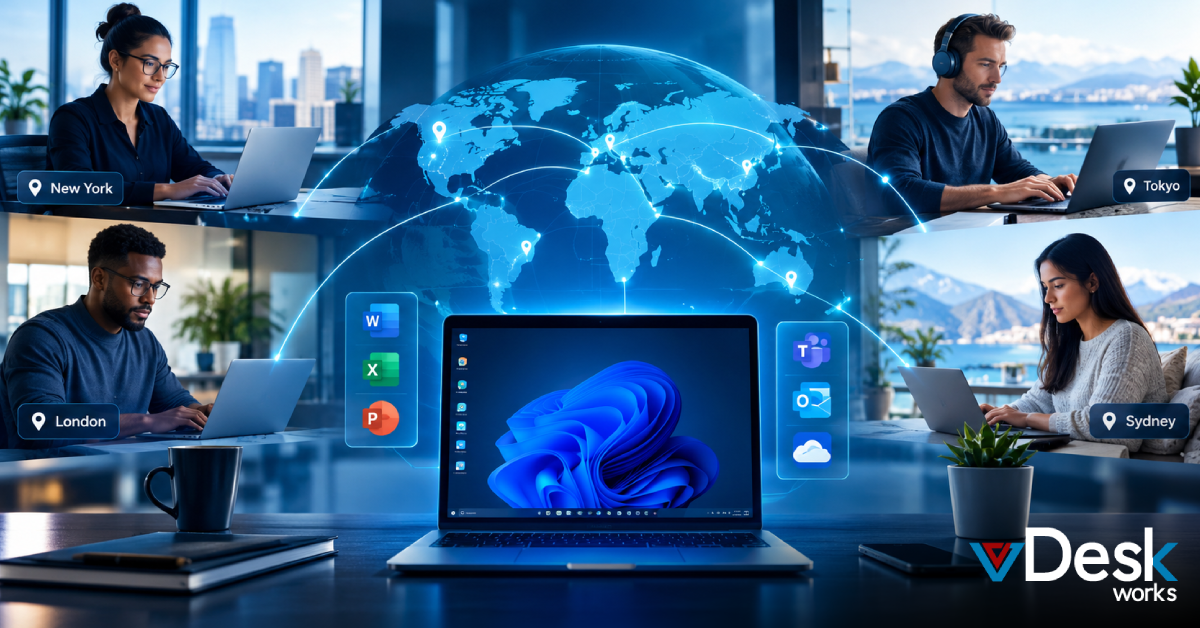
In today's global economy, the dream team often involves hiring talent from Tokyo to Toronto. But coordinating over multiple time zones can make simple discussions logistical nightmares. Traditional solutions involve a slew of emails, sporadic video calls, and clunky file-sharing tools, leading to miscommunications and delayed decisions.
Virtual desktops break this mold by centralizing all channels of communication in a single, secure cloud-based hub. With DaaS, teams are able to connect to shared virtual environments where real-time editing, instant messaging, and collaborative whiteboards are just a click away. Just picture a product manager in New York brainstorming with developers in Bangalore without having to sync files or wait for attachments. The cloud service providers handle the heavy lifting, ensuring low-latency connections that feel and act like working in an office. This movement to virtual desktop computers is not just about convenience; it's a facilitator for quicker ideation, compressed project timelines, enabling businesses to outpace competition in vibrant markets.
Hurdle #2: Inconsistent User Experiences on Diverse Devices
Hybrid work democratized access to work, but it also introduced chaos-one employee is thriving on a high-end PC, another one struggles on an older tablet. This fragmentation of the devices means inconsistent app performance, version mismatches, and frustration hampering team synergy.
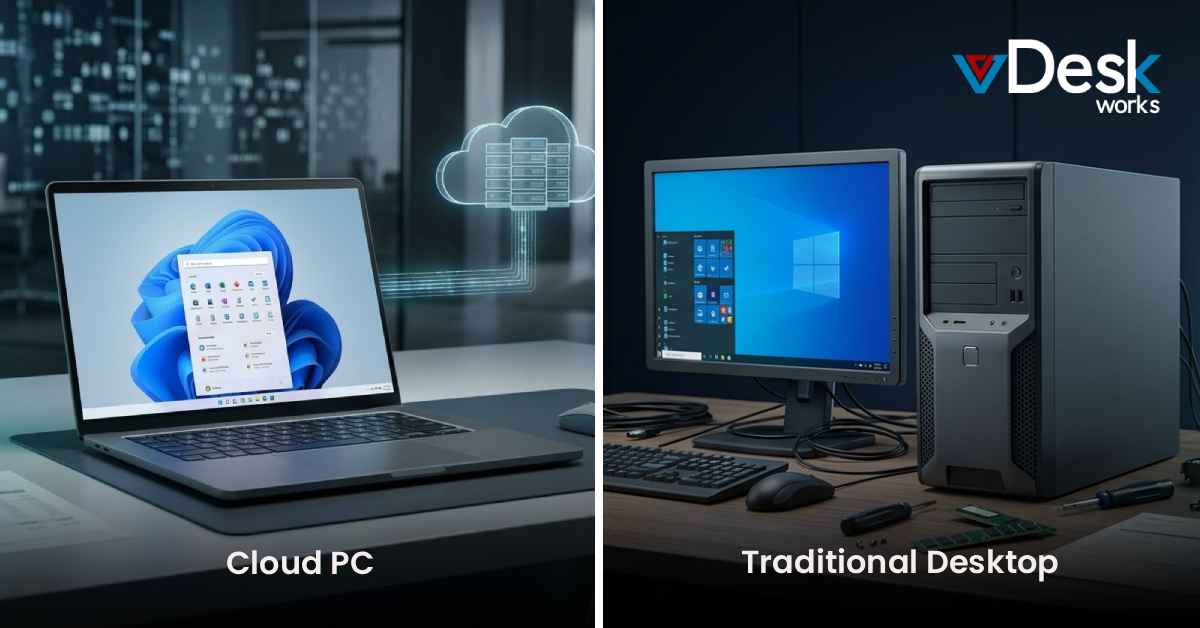
Enter virtual desktop computers that standardize the desktop experience, no matter the endpoint device. Hosted on robust cloud infrastructure, these solutions stream identical virtual desktops down to Windows PCs, Macs, Chromebooks, or even mobile devices. Employees log in from anywhere, and voilà-they're greeted with their customized workspace, complete with the latest software updates and settings. DaaS eliminates the "it works on my machine" excuses, creating a common platform where collaboration flows effortlessly. For enterprises, this means fewer IT tickets and more time for creative problem-solving, turning potential roadblocks into opportunities for inclusive teamwork.
Hurdle #3: Overwhelmed IT resources in scaling teams
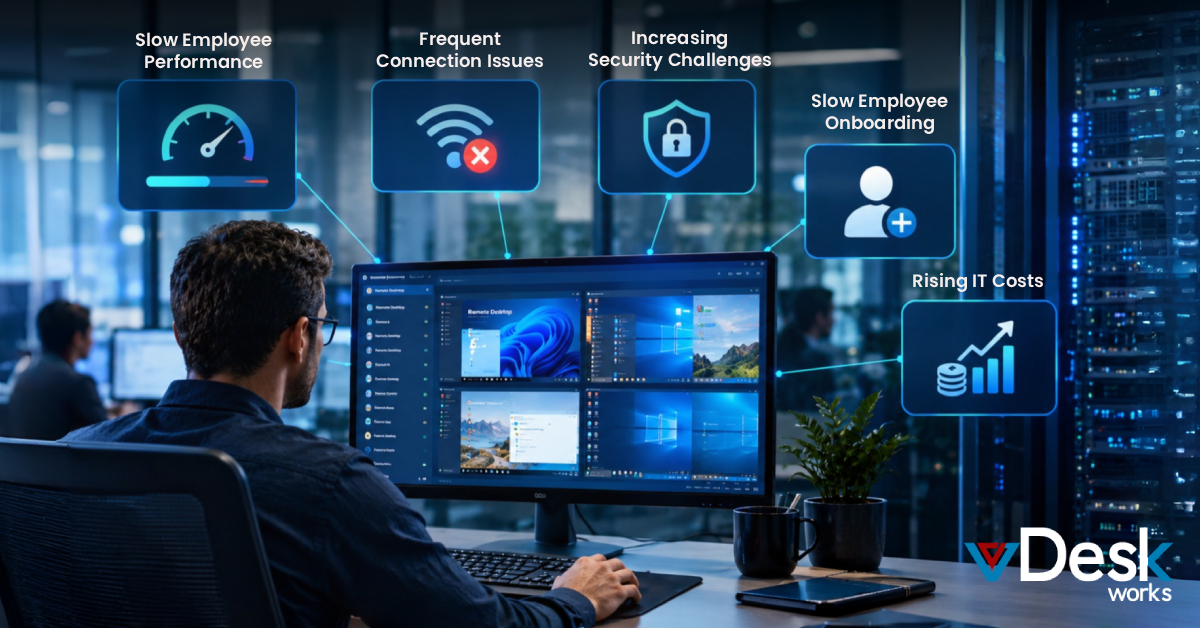
As businesses expand, IT departments are stretched to their limits. In-house systems creak under the demands of a growing user base, either in terms of provisioning new desktops, managing licenses, or troubleshooting problems with connecting to the network. This siphoning of resources redirects efforts away from strategic priorities and onto firefighting everyday glitches.
Cloud elasticity provides a scalable antidote in the form of virtual desktop computers. Powered by DaaS, VDI lets IT teams provision hundreds of desktops in minutes and auto-scales based on demand. No more manual hardware allocations or endless upgrade cycles-cloud providers manage the backend, freeing IT pros to innovate on cybersecurity integrations or AI-driven workflows. This flexibility-where remote work in 2026 demands instant onboarding for freelancers or seasonal hires-means teams can remain agile. Reductions in IT overhead as high as 50% are reported by businesses, with savings being funneled into tools such as integrated VR meeting spaces that facilitate collaboration.
Hurdle #4: Data Silos Hindering Cross-Functional Insights
Silos are the silent killers of collaboration. Marketing hoards customer data in one tool, while sales clings to CRM spreadsheets, resulting in disjointed strategies and missed opportunities. Remote setups only worsen this, as physical proximity once encouraged casual knowledge-sharing.
Virtual desktop computers bridge these gaps by centralizing data in a secure cloud repository that is accessible to authorized users across functions. Teams leverage DaaS to co-edit live dashboards, run joint analytics sessions, and pull insights from unified datasets-all without having to export sensitive files. Additional security features, such as multi-factor authentication and encryption, foster transparency while keeping data in compliance. Imagine a remote sales representative in London pulling real-time inventory data from a virtual desktop shared with the supply chain team in Shanghai. This level of integration not only accelerates decision-making but also sparks serendipitous innovations, turning data into a collaborative asset rather than a guarded secret.
Hurdle #5: Burnout due to disrupted work-life balance
Remote and hybrid work promised freedom, but without the right tools, it's blurring the lines between office and home, resulting in exhaustion and reduced creativity. Scattered productivity apps and unreliable access create mental friction that erodes the very collaboration they aim to enable.
Virtual desktop computers restore the balance by offering a "work anywhere" ethos without the chaos. Cloud-based desktops enable users to start a session at home, pause, and resume from a coffee shop or co-working space, with everything syncing seamlessly. With features like offline caching and AI-assisted task handoffs, interruptions are minimized, while built-in wellness prompts remind users to take breaks. In fostering this balance, DaaS boosts morale and output-studies show that teams using virtual desktop computers experience 30% higher engagement. For leaders, it is a win-win situation: happy, more connected employees who collaborate with renewed vigor to drive sustainable growth.
Embracing the Future: Getting Started with Virtual Desktops
In a world where remote work is not a trend, but the new normal, virtual desktop computers stand as indispensable collaborators. Cost-efficient, ironclad secure, and with boundless scalability, virtual desktops are positioned to empower organizations to thrive in the face of uncertainty. Looking into the future, well into 2026 and beyond, the adoption of cloud PCs and DaaS will only continue to accelerate, unleashing unparalleled levels of innovation and team harmony.
For businesses prepared to up the ante in remote collaboration, vDeskWorks is one of the leading DaaS providers. Known for its intuitive interface, enterprise-grade security, and unwavering support, vDeskWorks surpasses the other guys by delivering tailored virtual desktop solutions that scale with your ambitions. Be it a startup forging partnerships over the globe or an established firm at work on optimizing their hybrid teams, vDeskWorks will keep your workforce productive and united.
 Emma Carson