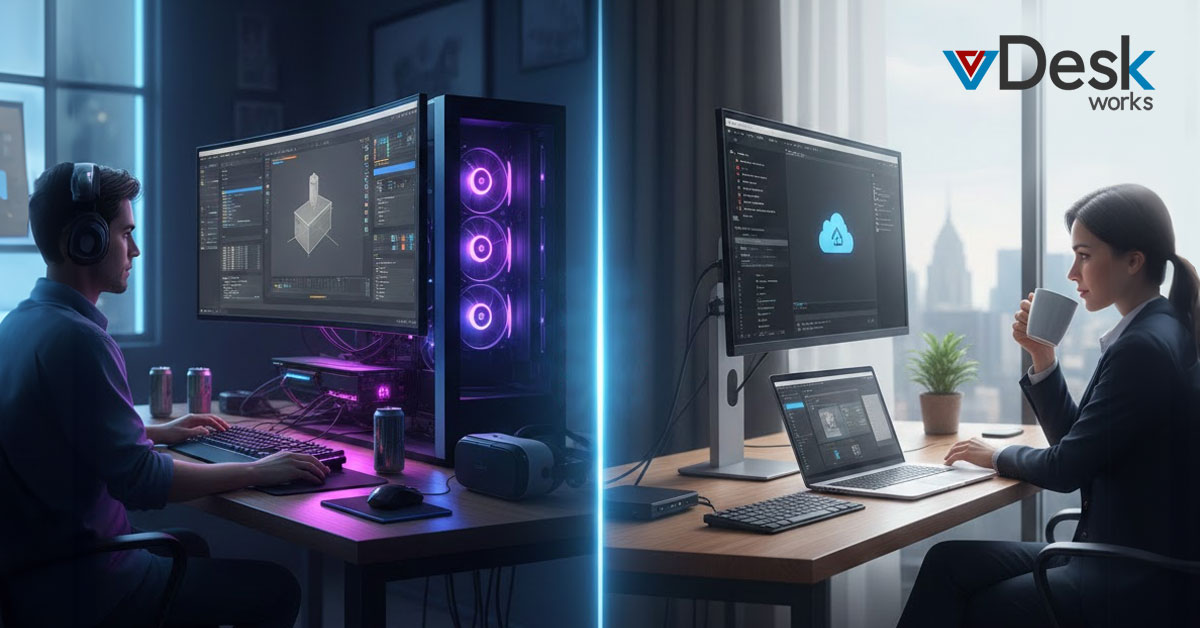
GPU Workstations impose a productivity penalty on B2B companies through maintenance and scaling bottlenecks that tie up their capital and limit their flexibility in areas such as artificial intelligence research, graphic and design work, and engineering applications. A Remote Desktop Solution offering Virtual PC assistance negates this effect by providing immediate virtual GPU access to scale inexpensively and dynamically.
GPU desktop computers offer in-house power for processors demanding B2B applications, such as 3D modeling, artificial intelligence, video editing, and simulations. The devices are fitted with NVIDIA and AMD graphic processors, and high-core processors, as well as expanded storage and ECC memory, are effective in running programs like Autodesk Maya, TensorFlow, Adobe Premiere, and more. Local processing guarantees sub-millisecond latency in real-time rendering and adjustments. Optimization includes customization from the driver and cooling to peripherals, and the initial purchase option gives financing predictability and avoids subscription costs. Dedicated processing guarantees consistent and network problem-free performance, and local data storage is also reliable in a regulatory context.
What You’re Sacrificing with GPU Workstations?
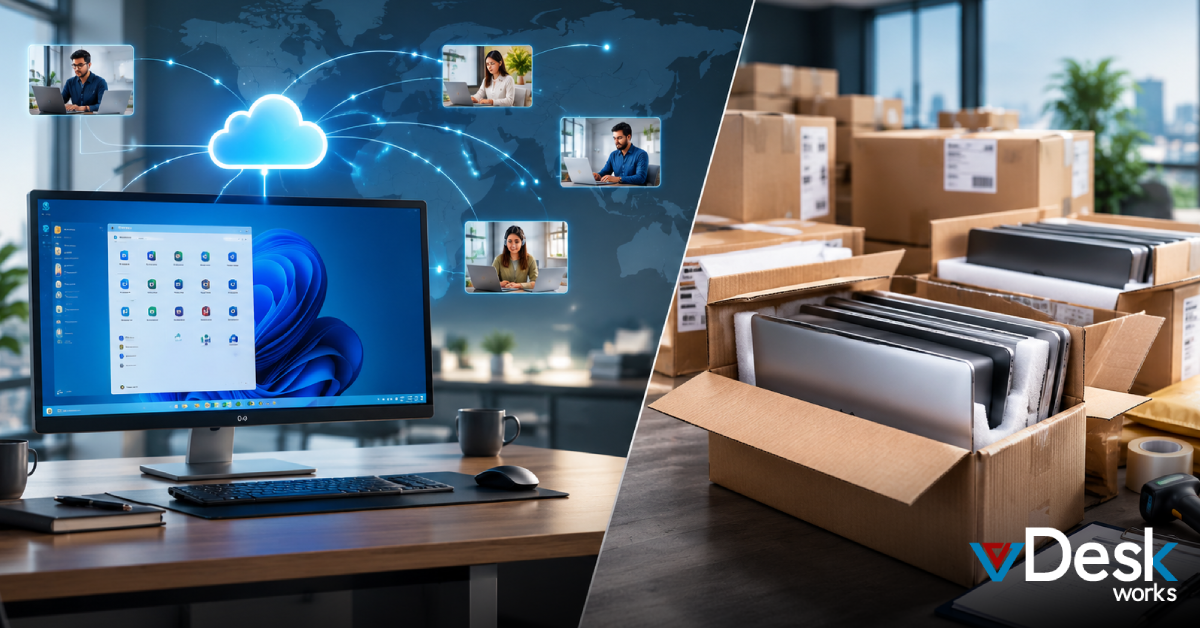
Disadvantages of using GPU workstations multiply rapidly for growing B2B businesses. Setup and validation involve weeks for individual components and the assembly and validation process, postponing projects and talent acquisition. Resources are wasted on light workloads, involving significant power and real estate considerations because of queuing within the hybrid model. Growth is stalled because expansion requires actual hardware acquisitions for the increases that hinder revenue generation and profitability. Tech investments are drained through analysis and repair solutions for heat dissipation and stifles innovation focus for the business. Upgrades are cycled at three- and five-year refresh rates that lock money into outdated technology and overlook innovations such as ray tracing and AI accelerators.
The Virtual GPU in Remote Desktop Solutions: Reclaiming Efficiency and Agility
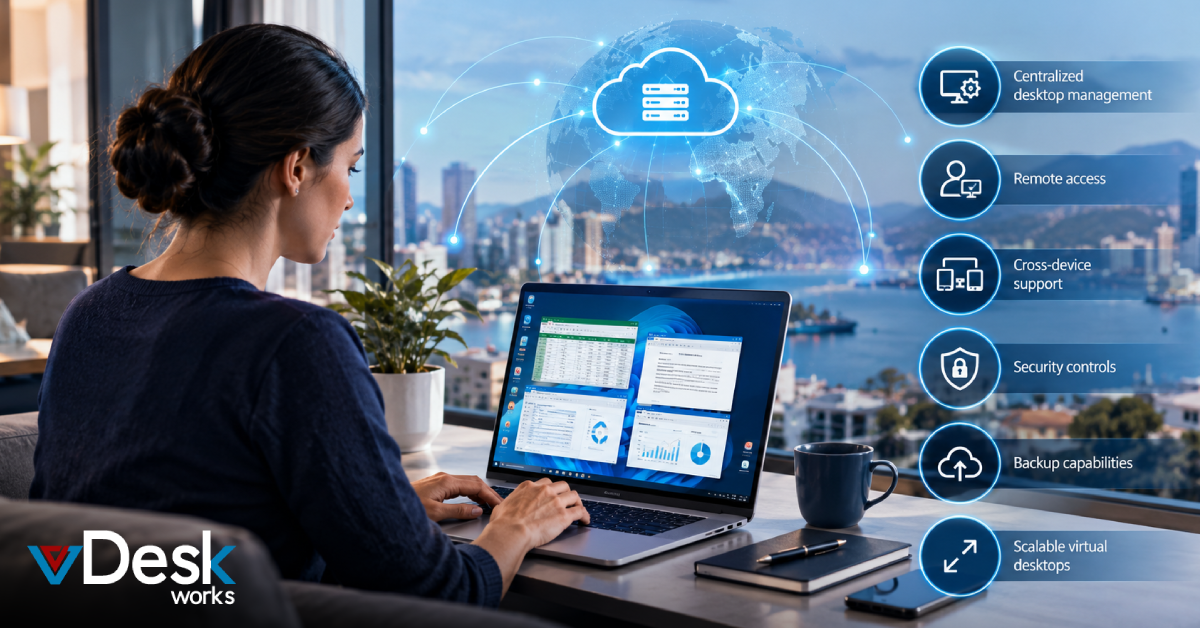
Remote Desktop Solutions use Virtual GPUs to allocate cloud resources for multiple users, streamed onto any device using Virtual PC. This allows bypassing resource allocation times, with VMs launched with GPU slices for parallel processing in minutes. The market for GPU as a Service expands from $5.79 billion in 2025 to reach $49.84 billion in 2032 at a CAGR of 35.8%, pushed by the trend for remote AI computing. In the B2B market, this inspires creativity without being bound by infrastructure.
How vDeskWorks Remote Desktop Solution Overcomes Challenges of GPU Workstations?
vDeskWorks Remote Desktop Solution with Virtual PC resolves the problem of workstations using the cloud with GPU acceleration. The solution converts capital expenditures to operating expenditures, reducing expenses by 50%, with investment ingrowth. One-click scaling removes the problem of time, scaling up during peak times without IT infrastructure. The solution takes care of all updates and monitoring; therefore, IT infrastructure is responsible for integrations. Up-to-date hardware eliminates the need to upgrade. Collaborative cutting reduces consumption of electricity in premises by 70%. Low-latency streaming is suitable for CAD or ML.
GPU Computing Workstation or Remote Desktop Solution – Which Works for You?
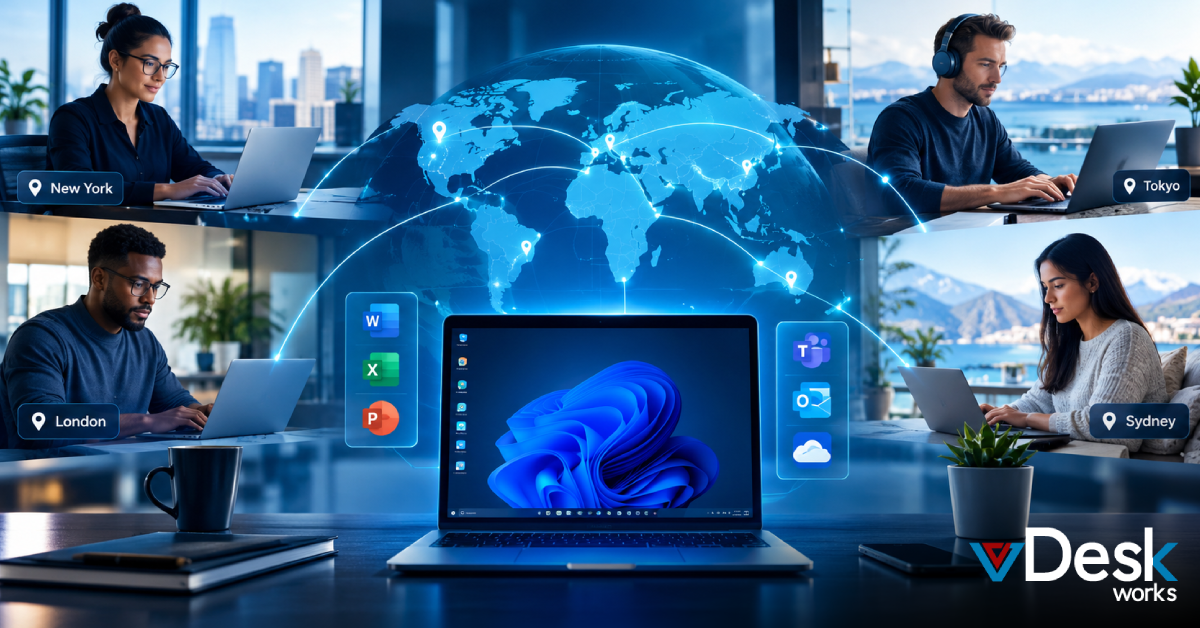
This depends on the speed of business. A delayed schedule can upset the timeline, and if the IT sector focuses on hardware or there are access disparities among hybrids, then the Cloud Virtual PC accelerates. Idle server expense or resource limitations indicate flexible requirement. With the distributed reality of 2025 and 40% B2B employees working from a distance, local environments become more obstacles than aid. Evaluate: Will yours facilitate the expansion or weigh it down? For design, tech, or analytics companies, the Remote Desktop Solution merges strength with flexibility.
Handling Typical IT Concerns with Remote Desktop Tools
“Cloud GPUs:” Trust issues are addressed with performance close to local computation for 95% of work, which is superior in parallel computation in AI using bursting. Security leads on premise with encryption, MFA, and GDPR/SOC2 audit compliance. Data transfer is done using compression and OneDrive/S3 connectivity. Cost is transparent, with auto-shutdown reducing costs by 30% without surprise charges. Management is eased using FCs, which include setup. Virtual PC is intuitive.
The market for GPUs will amount to $82.68 billion in 2025, peaking at $352 billion in 2030. Remote access increased by 40% after 2020, with Virtual PC cutting energy consumption by 70% with sharing. Since 2016, there has been a "shift to virtual."
GPU Computer vs. Remote Desktop Solution FAQ
Core difference: Workstations employ full local cards; Remote Desktop Solution uses Virtual PC to make Virtual GPUs possible for scaling in the cloud to save scaling for high-end renders and trainings without waste. B2B: remote for agility; and local for latency. Lifespan limitations: No longer than three years to incur latency; Scales to cloud for heavy-scale renders and trainings; Scales without waste to the cloud for heavy-scale renders and trainings.
Prepared To Power-Up Without The Weight?
By the time December 17, 2025, rolls around, hybrid work and AI-booms mean that having a GPU workstation becomes a liability. “vDeskWorks Remote Desktop Solution with Virtual PC puts you ahead – seamlessly, securely, and Schedule your complimentary demo. Visit vdeskworks.com or email Sales@vdeskworks.com. Boost your GPU workflow experience.
 Emma Carson