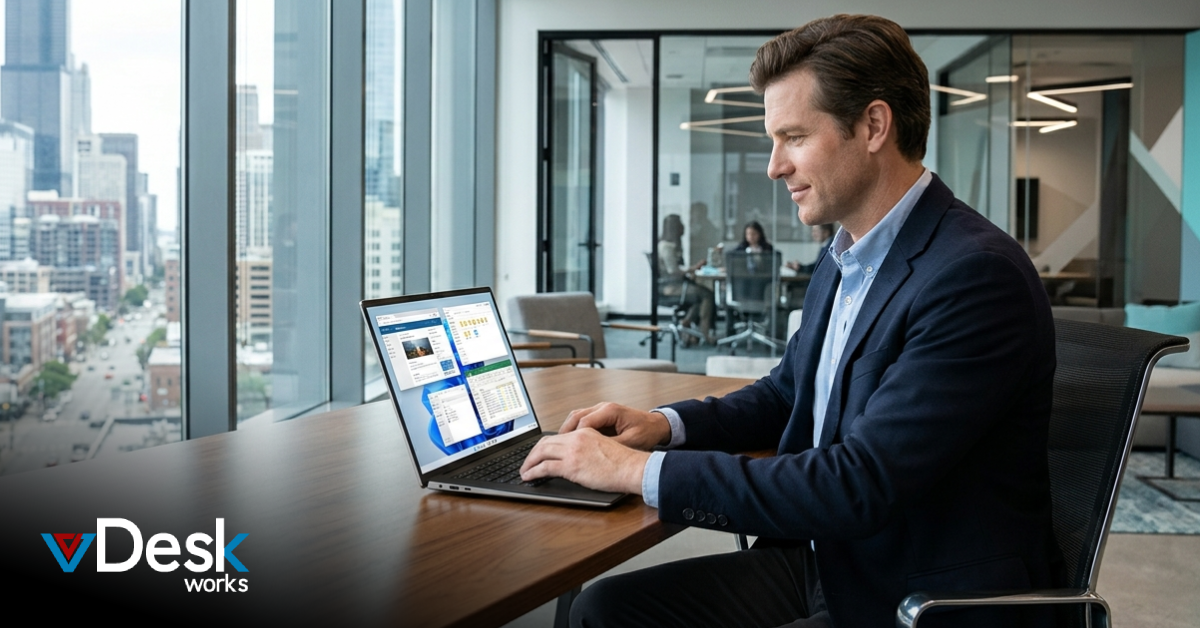
For decades, the word “office” meant a physical place.
It was the building where employees arrived each morning, the location where company computers were installed, the network where applications were accessed, and the environment where business data was stored and managed. Employees were expected to go to the office because that was where their work environment existed.
That definition is rapidly changing.
In the modern workplace, the office is increasingly becoming less about a physical address and more about access to a secure digital workspace.
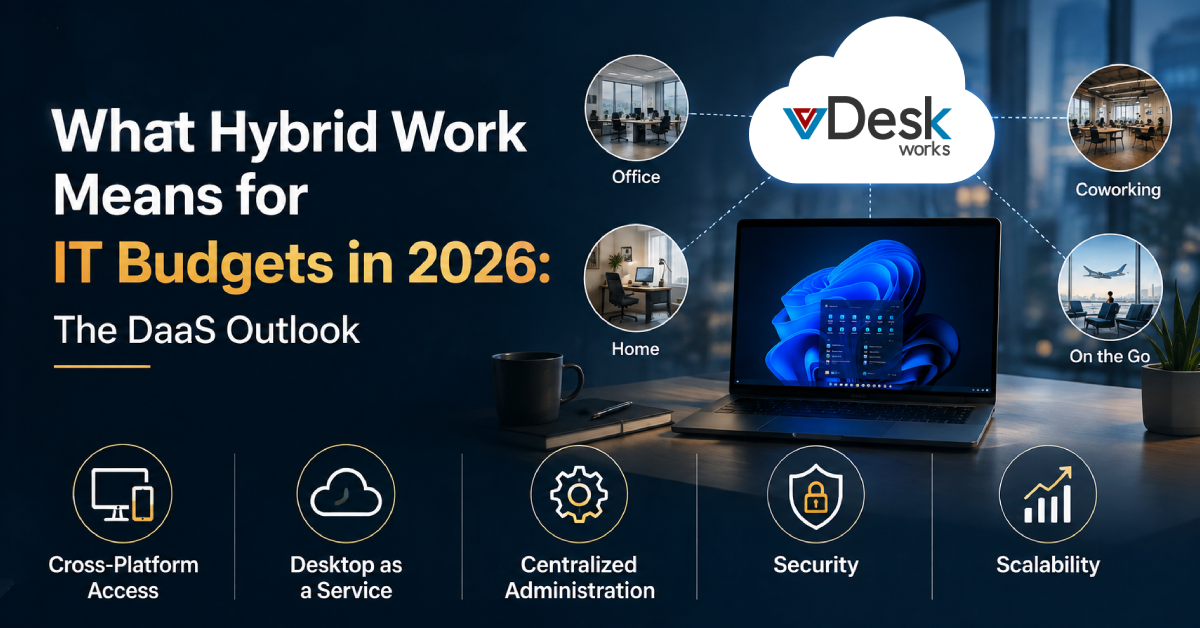
An employee can work from a corporate office, home, a branch location, a coworking space, or while traveling. What remains consistent is not necessarily the desk or building, it is the employee's digital work environment.
This is one reason Virtual Desktop technology has become increasingly important to modern IT strategies.
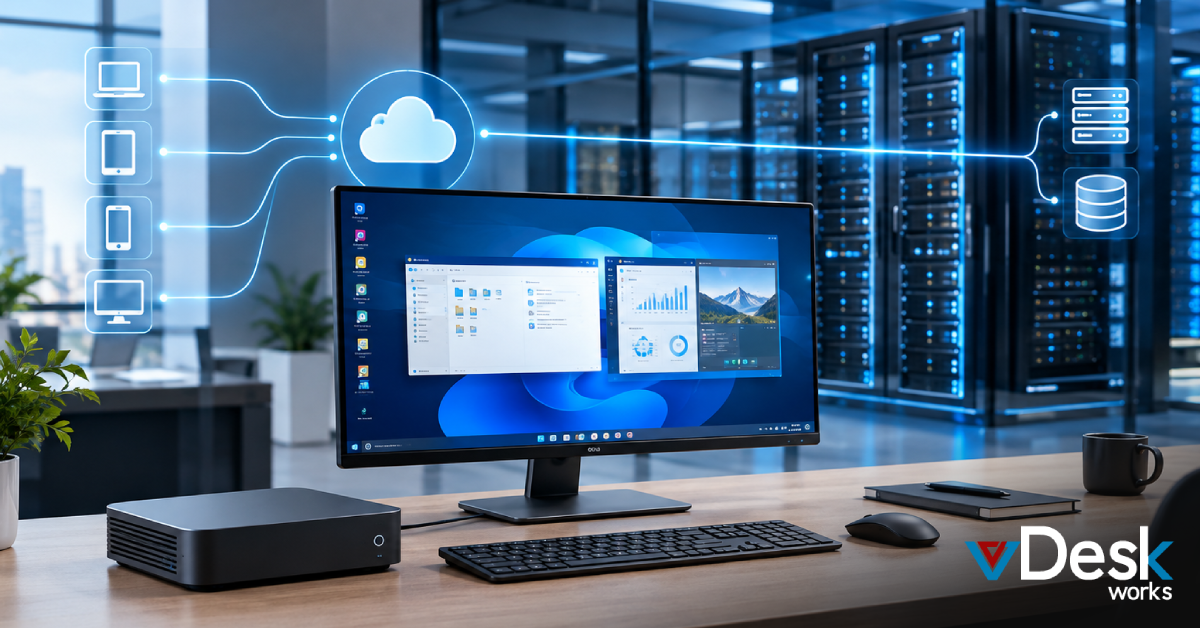
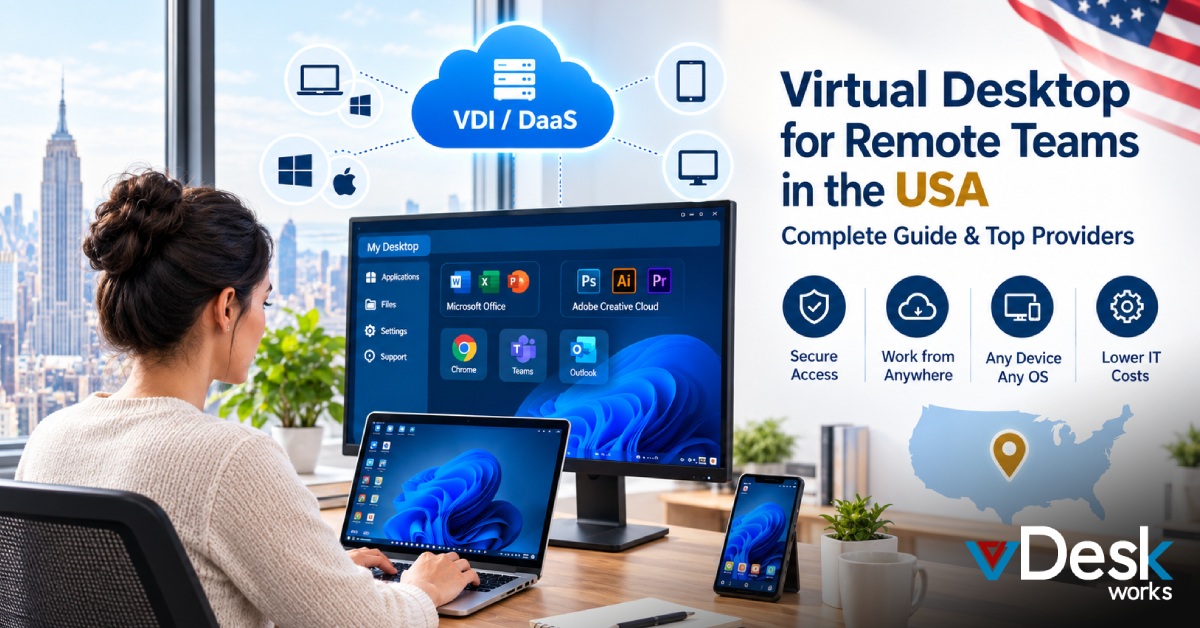
With Virtual Desktop Infrastructure (VDI) and Desktop as a Service (DaaS), organizations can deliver a complete desktop environment through centralized infrastructure, allowing employees to access applications, files, configurations, and business resources from supported devices and locations.
The result is a fundamental shift in how businesses think about the workplace:
The office is no longer necessarily where the computer is. The office can be the secure virtual workspace an employee logs into.
The Office Is Becoming a Digital Experience
The traditional workplace was built around physical infrastructure.
A company purchased office space, installed computers, configured a local network, deployed applications, and connected employees to business resources. The physical office served as the center of the technology ecosystem.
Hybrid work has disrupted this model.
When employees are distributed across multiple locations, the physical office can no longer be the only gateway to productivity. Businesses need employees to have access to the same applications, files, workflows, and corporate resources regardless of whether they are sitting at a headquarters desk or working from home.
This has made the digital workspace more important than the physical workspace.
A modern employee may not care whether the computing environment is physically located in the company's building, a private data center, or a cloud infrastructure environment. What matters is whether they can securely access the tools they need and experience a consistent workspace.
This is where cloud desktops become strategically significant.
What Does It Mean to Treat the Office as a Virtual Desktop Login?
The concept is simple.
Instead of defining an employee's workplace by a physical location, businesses can define it by access to a centrally managed digital environment.
An employee logs in and receives their virtual desktop.
That desktop may contain:
- Business applications
- Files and documents
- User settings
- Productivity tools
- Corporate resources
- Approved workflows
- Security policies
- Specialized applications
The physical device becomes the access point rather than the entire workplace.
This approach separates the employee's workspace from the endpoint device.
As a result, the employee can potentially access the same digital environment from different supported devices and locations.
Modern VDI platforms are specifically designed to provide centralized desktop management, flexible access, scalability, and support for remote and hybrid employees.
Cloud Desktops and the Economics of the Modern Workplace
The economics of workplace technology are also changing.
Traditional computing requires businesses to continually invest in endpoint hardware.
Every device has a lifecycle. Hardware becomes outdated. Components fail. Operating systems change. New applications demand more resources.
Cloud desktops allow businesses to shift some of this responsibility toward centralized infrastructure.
DaaS can also help organizations extend the usefulness of existing endpoint devices because demanding desktop workloads can be processed centrally.
This does not automatically make cloud desktops cheaper in every scenario. Organizations must evaluate licensing, cloud infrastructure, networking, storage, performance requirements, user profiles, and management costs.
The real advantage is flexibility.
Businesses can make technology investments according to actual workload requirements instead of automatically purchasing the most powerful physical device for every employee.
Why Is the Virtual Desktop Becoming the New “Workplace”?
The significance of the virtual desktop goes beyond remote access. It changes the definition of what a workplace actually is.
A workplace is no longer simply:
Building + Desk + Computer + Corporate Network
It can increasingly become:
Identity + Applications + Data + Security + Virtual Desktop
The employee's location becomes secondary.
The digital workspace becomes constant.
This is particularly relevant in an era where employees can be distributed across cities, countries, offices, homes, and temporary work locations.
How vDeskWorks Supports the Virtual Workplace Model
vDeskWorks is designed around the idea that employees should be able to access a powerful and centrally managed computing environment without being permanently tied to one physical workstation.
Through Virtual Desktop Solutions, businesses can deliver cloud-hosted desktop environments that support flexible work arrangements.
Instead of requiring every employee to depend entirely on a high-performance physical computer, vDeskWorks enables organizations to move more of the computing environment into a centralized virtual infrastructure.
This supports the broader transformation from location-dependent computing to workspace-on-demand computing.
Conclusion
The phrase “going to the office” is acquiring a different meaning.
For the traditional workplace, it meant physically traveling to a building where the employee's computer, applications, files, and corporate network were waiting.
For the modern organization, the concept is increasingly becoming:
Log in, access your workspace, and work securely, wherever business takes you.
Virtual desktops are helping businesses make that model practical.
By centralizing desktop environments, supporting flexible access, simplifying IT administration, enabling scalable provisioning, and separating the digital workspace from the physical endpoint, Virtual Desktop Solutions can give organizations a more adaptable foundation for hybrid work.
For vDeskWorks, this represents more than remote desktop access. It is a different way of thinking about workplace computing.
The future office may still have walls, desks, meeting rooms, and people.
But the employee's actual work environment increasingly lives somewhere else.
It lives in the virtual desktop they log into.
 Emma Carson