Cloud computing has become essential for organizations seeking greater productivity, security, mobility, and cost efficiency. With numerous cloud desktop (DaaS/VDI) solutions available, selecting the right one for your business can feel overwhelming.
Why Cloud Desktops Still Matter in 2026?
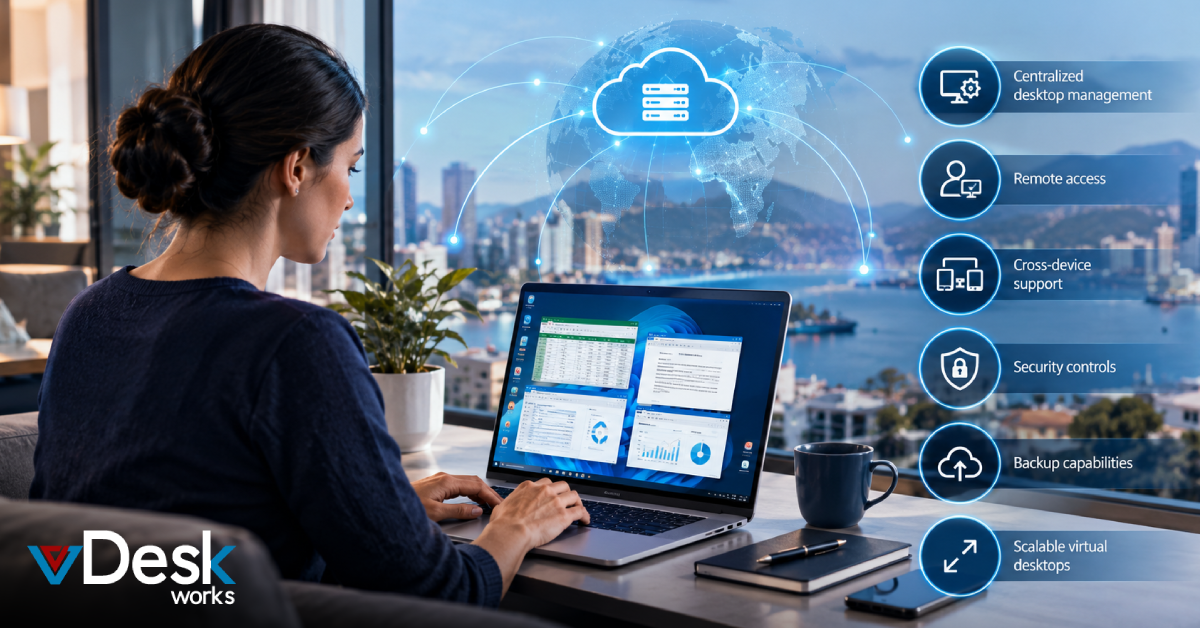
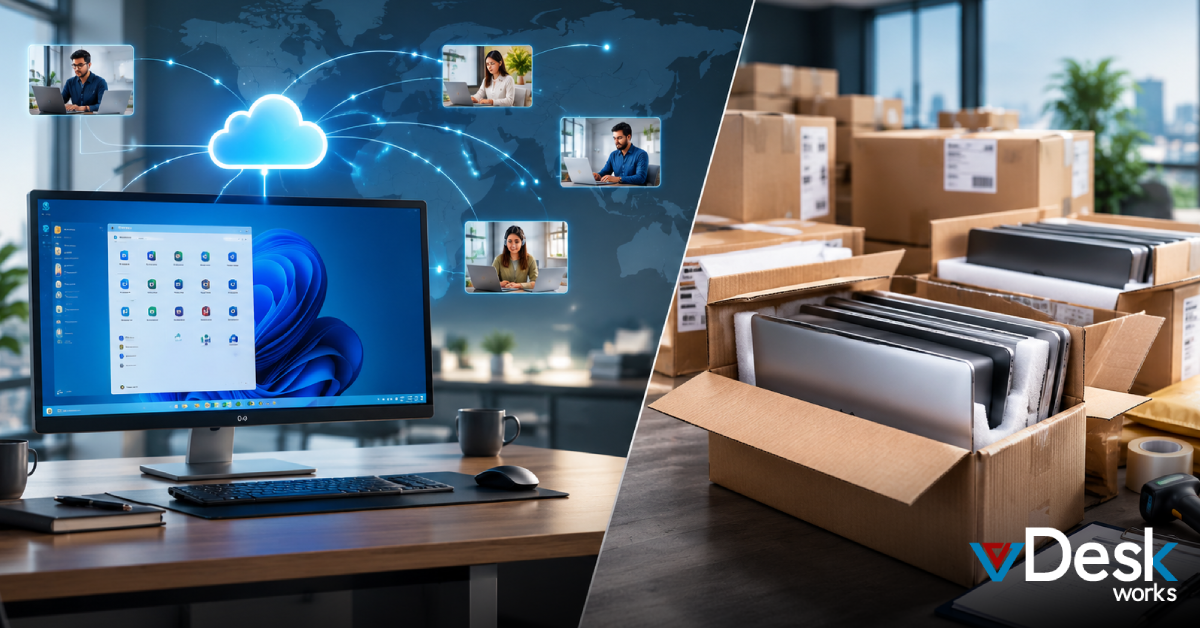
Traditional on-premises desktops remain familiar, but they often struggle with the demands of modern work. Cloud desktops deliver significant advantages: seamless remote and hybrid access, instant scalability, predictable costs, robust security, and simplified management of distributed teams.
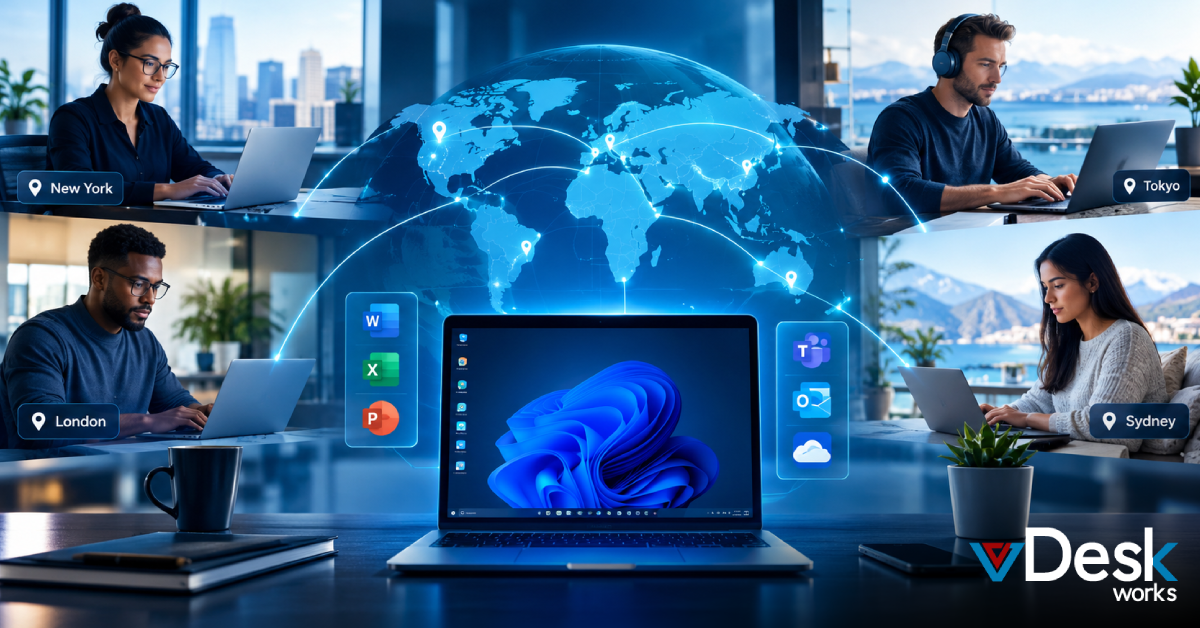
They enable employees to access a full Windows or Linux desktop experience from any device, anywhere, while centralizing data and applications in secure cloud environments. This reduces hardware costs, strengthens compliance, and supports business continuity.
To help you choose confidently, here’s an updated overview of eight leading cloud desktop solutions, highlighting their key strengths and ideal use cases:
1. Amazon WorkSpaces
Amazon WorkSpaces is a fully managed Desktop as a Service (DaaS) solution from AWS that provides secure, persistent or non-persistent virtual desktops. It supports both Windows and Linux, offers flexible performance bundles (from lightweight to GPU-accelerated), and integrates natively with the AWS ecosystem.
Businesses benefit from pay-as-you-go pricing, rapid provisioning, and strong security features like encryption and multi-factor authentication. It’s particularly well-suited for AWS-centric organizations needing quick scalability and reliable remote access.
2. Citrix DaaS (formerly Citrix Virtual Apps and Desktops)
Citrix DaaS is a powerful enterprise-grade platform designed for complex, high-performance environments. It excels in delivering a rich user experience across any device or location, with advanced HDX protocol optimization for graphics-intensive applications such as CAD, video editing, or 3D modeling.
Key highlights include multi-factor authentication, granular access controls, comprehensive analytics, and hybrid/multi-cloud flexibility. Organizations in regulated industries or those requiring superior application performance often choose Citrix for its security depth and reliability.
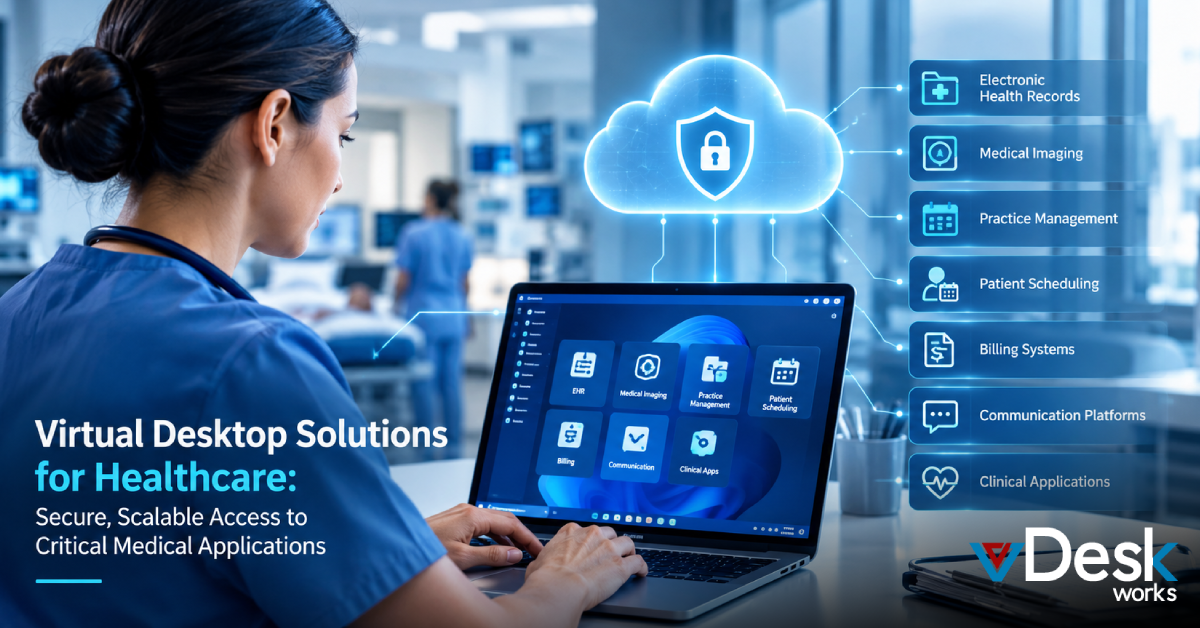
3. vDeskWorks Virtual Desktop Infrastructure (VDI)
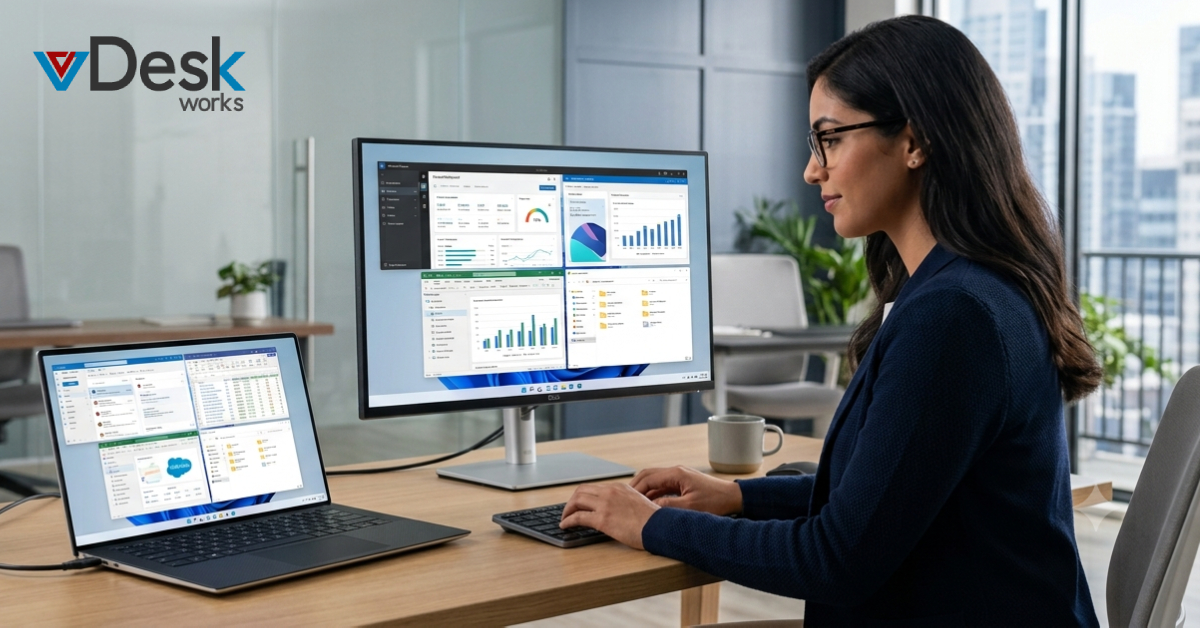
vDeskWorks offers a robust, feature-rich Virtual Desktop Infrastructure tailored for businesses that need secure, high-performance remote access from anywhere. It combines excellent graphics capabilities, reliable file storage, collaboration tools, and easy scalability.
What sets it apart is the inclusion of built-in anti-virus protection, automated data backups, and highly customizable subscription plans that fit various budgets. With strong emphasis on security and simplicity, vDeskWorks is an excellent choice for organizations looking for a complete, worry-free cloud desktop experience.
You can explore its capabilities through a live demo.
4. Microsoft Azure Virtual Desktop (AVD)
Microsoft Azure Virtual Desktop provides a flexible, cloud-native virtual desktop and app virtualization service deeply integrated with the Microsoft 365 ecosystem. It supports multi-session Windows 10/11 environments, personal desktops, and automated scaling to optimize costs.
Businesses already using Microsoft tools (Teams, OneDrive, Intune, etc.) benefit from seamless integration, strong identity management via Azure AD, and enterprise-grade security. It offers excellent value for Microsoft-heavy organizations seeking cost efficiency and centralized management.
5. Omnissa Horizon (formerly VMware Horizon Cloud)
Omnissa Horizon delivers a modern, flexible virtual desktop platform suitable for both cloud and hybrid deployments. It provides advanced features like application layering, 3D graphics support, instant clone technology, and robust session management.
The solution stands out for its customization options and strong performance in diverse environments. Security features, including integrated access controls and encryption, make it a trusted choice for enterprises prioritizing control and reliability across on-premises and cloud infrastructures.
6. V2 Cloud
V2 Cloud is a straightforward, secure cloud desktop solution ideal for small to mid-sized businesses. It enables fast deployment of remote desktops and applications with essential features such as file sharing, collaboration tools, and application virtualization.
Its user-friendly management console and competitive pricing make it accessible, while solid security measures—including data encryption—provide peace of mind. V2 Cloud works well for teams that want simplicity without sacrificing core functionality.
7. Parallels Remote Application Server (RAS)
Parallels RAS is an all-in-one, cost-effective solution for delivering virtual desktops and applications. It supports a wide range of hypervisors and platforms, offers high-end graphics capabilities, and includes useful tools for collaboration and secure access.
With features like multi-factor authentication, granular controls, and flexible licensing, it provides strong value for organizations seeking an easier-to-manage alternative to more complex enterprise platforms. Its simplicity and affordability appeal to businesses of varying sizes.
8. Nutanix Cloud Infrastructure (with Frame or Desktop Services)
Nutanix delivers hyperconverged infrastructure that powers reliable cloud desktop experiences, often through solutions like Nutanix Frame. It combines application virtualization, strong graphics support, collaboration capabilities, and secure file storage in a highly resilient platform.
Known for simplifying data center operations and offering excellent performance, Nutanix solutions appeal to organizations seeking unified infrastructure management alongside secure remote desktop access. Built-in encryption and security controls add further confidence.
All eight of these cloud desktop solutions empower businesses with the flexibility, mobility, and security needed for today’s hybrid and remote work models. Each has unique strengths—whether in integration, performance, ease of use, or cost structure—so evaluate them against your specific requirements, team size, compliance needs, and existing tech stack.
Choosing the right cloud desktop solution can dramatically improve productivity while reducing IT overhead and security risks. Take time to test options through demos or proof-of-concept trials, and select the platform that best aligns with your long-term goals.
 Emma Carson