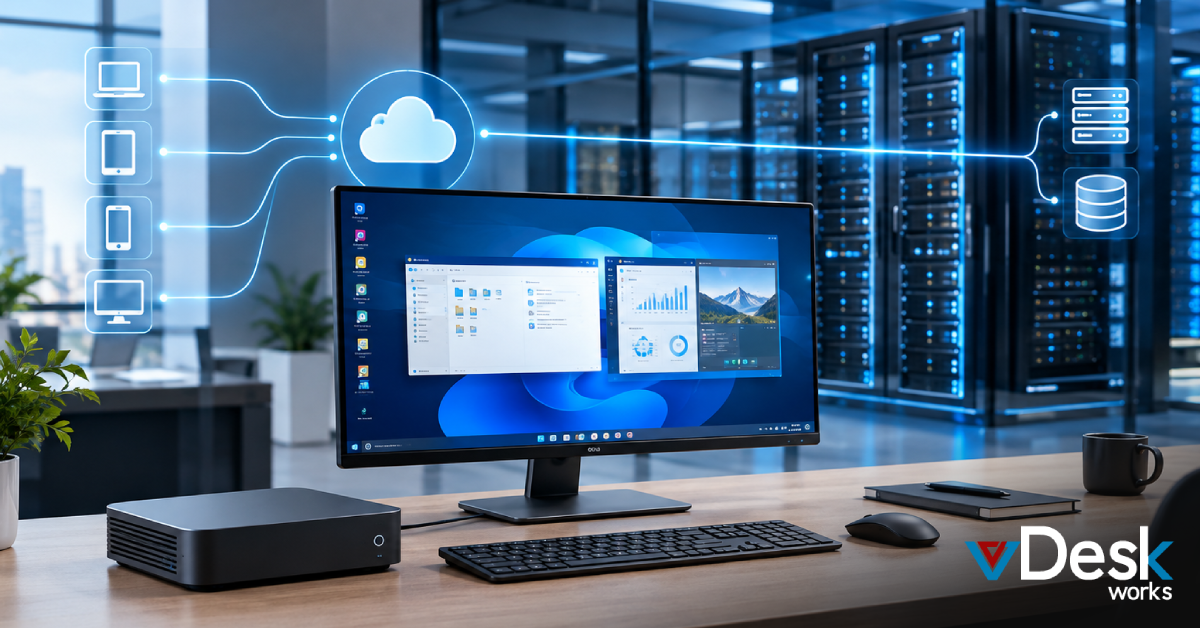
For many years, businesses believed that a powerful employee computer was essential for productive work. Organizations invested heavily in desktops and laptops equipped with faster processors, larger storage capacities, dedicated graphics, and increasingly sophisticated hardware. The traditional model was simple: the more demanding the business application, the more powerful the computer assigned to the employee needed to be.
That model is changing.
As cloud computing, virtualization, high-speed connectivity, and centralized data processing have matured, businesses no longer need to place the majority of their computing power directly on every employee's desk. Instead, processing, applications, storage, and business workloads can increasingly operate within secure cloud environments while employees interact with those resources through lightweight endpoints.
This architectural approach is bringing Thin Computing back into the spotlight.
However, today's thin computing model is significantly more capable than the thin-client environments associated with earlier generations of enterprise IT. Modern cloud infrastructure enables employees to access sophisticated virtual workspaces from thin clients, laptops, tablets, and other devices while the heavy computing workload is handled remotely.
This is where Cloud Desktops are becoming particularly important.
For businesses navigating hybrid work, rising cybersecurity risks, hardware replacement costs, distributed employees, and pressure to optimize IT spending in 2026, cloud desktops offer a practical way to separate the employee's computing experience from the physical endpoint
What Is Thin Computing?
Thin Computing is an IT architecture in which most computing activity takes place on a centralized server or cloud infrastructure rather than directly on the user's physical device.
In a conventional PC environment, the endpoint performs much of the work. Applications run locally, files may be stored on the device, operating-system updates are installed directly on the computer, and hardware determines much of the available performance.
Thin computing takes a different approach.
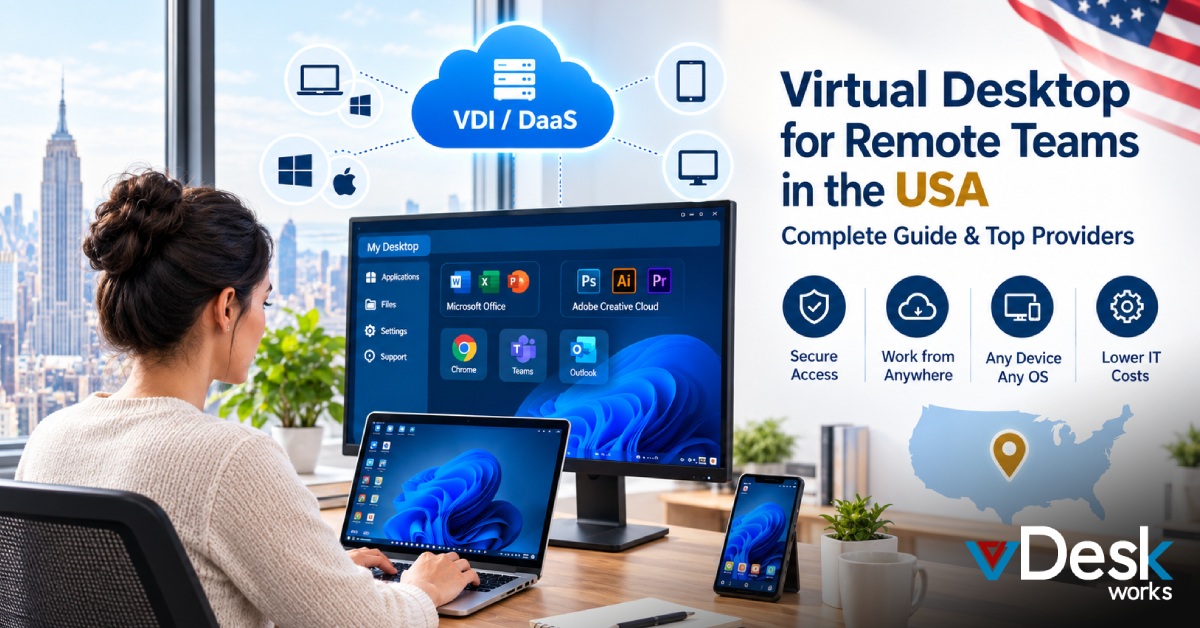
The endpoint primarily provides the interface through which the user connects to a centrally hosted computing environment. Instead of requiring every employee to own a high-performance workstation, the organization can provide access to a virtual desktop hosted in a data center or cloud environment.
The architecture generally consists of three major components:
- Centralized computing: Applications and workloads are processed on remote infrastructure.
- Lightweight endpoints: Users can work from devices that require substantially less local processing power.
- Remote access: The employee connects to a virtual workspace and interacts with it through a secure connection.
The result is a fundamental shift in how organizations think about workplace computing. The physical device becomes less important because the employee's digital workspace is no longer entirely dependent on the hardware sitting in front of them.
Why Is Thin Computing Returning in 2026?
The renewed interest in thin computing is not simply a technological trend. It reflects the changing requirements of modern organizations.
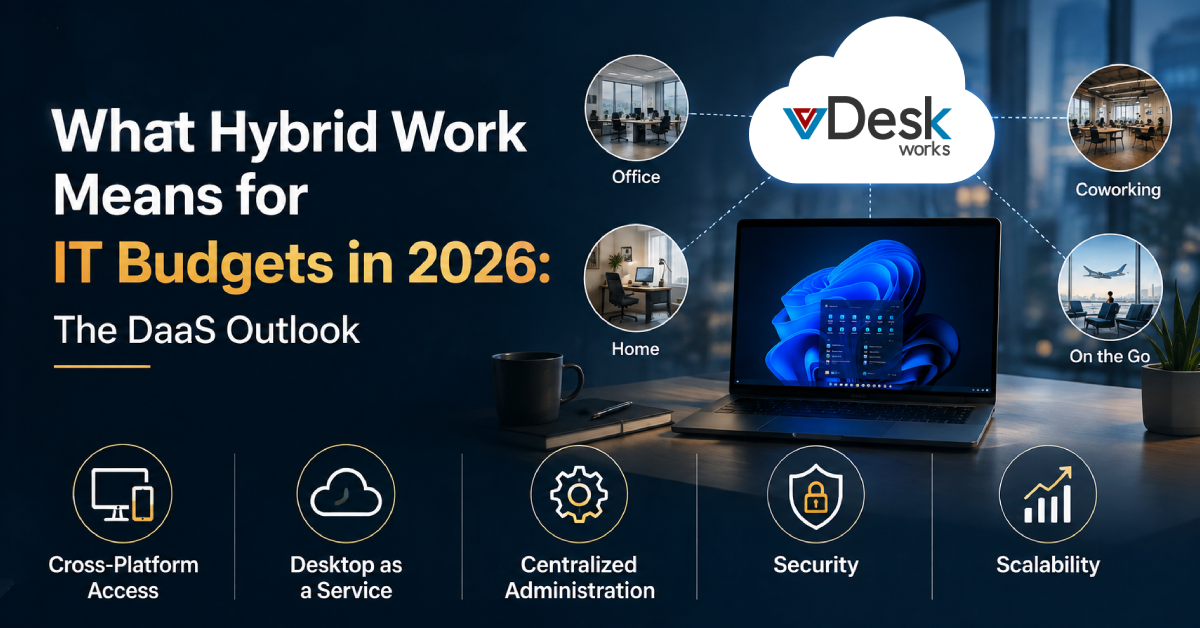
Businesses today operate across offices, homes, coworking environments, branch locations, and different geographic regions. Employees may use corporate laptops, personal computers, tablets, or other devices depending on their working arrangements.
At the same time, companies are dealing with increasing cybersecurity requirements, software complexity, cloud adoption, hardware expenses, and pressure to make technology investments more sustainable.
This has created a strong business case for moving computing resources away from individual endpoints and toward centralized infrastructure.
The modern workplace is becoming cloud-first.
Cloud platforms now support everything from business applications and databases to collaboration tools, analytics, artificial intelligence, and enterprise workloads. Employees are already accustomed to accessing important resources through the internet.
Cloud desktops extend this principle to the operating environment itself.
Rather than simply hosting individual applications in the cloud, businesses can host an entire desktop environment that employees can access remotely.
Where vDeskWorks Fits into the Thin Computing Revolution
vDeskWorks helps bring the principles of modern thin computing together through Virtual Desktop Infrastructure (VDI) and Desktop-as-a-Service (DaaS) solutions.
Instead of forcing organizations to build every employee's computing environment around a high-performance physical endpoint, vDeskWorks enables businesses to deliver virtual desktops through a centralized cloud architecture.
This allows the organization to rethink the role of the endpoint.
A laptop, thin client, Chromebook, tablet, or other supported device can become the access point through which an employee reaches their business workspace.
The computing environment itself can remain centralized.
Is Thin Computing Right for Every Business?
Thin computing is not a universal replacement for every physical computer.
Certain workloads may still benefit from powerful local hardware, especially where applications require specialized local processing, very low latency, specialized peripherals, or environments where reliable cloud connectivity is unavailable.
However, businesses should not assume that every employee needs a high-performance local workstation.
A more strategic approach is to classify employees according to their computing requirements.
For example:
- Standard office users may be strong candidates for cloud desktops.
- Remote employees can benefit from centrally managed virtual workspaces.
- Temporary workers can receive quickly provisioned environments.
- Contractors can access controlled business desktops without requiring full physical-device deployment.
- Seasonal teams can be scaled through virtual resources.
- Specialized professionals may require higher-performance virtual or physical workstations depending on their applications.
The future is therefore unlikely to be purely “thin” or purely “thick.”
It will be workload-driven.
Conclusion
The return of Thin Computing is not a nostalgic return to an older technology model. It represents the evolution of an idea that has become significantly more practical because cloud infrastructure, virtualization, connectivity, and centralized management have advanced.
Today's businesses do not necessarily need every employee to own a powerful computer packed with local processing capabilities. Increasingly, they need secure, accessible, scalable, and centrally managed digital workspaces.
That is why Cloud Desktops are leading the modern shift.
By moving computing resources into centralized environments, businesses can rethink hardware investments, simplify IT administration, support distributed employees, improve workspace consistency, and create more flexible technology strategies.
With vDeskWorks, organizations can take this approach further through VDI and DaaS capabilities designed to deliver virtual desktops across a flexible range of devices.
The future of workplace computing is therefore not simply about making computers more powerful.
It is about making computing more accessible, centralized, scalable, secure, and strategically manageable.
And that is precisely why thin computing is returning, not as an outdated concept, but as a modern cloud-powered architecture for the evolving workplace. Schedule a personalized demo at www.vdeskworks.com/live-demo-client.
 Emma Carson