The way organizations consume technology is changing rapidly. Businesses no longer want to wait days or weeks to provision resources, onboard users, or scale infrastructure. In an environment where speed directly impacts productivity, delays in IT processes are no longer acceptable.
This shift has led to the rise of self-service models across cloud platforms. From storage to computing, organizations now expect the ability to deploy and manage resources instantly, without depending on long approval cycles or complex provisioning workflows.
Cloud PC is now following the same trajectory.
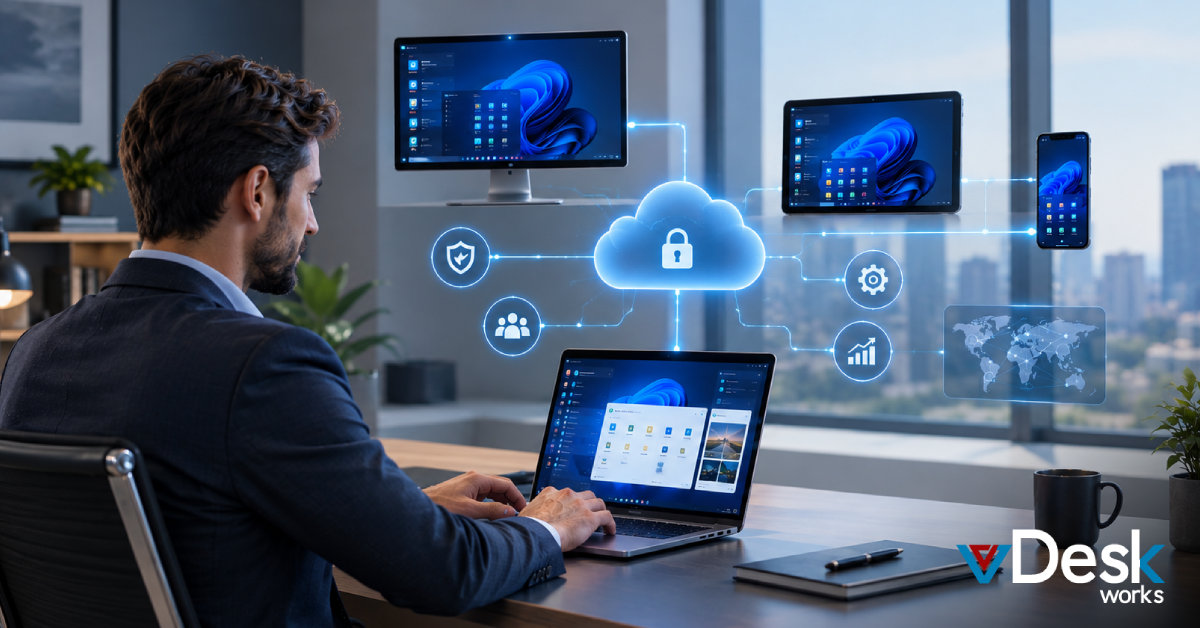
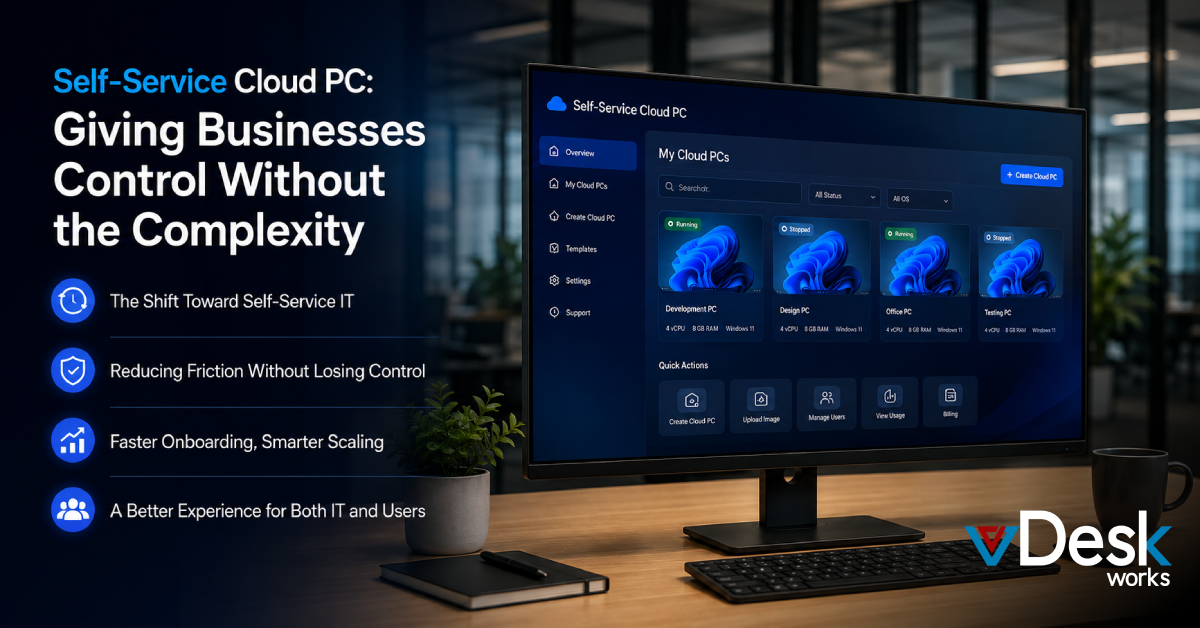
Self-service Cloud PC is emerging as a powerful way to give businesses greater control over their digital workspaces—without adding operational burden. It combines the flexibility of cloud infrastructure with the simplicity of user-driven provisioning, allowing organizations to move faster while maintaining control.
Why Traditional Provisioning Slows Businesses Down
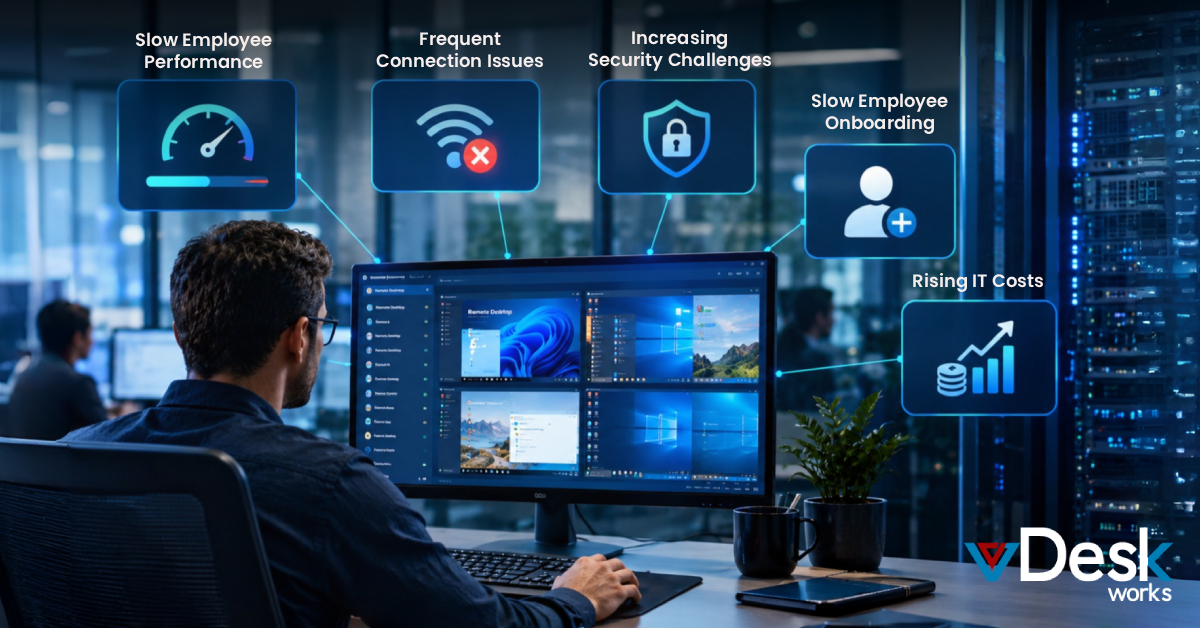
In many organizations, provisioning desktops is still a time-consuming process. IT teams are responsible for setting up environments, allocating resources, configuring access, and ensuring security compliance before users can even begin working.
While this approach ensures control, it also introduces friction.
Every request becomes a ticket. Every change requires intervention. And every delay impacts productivity. For growing organizations or those with distributed teams, these delays can quickly add up.
Even with virtual desktop environments, provisioning often involves backend configurations that require technical expertise and coordination across systems.
The result is a bottleneck that limits agility.
The Shift Toward Self-Service IT
Modern businesses are moving toward self-service IT models where users and administrators can provision resources on demand. This approach reduces dependency on manual processes and allows teams to operate more independently.
Self-service does not mean lack of control. Instead, it introduces controlled autonomy. Organizations can define policies, access levels, and resource limits while still allowing users to take action when needed.
This balance is critical.
It ensures that IT teams maintain governance while enabling business units to move quickly. In a competitive environment, this speed can make a significant difference.
What Self-Service Means in a Cloud PC Environment
Self-service Cloud PC takes this concept and applies it to desktop delivery.
Instead of waiting for IT to provision environments, organizations can deploy cloud desktops instantly. New users can be onboarded in minutes, and existing users can scale their resources based on workload requirements.
This transforms how workspaces are delivered.
Teams no longer need to plan infrastructure in advance or rely on static configurations. They can adapt in real time, ensuring that resources align with actual demand.
For IT teams, this reduces the workload associated with routine tasks, allowing them to focus on strategic initiatives rather than repetitive provisioning.
Reducing Friction Without Losing Control
One of the biggest concerns with self-service models is the potential loss of control. However, modern Cloud PC platforms are designed to address this challenge.
Policies, permissions, and governance frameworks are built into the system, ensuring that all actions remain within defined boundaries. Organizations can control who can provision desktops, what configurations are allowed, and how resources are allocated.
This creates a structured environment where flexibility does not compromise security or compliance.
By combining automation with governance, self-service Cloud PC achieves a balance that traditional models struggle to deliver.
Why vDeskWorks Cloud PC Enables True Autonomy?
For organizations looking to adopt a self-service approach, vDeskWorks Cloud PC provides a platform designed for both simplicity and control.
vDeskWorks allows businesses to deploy and manage cloud desktops through a centralized interface, making it easy to onboard users, allocate resources, and scale environments as needed. The process is streamlined, reducing the time and effort required to deliver workspaces.
At the same time, it maintains strong governance. Administrators can define policies, control access, and monitor usage, ensuring that the system remains secure and compliant.
This combination of autonomy and control is what makes self-service Cloud PC practical.
Instead of relying on IT for every action, teams can operate independently while still staying within organizational guidelines.
Faster Onboarding, Smarter Scaling
One of the most immediate benefits of self-service Cloud PC is faster onboarding.
New employees can access their workspaces almost instantly, without waiting for hardware setup or complex configurations. This is especially valuable for organizations with remote or distributed teams.
Scaling also becomes more efficient. Resources can be adjusted dynamically based on workload, ensuring that users always have the performance they need without over-provisioning.
This flexibility not only improves productivity but also helps optimize costs.
A Better Experience for Both IT and Users
Self-service Cloud PC improves the experience on both sides.
For users, it provides instant access and flexibility. They can start working without delays and adapt their environment as needed.
For IT teams, it reduces repetitive tasks and simplifies management. Instead of handling individual requests, they can focus on maintaining policies, monitoring performance, and improving overall efficiency.
This alignment creates a more productive and responsive IT environment.
The Future of Workspaces is On-Demand
The demand for speed and flexibility is not going away. If anything, it will continue to grow as businesses become more dynamic and distributed.
Self-service Cloud PC aligns perfectly with this trend.
It removes unnecessary friction, empowers teams, and ensures that technology adapts to business needs—not the other way around.
Moving Toward a Frictionless IT Model
The evolution of Cloud PC is not just about delivering desktops through the cloud. It is about redefining how those desktops are accessed, managed, and scaled.
Self-service capabilities are a key part of this transformation.
They enable organizations to move faster, reduce dependency on manual processes, and create a more agile IT environment.
For businesses looking to stay competitive, the goal is clear: reduce friction, increase autonomy, and maintain control.
With solutions like vDeskWorks Cloud PC, that balance is no longer difficult to achieve—it is built into the platform.
 Emma Carson