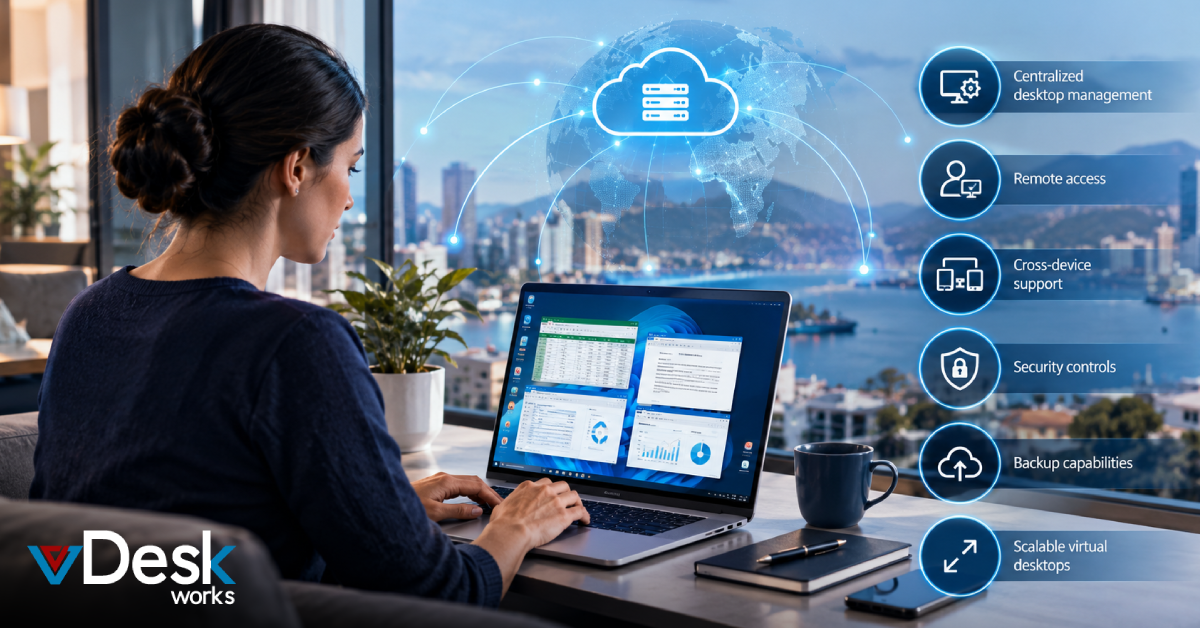
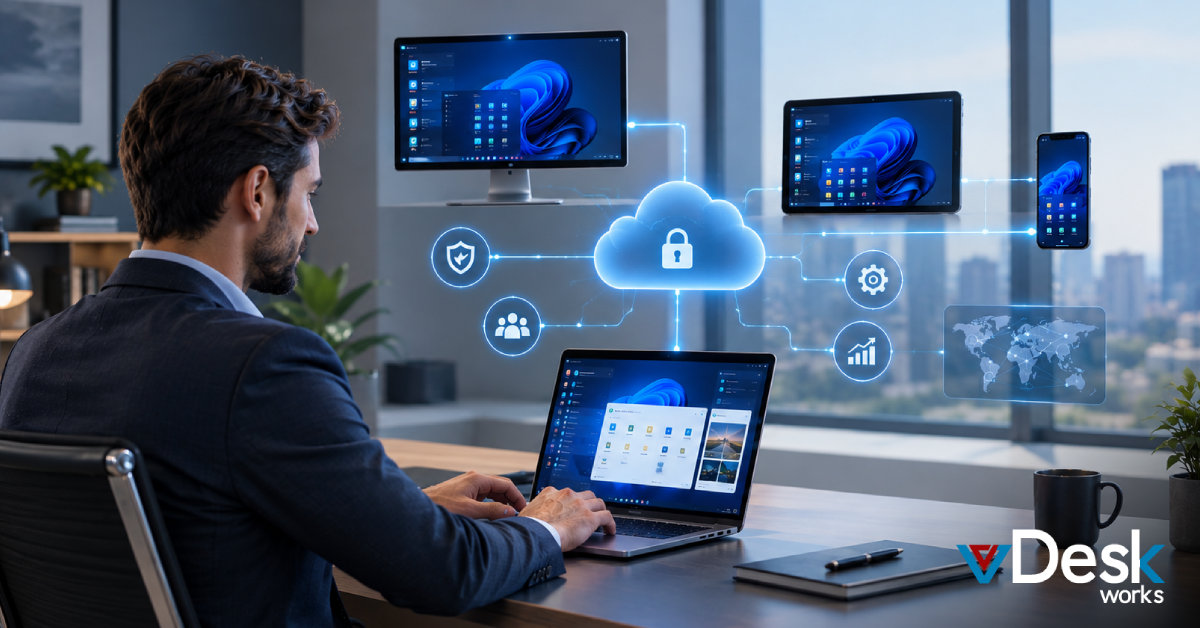
The hosted virtual desktop market has changed dramatically over the last few years. What was once considered a niche IT solution for large enterprises has now become a mainstream workspace strategy for businesses of all sizes.
Hybrid work, rising cybersecurity concerns, distributed teams, and cloud-first operations have accelerated the demand for flexible desktop environments that employees can access from anywhere. At the same time, businesses are looking for ways to simplify IT management while improving scalability and operational efficiency.
That shift is pushing hosted virtual desktops and Cloud PC environments into the center of modern workplace transformation.
Hybrid Work Is No Longer Temporary
One of the biggest drivers behind hosted virtual desktop adoption is the long-term rise of hybrid work.
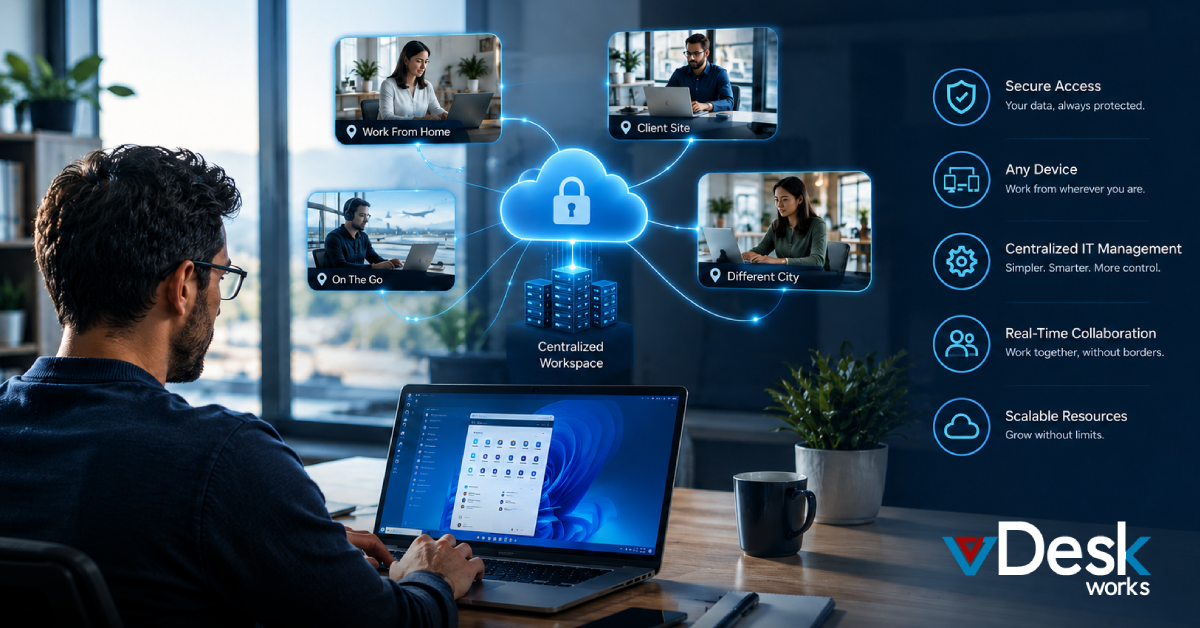
Businesses are no longer designing infrastructure around a single office location. Employees now expect to move between home, office, and remote environments without losing access to applications, files, or collaboration tools.
Traditional desktop setups struggle in this kind of environment because they rely heavily on physical devices and local infrastructure. Hosted virtual desktops solve that problem by centralizing the workspace in the cloud while allowing employees to securely access it from virtually any device.
This flexibility is becoming a standard expectation rather than a premium feature. Organizations increasingly want workspaces that remain consistent regardless of where employees log in from.
Cloud PC Is Replacing Complex VDI Infrastructure
Another major trend shaping the market is the movement away from highly complex on-premise VDI deployments toward simpler Cloud PC models.
Traditional VDI environments often require significant investments in servers, storage, networking, virtualization infrastructure, and ongoing IT maintenance. While effective for some enterprises, these environments can become difficult and expensive to scale.
Cloud PC environments simplify much of that complexity by delivering desktops as a managed cloud service instead of requiring businesses to build and maintain large infrastructure stacks internally.
This shift is especially attractive for SMBs and growing organizations that want enterprise-grade desktop environments without the operational burden tied to traditional virtualization deployments.
As cloud adoption continues growing, businesses are increasingly prioritizing operational simplicity alongside performance and security.
Security and Compliance Are Driving Faster Adoption
Cybersecurity concerns are also accelerating hosted virtual desktop adoption across industries.
With employees accessing business systems remotely, organizations face growing risks tied to endpoint security, unmanaged devices, ransomware attacks, and data leakage. Traditional desktop environments often leave sensitive information distributed across multiple local systems, which increases exposure.
Hosted virtual desktops centralize applications and data within managed cloud environments instead of storing information directly on endpoint devices. This gives IT teams better visibility, centralized access control, and simplified security management.
Industries like healthcare, finance, legal services, and government sectors are especially driving adoption because compliance requirements continue becoming stricter.
Businesses increasingly want workspace environments where security, backups, monitoring, and access management operate centrally rather than relying on individual devices.
GPU-Powered and AI-Driven Workspaces Are Growing Fast
Hosted virtual desktops are also evolving far beyond standard office productivity environments.
As industries adopt AI tools, 3D modeling, video editing, BIM workflows, and advanced simulations, demand for GPU-powered cloud desktops is growing rapidly. Businesses no longer want cloud workspaces limited to lightweight tasks — they want environments capable of handling graphics-intensive and compute-heavy workloads as well.
At the same time, AI-driven infrastructure management is becoming more common across hosted desktop environments. Automation tools are helping businesses optimize resource allocation, monitor performance proactively, detect security anomalies, and improve user experience without increasing IT overhead.
This combination of GPU acceleration and AI-assisted management is expected to play a major role in the next phase of hosted virtual desktop growth.
Why vDeskWorks Cloud PC Fits the Future of Hosted Workspaces?
This shift toward flexible, cloud-first work environments is exactly where vDeskWorks Cloud PC becomes highly relevant for modern businesses.
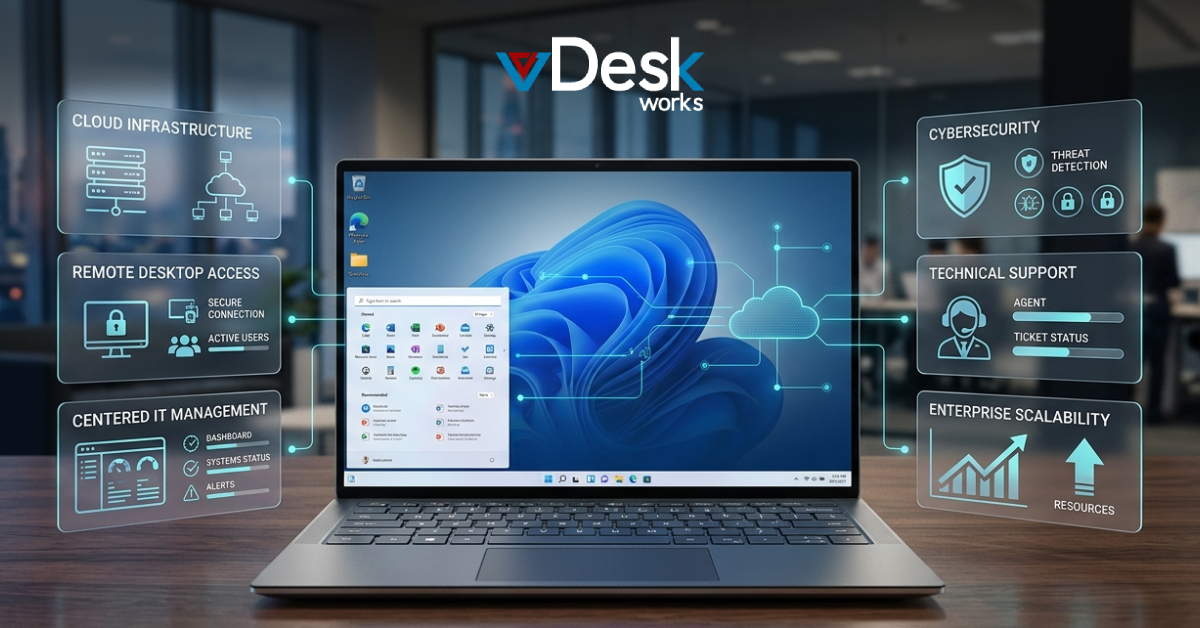
Instead of requiring organizations to maintain complex infrastructure internally, vDeskWorks delivers centralized Cloud PC environments designed for scalability, security, and accessibility. Teams can securely access desktops, applications, and files from virtually any device while maintaining a consistent user experience across locations.
What makes the approach especially practical is the ability to support multiple workload types within one environment. Businesses can run lightweight productivity workflows, remote operations, or even GPU-powered applications depending on user requirements.
As hosted virtual desktop adoption continues growing, organizations are increasingly prioritizing solutions that reduce IT complexity while still supporting performance, security, and hybrid work flexibility together.
Final Thoughts
The hosted virtual desktop market is evolving quickly because the way businesses work has fundamentally changed.
Hybrid work, cybersecurity demands, cloud adoption, GPU-powered applications, and AI-driven operations are all reshaping how organizations think about desktop infrastructure. Businesses no longer want environments tied to physical offices or rigid hardware lifecycles.
They want workspaces that are flexible, scalable, secure, and accessible from anywhere.
Hosted virtual desktops and Cloud PC environments are becoming central to that transformation because they align far more naturally with modern operational needs.
And as businesses continue moving toward cloud-first strategies, the future of workplace infrastructure will increasingly revolve around centralized digital workspaces rather than traditional desktops.
 Emma Carson