The way businesses operate has changed dramatically over the past several years. The rise of remote work, hybrid workplaces, cybersecurity concerns, and increasing operational costs have forced organizations to rethink how they deliver technology to employees. Small businesses, in particular, face unique challenges because they often have limited IT resources while still needing enterprise-level performance, security, and flexibility.
As organizations continue embracing digital transformation, Desktop Virtualization for Small Business has emerged as one of the most effective strategies for improving workforce productivity, reducing infrastructure costs, and supporting business continuity. By moving desktop environments into the cloud, businesses can provide employees with secure access to applications, files, and business systems from virtually anywhere. Solutions such as vDeskWorks Cloud VDI help organizations modernize their IT environments while simplifying management and improving operational efficiency.
The Growing Need for Flexible Work EnvironmentsThe way businesses operate has changed dramatically over the past several years. The rise of remote work, hybrid workplaces, cybersecurity concerns, and increasing operational costs have forced organizations to rethink how they deliver technology to employees. Small businesses, in particular, face unique challenges because they often have limited IT resources while still needing enterprise-level performance, security, and flexibility.
As organizations continue embracing digital transformation, Desktop Virtualization for Small Business has emerged as one of the most effective strategies for improving workforce productivity, reducing infrastructure costs, and supporting business continuity. By moving desktop environments into the cloud, businesses can provide employees with secure access to applications, files, and business systems from virtually anywhere. Solutions such as vDeskWorks Cloud VDI help organizations modernize their IT environments while simplifying management and improving operational efficiency.
The Growing Need for Flexible Work Environments
Modern employees expect the ability to work from different locations without sacrificing productivity. Whether working from home, traveling, or operating across multiple offices, users need reliable access to the same applications and data they would normally access in a traditional workplace.
Businesses are also looking for ways to:
- Improve workforce flexibility
- Reduce technology expenses
- Enhance security controls
- Support hybrid work initiatives
- Minimize operational disruptions
- Increase employee satisfaction
These changing requirements have accelerated the adoption of cloud-based desktop solutions.
What Is Desktop Virtualization for Small Business?
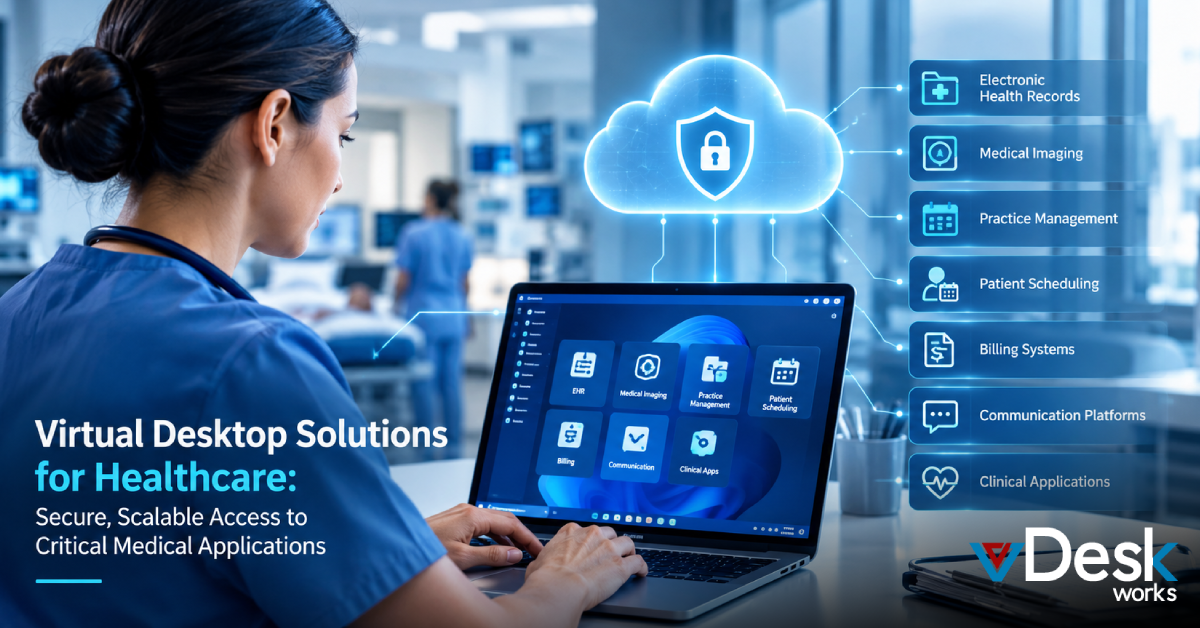
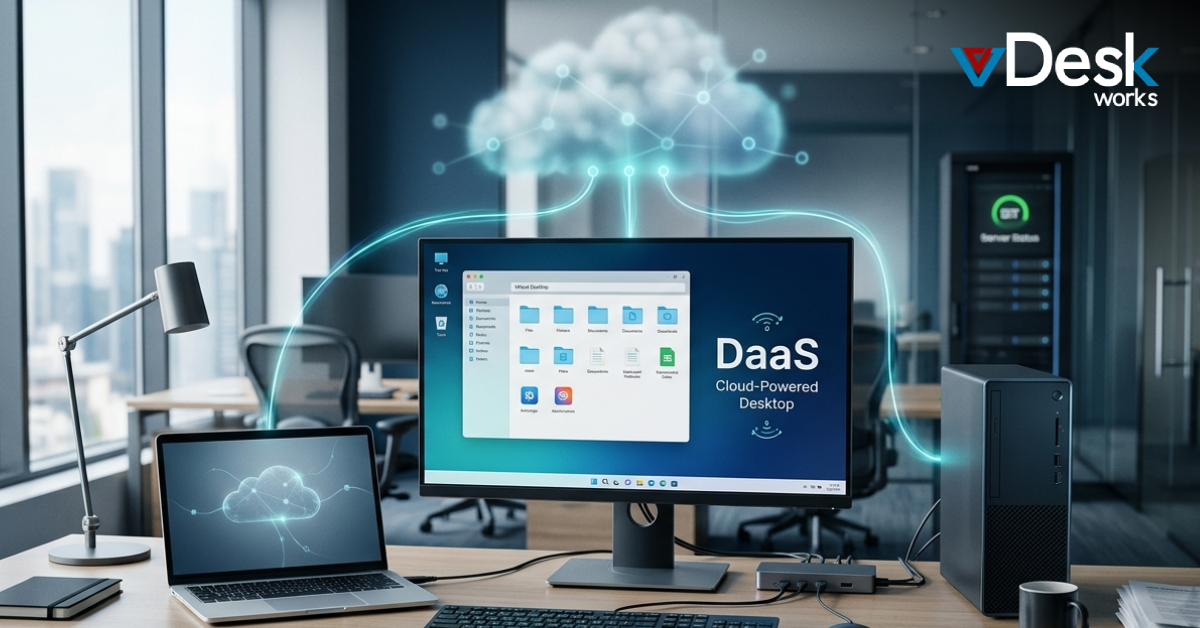
Desktop Virtualization for Small Business is a technology approach that separates desktop operating systems, applications, and user data from physical devices. Instead of relying on individual computers to store and run applications, desktop environments are hosted centrally and delivered through secure internet connections.
Employees can access their personalized workspaces from:
- Laptops
- Desktop computers
- Tablets
- Smartphones
- Thin clients
- Web browsers
This allows organizations to deliver a consistent and secure user experience regardless of location or device.
Why Traditional IT Infrastructure Is No Longer Enough
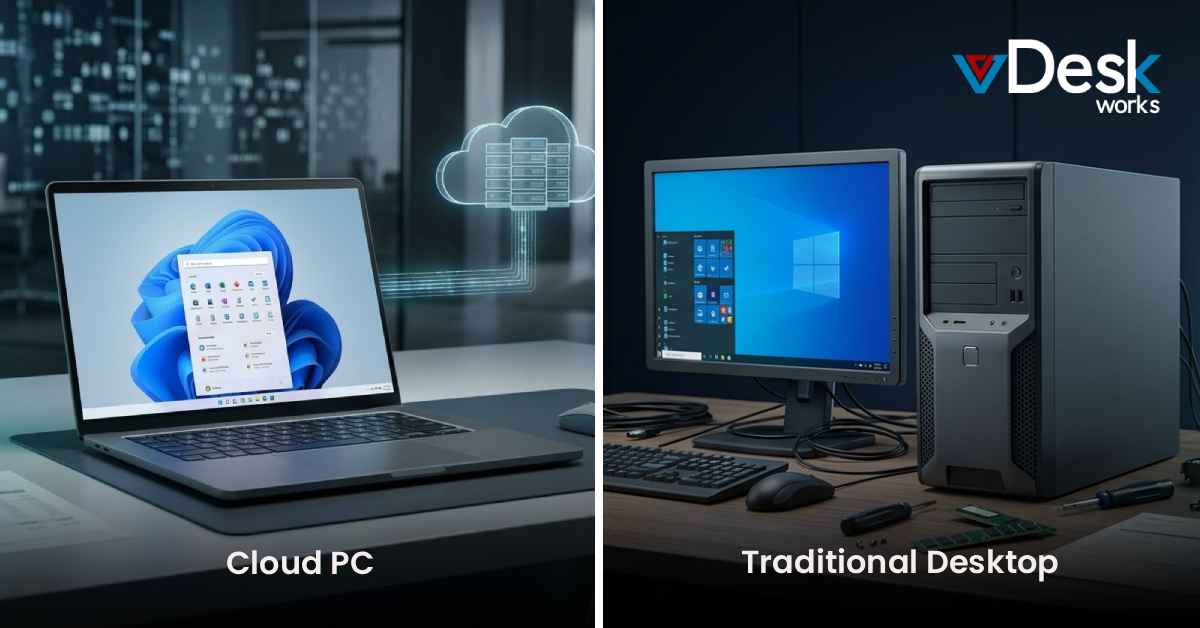
Many small businesses continue to depend on aging hardware and fragmented IT systems that were designed for office-based work environments.
Traditional infrastructure often creates several challenges:
- High Hardware Costs: Businesses must continually invest in purchasing, upgrading, and maintaining employee devices.
- Limited Mobility: Employees may struggle to access critical business resources outside the office.
- Increased Security Risks: Data stored locally on laptops and workstations is vulnerable to theft, loss, and cyberattacks.
- Complex IT Management: Managing multiple devices across various locations increases administrative workloads.
- Downtime Concerns: Hardware failures and system disruptions can significantly impact productivity.
As businesses become increasingly digital, these limitations can hinder growth and competitiveness.
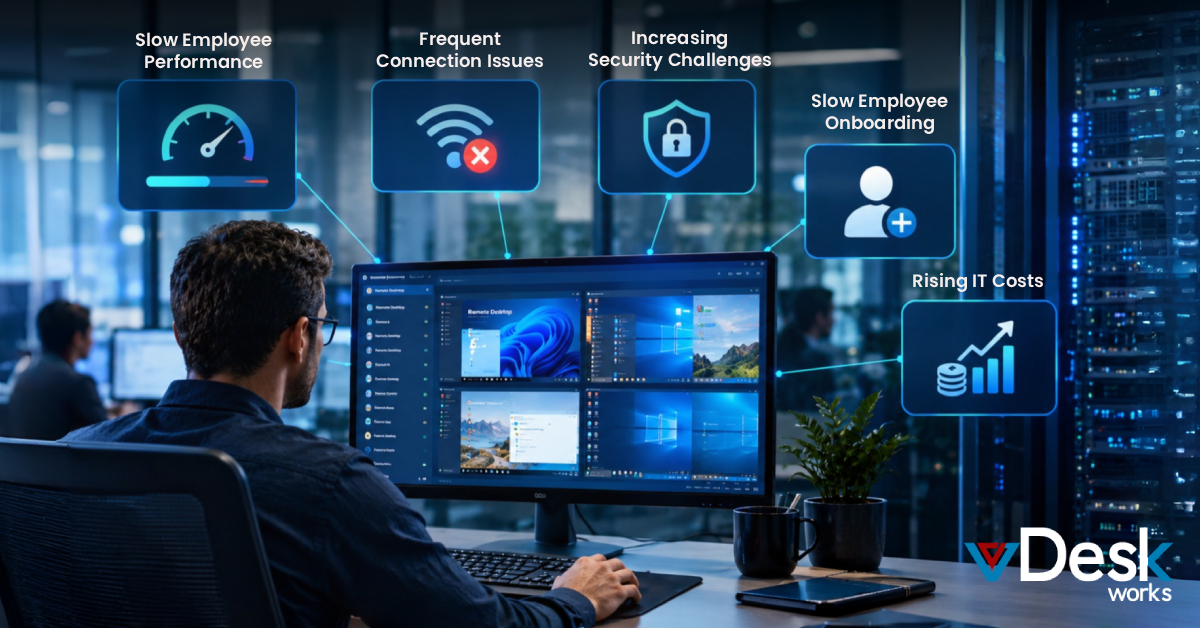
Key Challenges Small Businesses Face Today
Small businesses frequently encounter technology-related obstacles that affect efficiency and profitability.
These include:
- Rising IT expenses
- Remote workforce management
- Data security concerns
- Disaster recovery planning
- Employee onboarding challenges
- Limited IT staffing
- Application accessibility issues
- Business continuity risks
Desktop virtualization addresses many of these challenges through centralized management and cloud-based delivery.
How Desktop Virtualization Solves Modern Business Problems
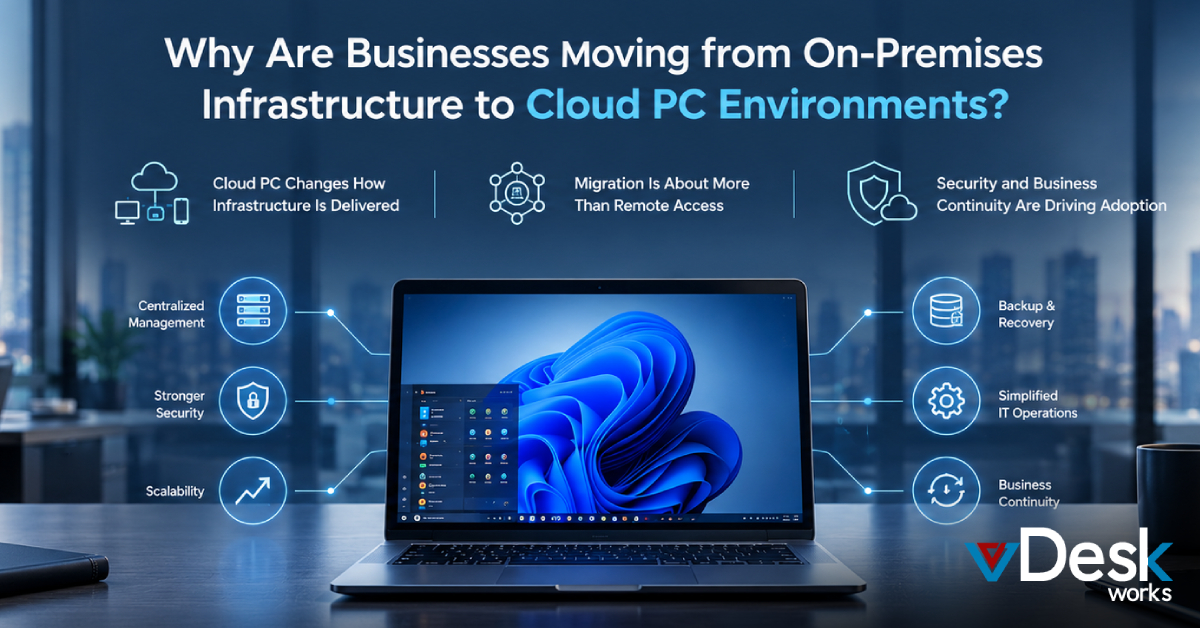
Implementing Desktop Virtualization for Small Business creates a more flexible and resilient technology environment. Instead of managing numerous physical workstations, businesses can centralize desktop delivery through cloud infrastructure. This allows IT teams to deploy, monitor, and secure user environments from a single platform.
The result is improved efficiency, enhanced security, and reduced operational complexity.
Major Benefits of Desktop Virtualization for Small Business
Reduced Hardware Expenses:
One of the most significant advantages of desktop virtualization is lower hardware investment. Since processing occurs within the cloud environment, businesses can extend the lifespan of existing devices or utilize cost-effective thin clients.
This reduces capital expenditures while maintaining high performance.
Key Benefits
- Lower equipment costs
- Extended device lifespan
- Reduced upgrade requirements
- Predictable technology spending
- Simplified IT Management
Managing traditional desktop environments can be time-consuming and resource-intensive.
Virtual desktop environments centralize administration, making it easier to:
- Deploy desktops
- Manage applications
- Apply security updates
- Configure user permissions
- Monitor performance
This significantly reduces administrative overhead.
Enhanced Security and Compliance
Security remains a top concern for organizations of every size. With Desktop Virtualization for Small Business, critical data remains within secure cloud environments rather than individual devices.
Security advantages include:
- Centralized data storage
- Secure user authentication
- Encrypted connections
- Access control management
- Reduced endpoint risk
Even if a laptop is lost or stolen, sensitive company information remains protected.
Faster Employee Onboarding
Hiring and onboarding new employees can be a lengthy process when organizations must configure physical hardware. Desktop virtualization allows businesses to create fully configured work environments within minutes.
New employees gain immediate access to:
- Business applications
- Shared resources
- Security policies
- User settings
This accelerates productivity from day one.
Improved Business Continuity
Unexpected disruptions can affect any organization. Natural disasters, cyberattacks, power outages, and hardware failures all have the potential to interrupt operations. Virtual desktop environments support continuity through:
- Cloud-hosted infrastructure
- Automated backups
- Disaster recovery capabilities
- Rapid restoration processes
Employees can continue working with minimal disruption.
Support for Remote and Hybrid Work
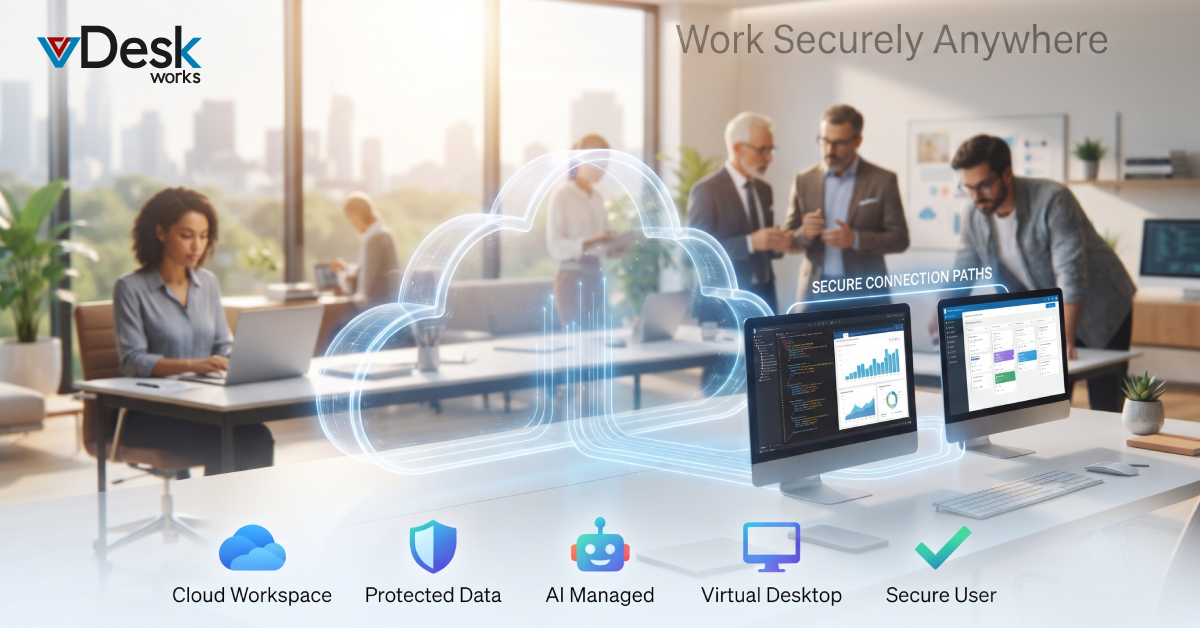
Desktop virtualization enables employees to securely access their work environment from virtually anywhere using any internet-connected device.
This helps organizations:
- Support remote teams
- Improve collaboration
- Increase workforce mobility
- Maintain productivity
Understanding Different Desktop Virtualization Models
Desktop as a Service (DaaS)
Desktop as a Service is one of the most popular deployment models for small businesses. Under this approach, a provider hosts and manages the virtual desktop infrastructure while businesses focus on users, applications, and operations.
Advantages include:
- Lower upfront costs
- Rapid deployment
- Simplified management
- Easy scalability
Virtual Desktop Infrastructure (VDI)
VDI provides dedicated virtual desktops hosted on centralized servers. This model offers greater control but often requires additional infrastructure and IT expertise.
Organizations typically choose VDI when they require:
- Advanced customization
- Greater administrative control
- Dedicated desktop environments
Session-Based Virtualization
Session-based virtualization allows multiple users to share a centralized operating system while maintaining separate sessions.
Benefits include:
- Lower resource consumption
- Cost efficiency
- Simplified management
This option is often suitable for task-oriented work environments.
How vDeskWorks Cloud VDI Helps Small Businesses Thrive
vDeskWorks provides a comprehensive cloud VDI platform designed to help businesses modernize desktop delivery while reducing IT complexity. By combining cloud infrastructure, security, management tools, and business continuity capabilities, vDeskWorks enables organizations to create flexible work environments that support growth and operational efficiency.
Businesses can provide employees with secure access to applications and data from virtually any location while maintaining centralized control.
Why Cloud VDI Is the Future of Small Business Technology
The future workplace demands flexibility, security, and scalability. Businesses can no longer rely solely on traditional desktop environments that limit mobility and increase operational costs. Cloud VDI platforms provide a modern alternative by delivering secure, accessible, and centrally managed workspaces that support both current and future business requirements. As organizations continue investing in digital transformation, desktop virtualization will remain a critical component of sustainable growth strategies.
Conclusion
The modern business landscape requires technology solutions that support workforce mobility, improve security, simplify IT operations, and ensure business continuity. Desktop Virtualization for Small Business addresses these needs by delivering secure virtual workspaces that can be accessed from anywhere, on virtually any device. vDeskWorks empowers organizations with a comprehensive Cloud VDI platform that combines affordability, scalability, disaster recovery, centralized management, GPU-powered performance, and enterprise-grade security. By embracing desktop virtualization, small businesses can reduce costs, improve productivity, and build a resilient technology foundation capable of supporting long-term success.
 Emma Carson