We are living in a time where computers are really powerful. This is because of something called GPU acceleration. It helps do lots of things at the time like working with artificial intelligence making pictures and videos and doing simulations. The market for GPUs is going to be really big; it will be worth $592 billion by 2033. This shows how important the GPU is for doing tasks on computers.
Businesses need computer systems that can handle a lot of work and are easy to manage.. When they have to manage all their computer equipment in their own offices it takes up a lot of time and money from their information technology team.
A workstation network that uses a Graphics Processing Unit or GPU has end desktop computers with professional Graphics Processing Units, Central Processing Units and storage. This is useful for people who do things like design three objects, edit videos and work with machine learning. These computers are very good at what they do. They need to be watched all the time.
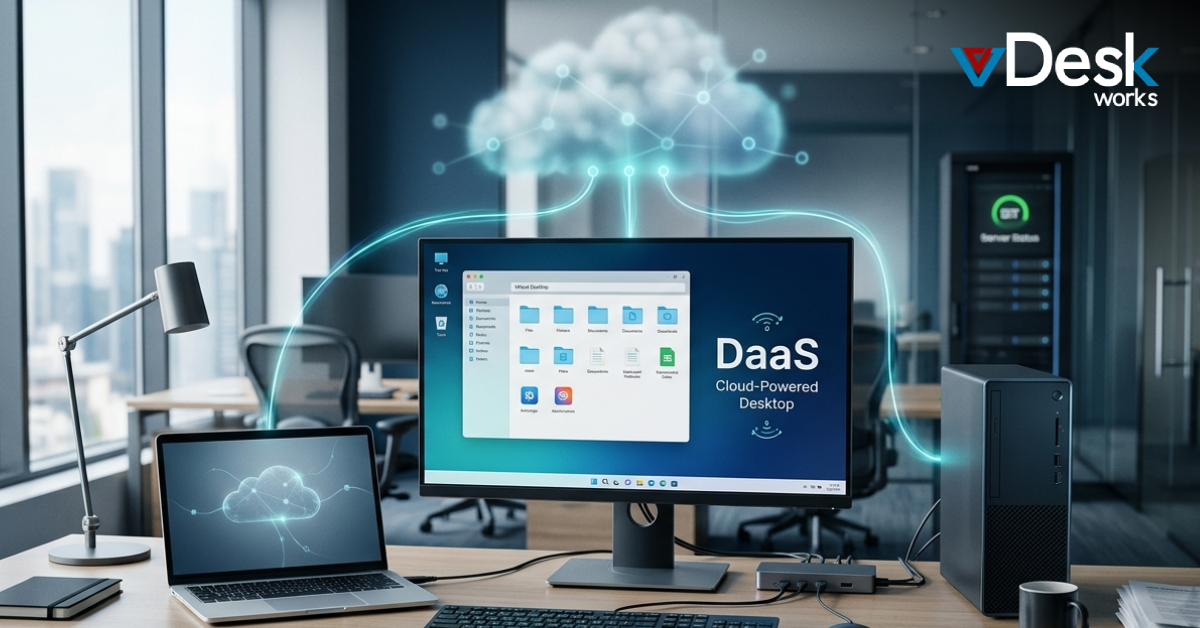
VDeskWorks (www.vdeskworks.com) is a company that makes this easier by using the cloud to make desktops, with Graphics Processing Units. This means that the computers can be managed in a way so people can focus on being creative and coming up with new ideas.
Core Components of a GPU Network
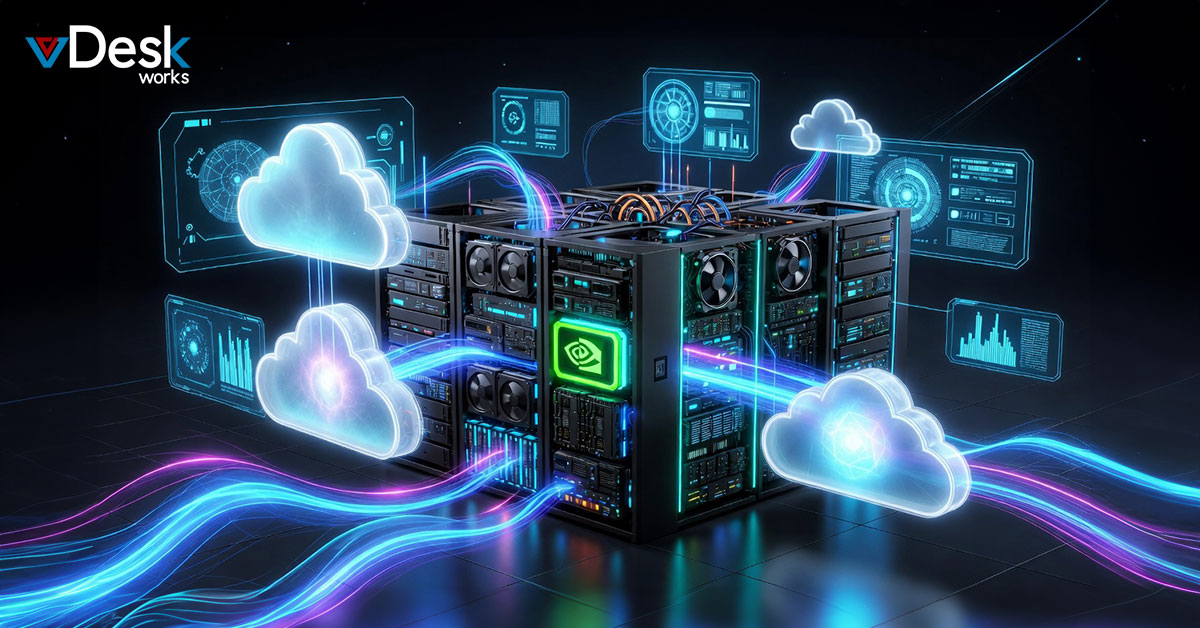
The important things you need are computer workstations with NVIDIA A100 and H100 cards. These workstations also have processors with many cores. They use something called NVLink to help multiple graphics cards work together. You also need fast network cards, like ConnectX-7. These cards use something called RoCE to keep the network traffic separate and running smoothly and quickly.
Leaf-spine topologies are really good for making sure data flows freely. They use 100GbE switches so that everything can move quickly. The paths that store data work well with cloud systems. This means that the computers can work without getting bogged down. There are tools, like Kubernetes or Slurm that help manage everything. These tools make sure that tasks are scheduled and that everything is working correctly. They also help many users share the system at the time. Leaf-spine topologies and these tools work together to make the system run smoothly.
Setting Up and Managing Your Network
So you want to set up something on your premises. This on-premise setup needs the hardware to work together. You need to make sure the PCIe lanes and power supplies match up. You also need to cool things down with liquid because the setup uses a lot of power we are talking about kilowatts here. If you want to work with others and share things directly from your graphics cards you should get a network that uses RDMA. This way your graphics cards can talk to each other directly in collaborations with RDMA-enabled networks for graphics card access, in these collaborations.
The software stack is made up of Linux and NVIDIA drivers and CUDA and containers like Docker. This helps to keep things consistent. Schedulers are used to distribute resources to the software stack. DCGM is used to track how much the software stack is being used.
Security is very important for the software stack. This is done by keeping things separate and having controls in place.
VDeskWorks helps with all of this. It allows the software stack to be scaled up instantly without having to spend a lot of money upfront on things, like equipment. This means that the software stack can be scaled up quickly and easily.
Troubleshooting Common Issues
We have to deal with some problems when we use computers. One of these problems is that the GPU is not being used when it should be because the CPU and RAM are too slow. We need to keep an eye on this to make sure it does not cause any issues with the computer.
When the computer gets too hot it can make the performance worse by thirty percent.. If we use a good cooling system we can prevent this from happening.
Another problem is that the network can be slow when we are doing tasks that need a lot of computers to work together. To fix this we need to make sure that each task has its path on the network so they do not get in the way of each other. This is called traffic isolation for network tasks. We need traffic isolation for distributed tasks to prevent network lags, in distributed tasks.
Software problems can make things crash. This is because they do not work together. We should use containers to make them work together smoothly. These problems are a hassle, for the IT people.. Vdeskworks VDI is different. It watches for problems before they happen. It can fix them very quickly. This means that vDeskWorks VDI can help the IT people a lot. Software mismatches are an issue but vDeskWorks VDI and its containers can really help with that.
Embracing GPU VDI with vDeskWorks
The company uses GPU VDI pools to get resources for virtual desktops when they need them, which helps to cut down on costs and use resources better. VDeskWorks is a tool that lets you set up GPUs in just a few minutes and it also has features like elastic scaling, encrypted security and dashboards that are easy to understand. This makes it really useful for GPU VDI pools. Helps with things like utilization and costs, for GPU VDI pools.
You can have fast access to the things you need and get help at any time with vDeskWorks. This makes your infrastructure really useful. If you want a lot of power from your computers and you need it to work around the world then you should choose vDeskWorks, for its strong global GPU power.
In essence, GPU networks unlock potential but pose management hurdles. vDeskWorks' VDI delivers performance without pain—start at www.vdeskworks.com.
 Jerry Clark