In today’s fast-evolving digital landscape, businesses must be ready to grow, adapt, and respond to changing demands instantly. This is where scalability in cloud computing becomes essential. Whether you're running applications, storing data, or enabling remote work, scalability ensures your IT infrastructure can handle it all—without disruption.
More importantly, solutions like Cloud Desktop take scalability to the next level by offering flexible, on-demand computing environments accessible from anywhere.
Understanding Scalability in Cloud Computing
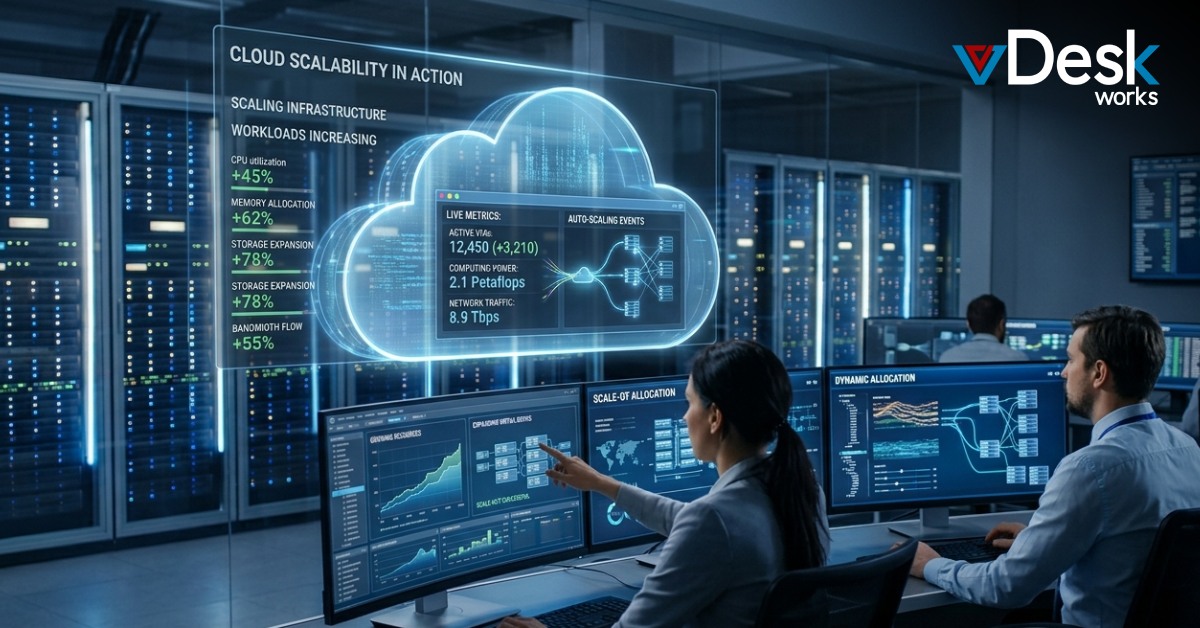
Scalability in cloud computing refers to the ability of a system to increase or decrease its resources based on workload demands. This means businesses can expand computing power, storage, or network capacity whenever needed—without investing in physical hardware.
Unlike traditional systems, where upgrades require time and capital, cloud-based environments allow instant scaling. Whether you're handling peak traffic or reducing resources during downtime, scalability ensures efficiency and performance remain intact.
When integrated with a Cloud Desktop, scalability becomes even more powerful. Employees can access high-performance desktops without worrying about hardware limitations, while IT teams can scale resources centrally.
Why Scalability Matters for Modern Businesses?
Business needs are never constant. Traffic spikes, seasonal demand, and business expansion all require flexible infrastructure. Scalability ensures that your systems can handle these fluctuations smoothly.
For example, an e-commerce company may experience massive traffic during a sale. Without scalable infrastructure, systems may crash, leading to lost revenue. With scalable cloud solutions, additional resources are automatically allocated to handle the load.
A Cloud Desktop enhances this further by ensuring that remote employees experience consistent performance—even during peak usage. Instead of upgrading individual systems, businesses can scale desktop environments instantly.
Types of Scalability in Cloud Computing
There are three primary types of scalability:
1. Vertical Scalability (Scaling Up)
Vertical scaling involves increasing the capacity of an existing system by adding more CPU, RAM, or storage.
This approach is simple and effective for improving performance quickly. However, it has limitations since a single machine can only be upgraded to a certain extent.
In a Cloud Desktop environment, vertical scaling ensures users get enhanced performance without changing devices—everything is handled in the cloud.
2. Horizontal Scalability (Scaling Out)
Horizontal scaling adds more machines or servers to distribute the workload.
This method is ideal for handling large-scale applications or high traffic. It improves reliability because workloads are distributed across multiple systems.
With Cloud Desktop, horizontal scaling allows organizations to onboard new employees instantly by provisioning additional virtual desktops without delays.
3. Diagonal Scalability
Diagonal scaling combines both vertical and horizontal approaches, offering maximum flexibility.
It allows systems to scale up first and then scale out when needed, ensuring optimal performance and cost efficiency.
A Cloud Desktop solution leverages diagonal scalability to provide both power and flexibility, adapting to dynamic business needs seamlessly.
Benefits of Scalability in Cloud Computing
1. Cost Efficiency
Scalability helps businesses avoid over-investing in infrastructure. You only pay for what you use, reducing unnecessary expenses.
With Cloud Desktop, companies eliminate the need for expensive hardware upgrades and maintenance.
2. Improved Performance
Scalable systems ensure consistent performance, even during peak demand.
A Cloud Desktop ensures that users experience high-speed performance regardless of device specifications.
3. Business Continuity
Scalable cloud environments are designed to handle failures and maintain uptime.
When paired with Cloud Desktop, employees can continue working from any location without interruptions.
4. Flexibility and Agility
Scalability allows businesses to adapt quickly to market changes and growth opportunities.
A Cloud Desktop supports this agility by enabling remote access and centralized management.
5. Better Resource Utilization
Resources are allocated efficiently, ensuring no wastage during low-demand periods.
This makes Cloud Desktop an ideal solution for businesses with fluctuating workloads.
Real-World Use Case of Scalability
Imagine a growing startup expanding its workforce rapidly. Setting up physical desktops for each employee would be costly and time-consuming.
With a scalable Cloud Desktop, the company can instantly provide virtual desktops to new hires. As the team grows, resources are scaled accordingly. If demand decreases, resources can be reduced—ensuring cost optimization.
This flexibility makes Cloud Desktop a powerful tool for modern organizations embracing hybrid and remote work models.
How Cloud Desktop Enhances Scalability?
While cloud computing provides the foundation for scalability, Cloud Desktop transforms how businesses utilize it.
Here’s how:
- Instant Deployment: Launch virtual desktops in minutes
- Centralized Management: Scale resources from a single dashboard
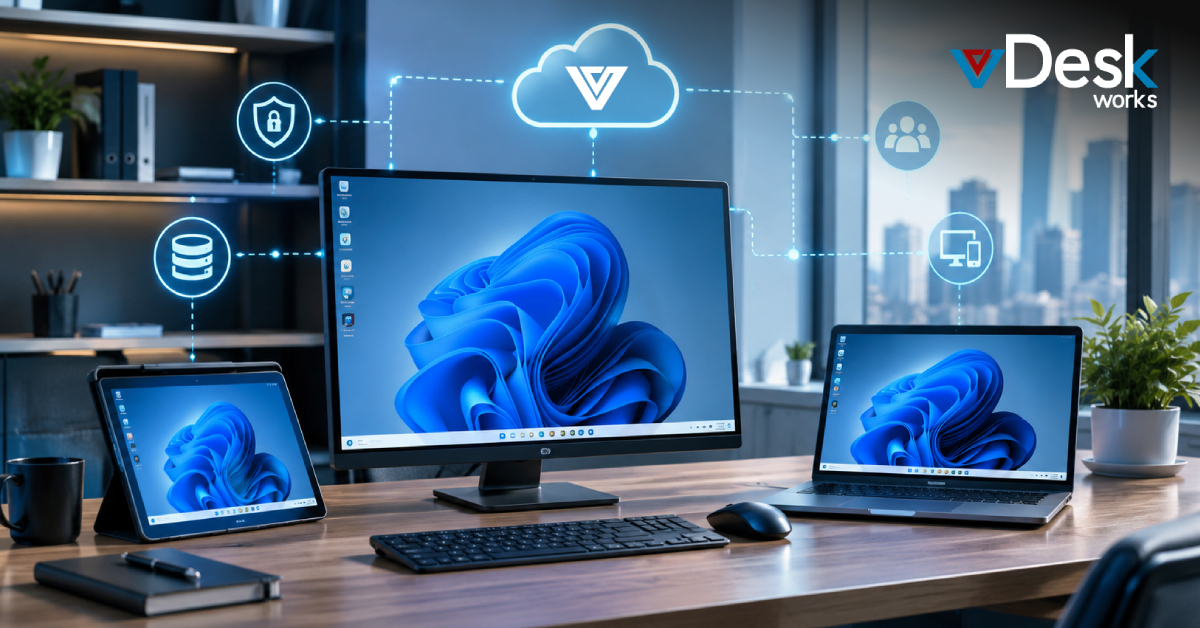
- Device Independence: Access desktops from any device
- Secure Environment: Data remains in the cloud, reducing risks
- Seamless Performance: Scale resources without affecting users
By combining scalability with desktop virtualization, Cloud Desktop ensures businesses stay productive, secure, and future-ready.
Why Choose vDeskWorks Cloud Desktop?
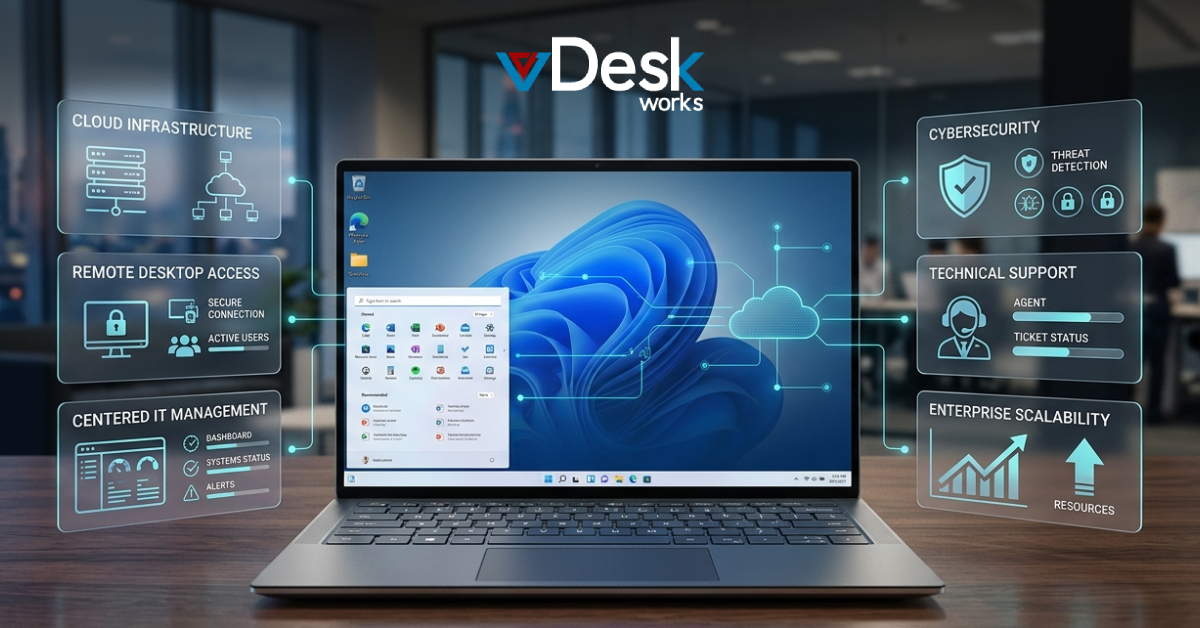
When it comes to combining scalability, performance, and simplicity, vDeskWorks Cloud Desktop stands out as a reliable solution for modern businesses. Designed to support organizations of all sizes, vDeskWorks enables seamless access to fully managed virtual desktops that scale effortlessly with your needs.
With vDeskWorks Cloud Desktop, businesses can eliminate the complexity of traditional IT infrastructure and focus on growth. Whether you’re onboarding new employees, managing remote teams, or expanding operations, vDeskWorks ensures your desktop environment is always ready.
Key Advantages of vDeskWorks Cloud Desktop
- On-Demand Scalability: Instantly scale resources up or down based on your business requirements without downtime.
- High Performance: Experience fast, reliable desktop environments powered by enterprise-grade infrastructure.
- Secure Access: Advanced security protocols ensure your data remains protected in a centralized cloud environment.
- Cost Optimization: Reduce capital expenditure on hardware and pay only for what you use.
- Remote Accessibility: Enable your workforce to access their desktops anytime, anywhere, on any device.
vDeskWorks Cloud Desktop is especially beneficial for industries that require flexibility, such as IT services, education, healthcare, and startups. It empowers teams to collaborate efficiently while maintaining control and security.
Scale Smarter with vDeskWorks Cloud Desktop
As your business grows, your IT infrastructure should grow with you—not hold you back. vDeskWorks Cloud Desktop provides the scalability and agility needed to adapt to changing demands without compromising performance.
 Jerry Clark