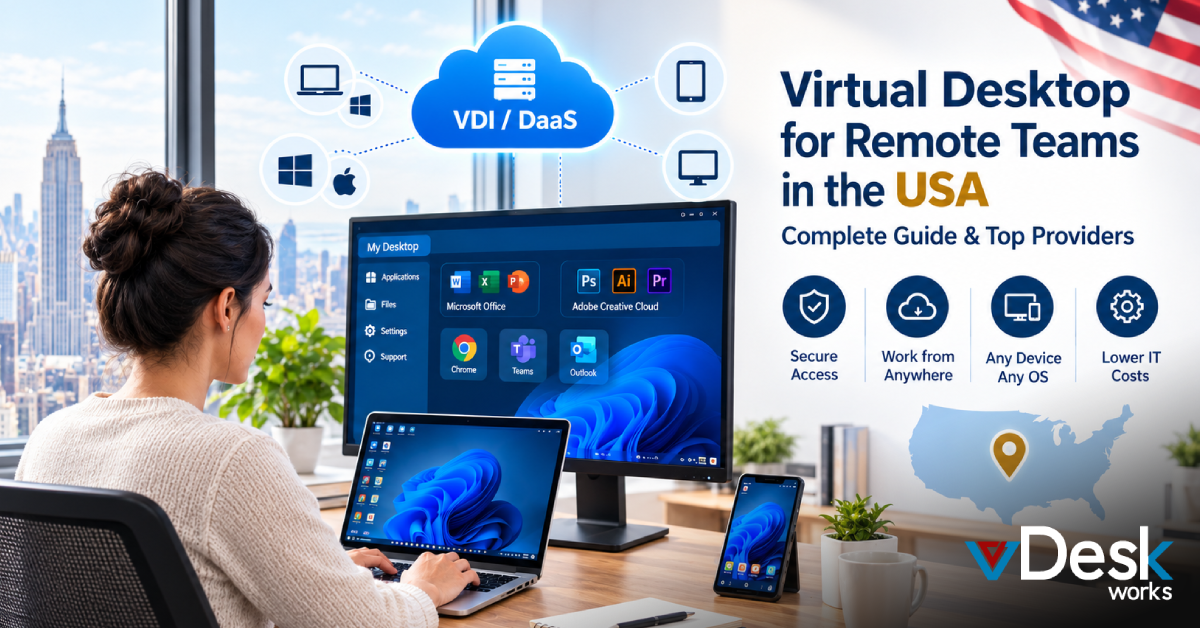
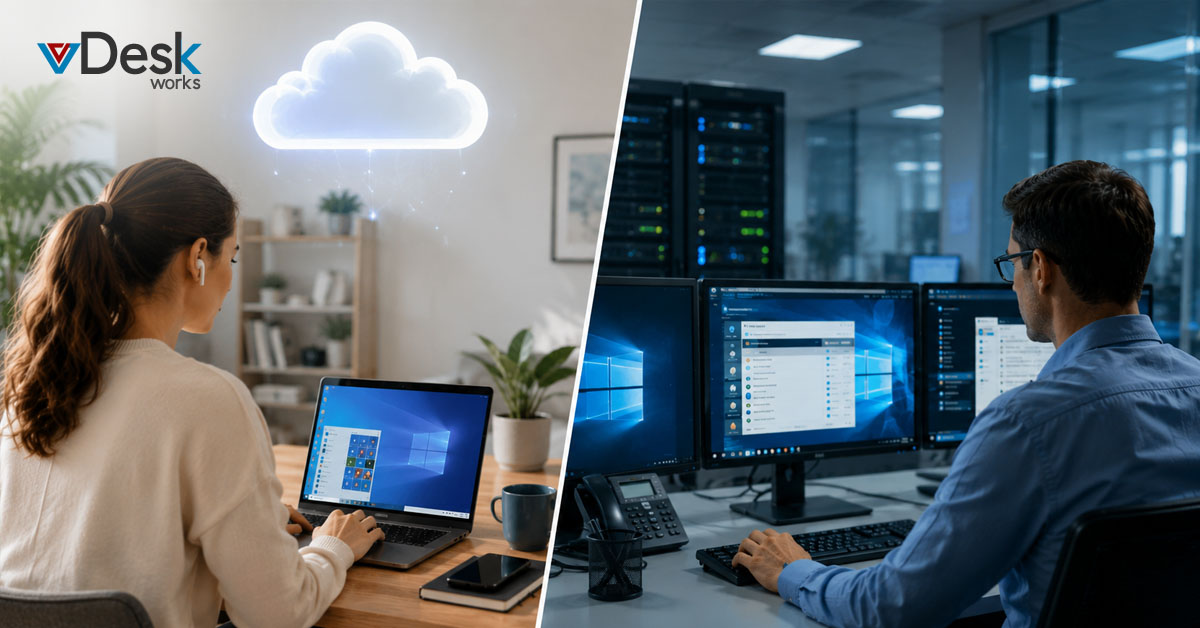
As organizations embrace hybrid work, the way desktops are delivered is undergoing a major transformation. Employees are no longer tied to offices, and IT environments are no longer confined to on-premise systems. Instead, businesses are operating in hybrid ecosystems—where cloud and local infrastructure coexist, and flexibility is key.
In this evolving landscape, solutions like Windows 365 and Azure Virtual Desktop (AVD) are helping enterprises deliver virtual desktops from the cloud. But while both serve similar purposes, they represent two very different approaches to hybrid cloud strategy.
Understanding these differences is essential for building a scalable, secure, and future-ready digital workplace.
Hybrid Work Demands a New IT Foundation
Hybrid work has become the norm rather than the exception. Employees expect to work from anywhere, on any device, without compromising performance or security. At the same time, organizations must maintain control over data, applications, and compliance.
This has led to the rise of hybrid cloud environments, where some workloads run in the cloud while others remain on-premise. The challenge lies in creating a seamless experience across these layers without increasing complexity.
Virtual desktops have emerged as a bridge between these worlds, enabling consistent access regardless of location.
Simplicity vs Control: Two Approaches to Cloud Desktops
Windows 365 and Azure Virtual Desktop reflect two different philosophies in delivering cloud desktops.
Windows 365 focuses on simplicity. It provides a fully managed Cloud PC experience where each user gets a dedicated virtual desktop. This makes deployment straightforward and predictable, especially for organizations that want minimal IT involvement.
Azure Virtual Desktop, on the other hand, prioritizes flexibility. It allows businesses to customize infrastructure, optimize costs, and design environments tailored to specific needs. This makes it more powerful, but also more complex to manage.
The choice between the two often comes down to how much control an organization needs versus how much simplicity it prefers.
Where Standardization Works Best
For many organizations, a standardized environment is the most practical solution. Windows 365 delivers consistency by providing the same experience across users, devices, and locations.
This approach works particularly well for roles that require predictable performance and minimal customization. It simplifies onboarding, reduces configuration errors, and ensures that employees can start working immediately without technical barriers.
However, this standardization can become a limitation when organizations need more flexibility or want to optimize resources dynamically.
Where Flexibility Becomes Critical?
In more complex hybrid environments, flexibility becomes essential. Azure Virtual Desktop allows organizations to design infrastructure that aligns with specific workloads, whether it's high-performance computing, development environments, or shared resources.
This adaptability is valuable for enterprises with diverse needs. It enables cost optimization through resource sharing and allows IT teams to fine-tune performance based on usage patterns.
At the same time, this level of control requires expertise and ongoing management, which can increase operational overhead.
The Reality of Hybrid IT Complexity
While both solutions offer strong capabilities, they also highlight a broader challenge in hybrid IT environments—complexity.
Managing multiple platforms, ensuring consistent security policies, and integrating cloud and on-premise systems can quickly become difficult. Organizations often find themselves balancing trade-offs between ease of use, control, and cost efficiency.
This complexity can slow down innovation and place additional pressure on IT teams, especially as businesses scale.
Moving Toward a Unified Hybrid Experience
Rather than choosing between simplicity and flexibility, many organizations are now looking for ways to unify their approach.
A hybrid strategy often involves using different solutions for different use cases. Standard users may rely on simpler environments, while specialized teams use more advanced configurations.
The key is integration—ensuring that all systems work together seamlessly without creating silos or inconsistencies.
Why vDeskWorks Cloud PC Simplifies Hybrid Environments?
For businesses navigating the challenges of hybrid work, vDeskWorks Cloud PC offers a more streamlined path forward.
Instead of forcing a choice between rigid simplicity and complex customization, vDeskWorks delivers a balanced approach. It provides fully managed cloud desktops that are easy to deploy while still offering the flexibility needed to support diverse workloads.
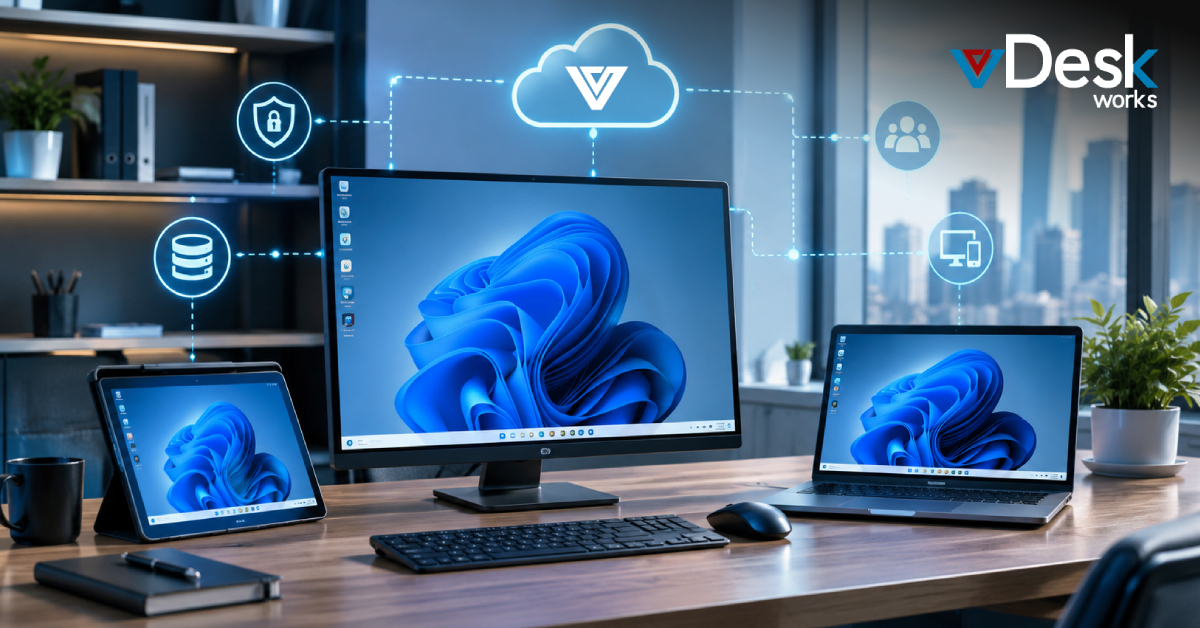
With vDeskWorks Cloud PC, organizations can create consistent environments across all users without sacrificing scalability. Desktops can be provisioned instantly, managed centrally, and accessed securely from any device.
This reduces the burden on IT teams and eliminates much of the complexity associated with managing multiple platforms. At the same time, it ensures that employees experience a seamless and reliable workspace, whether they are working remotely or on-site.
By aligning with hybrid work requirements, vDeskWorks enables businesses to transition toward a more unified and efficient IT model.
The Future of Hybrid Work is Seamless and Cloud-Driven
As hybrid work continues to evolve, the need for flexible, secure, and scalable desktop solutions will only grow. Traditional virtual desktop approaches have laid the foundation, but they often require trade-offs between simplicity and control.
The next phase of this evolution lies in solutions that remove these trade-offs altogether.
vDeskWorks Cloud PC technology is leading this shift by delivering environments that are consistent, accessible, and easy to manage. It allows organizations to focus less on infrastructure and more on productivity, collaboration, and growth.
In a world where hybrid is the standard, success will depend on how effectively businesses can simplify complexity while maintaining flexibility. That is the direction modern Cloud PC solutions are moving toward—and it is redefining what hybrid work truly means.
 Admin
Admin