For years, Remote Desktop Services (RDS) was the default solution for delivering Windows applications and desktops remotely. It gave organizations a way to centralize access and support remote users long before hybrid work became the norm.
But in 2026, RDS is no longer keeping up.
What once felt like a practical solution is now showing clear limitations in performance, scalability, and security. As organizations evolve, they are not just looking for replacements—they are rethinking the entire model of how work is delivered.
The Problem Isn’t RDS—It’s the Era It Was Built For
RDS was designed for a different kind of workplace. It assumed controlled environments, predictable usage, and primarily office-based teams. That model no longer exists.
Today’s work environments are distributed, dynamic, and device-agnostic. Employees expect seamless access from anywhere, across devices, without performance drops or complex setups.
RDS struggles in this context. High bandwidth usage, inconsistent application performance, and growing security concerns make it harder to justify as a long-term solution.
The issue is not that RDS is broken—it is that it was never designed for how work happens today.
Why Are Organizations Actively Moving Away from RDS?
The shift away from RDS is not driven by a single limitation. It is the result of multiple friction points that compound over time.
Performance degradation under heavy workloads, difficulty scaling environments, and the need for constant maintenance all contribute to rising operational costs. At the same time, security risks associated with remote access protocols have become harder to ignore.
Even simple limitations—like restricted user controls or dependency on manual IT intervention—can slow down operations in fast-moving organizations.
These challenges push businesses to explore alternatives that align better with modern expectations.
The Rise of Specialized Alternatives
As RDS limitations become more visible, a range of alternatives has emerged, each designed to address specific use cases.
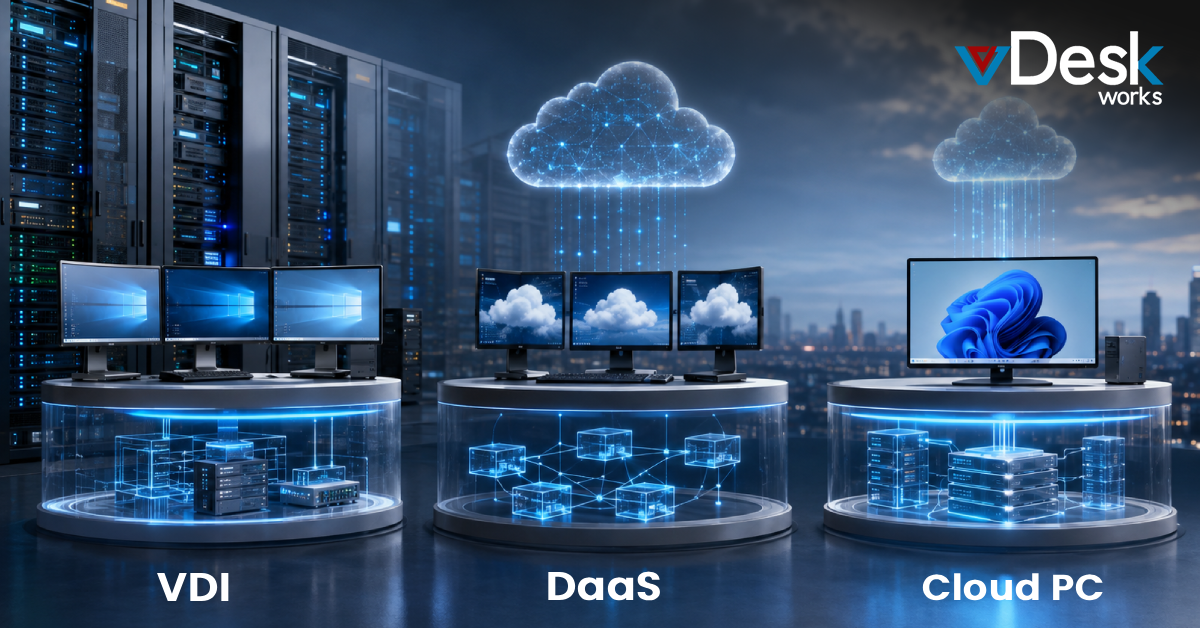
Solutions like application publishing platforms focus on delivering individual apps efficiently, while enterprise-grade platforms offer full virtual desktop environments with advanced customization. Cloud-native solutions provide scalability and global accessibility without heavy infrastructure.
Each of these options solves a part of the problem. Some prioritize cost efficiency, others focus on performance or flexibility.
But most still carry some level of complexity, especially when integrating with existing systems or scaling across regions.
Complexity is Still the Hidden Challenge
While alternatives to RDS improve performance and flexibility, many of them introduce a different kind of challenge—complexity.
Enterprise-grade platforms often require specialized expertise to deploy and manage. Hybrid environments demand careful configuration to maintain consistency. Even cloud-native solutions can become difficult to control when spread across multiple services.
This creates a new problem. Organizations move away from RDS to simplify operations, but end up managing equally complex systems in a different form.
The real need is not just replacement—it is simplification.
Cloud PC Solution Changes the Equation Entirely
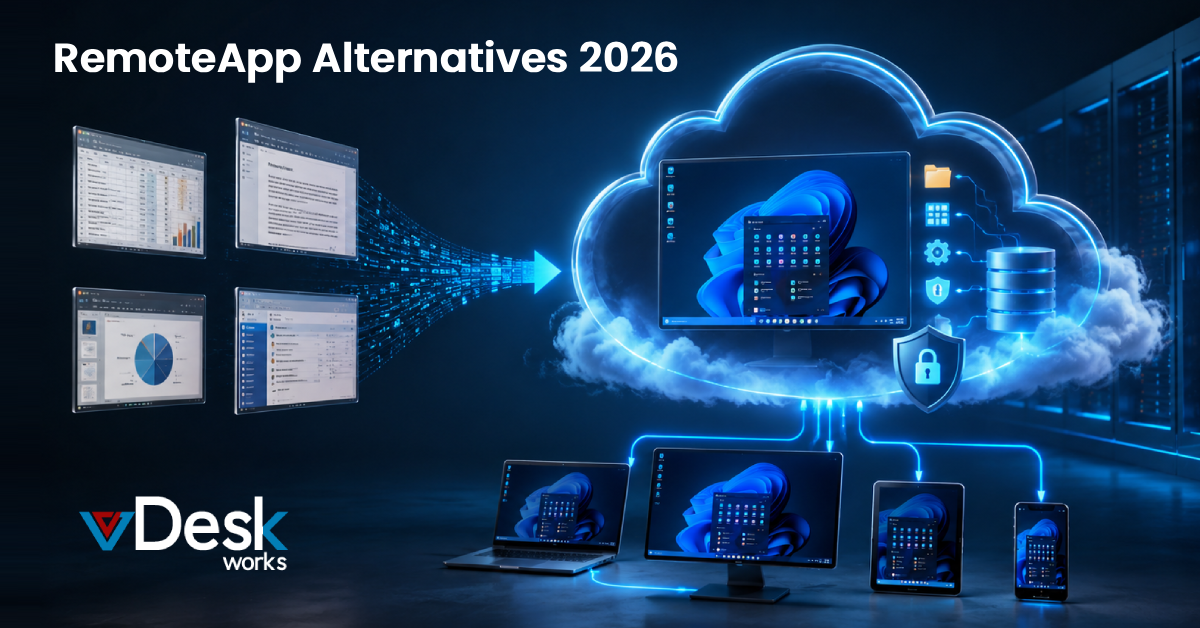
Cloud PC Solution represents a shift away from both traditional RDS and complex alternatives. Instead of focusing on application delivery or infrastructure layers, it delivers a complete desktop environment through the cloud.
This eliminates many of the challenges associated with RDS. There is no dependency on session-based architecture, no need for complex server management, and no inconsistency across user environments.
Everything is centralized, consistent, and accessible from anywhere.
Cloud PC Solution also aligns naturally with hybrid work. It allows users to access the same environment across devices and locations, without performance trade-offs or configuration overhead.
Rather than replacing RDS with another workaround, it replaces the model itself.
Why vDeskWorks Cloud PC Solution is the Smarter Alternative?
For organizations looking to move beyond RDS without inheriting new complexity, vDeskWorks Cloud PC Solution offers a modern and practical solution.
vDeskWorks delivers full desktop environments through the cloud, eliminating the limitations of session-based systems. Users get a consistent, high-performance experience regardless of device or location.
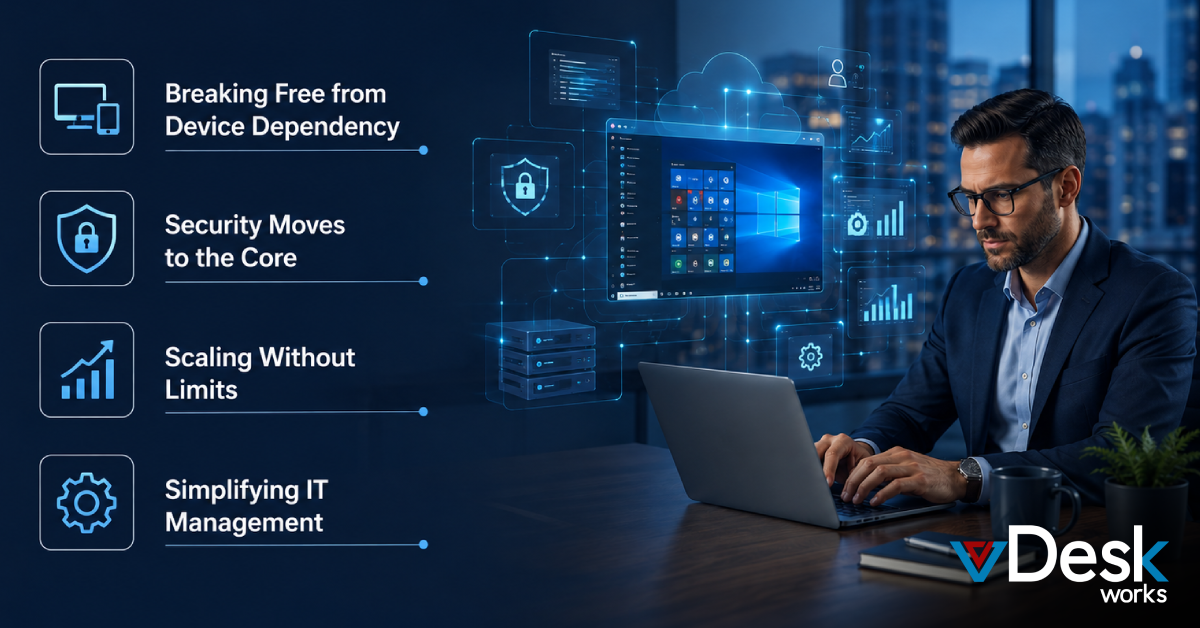
From an IT perspective, vDeskWorks simplifies management by centralizing control. There is no need to maintain multiple servers, manage session hosts, or troubleshoot device-level issues. Everything is handled from a single platform.
Security is also strengthened, as data and applications remain within the cloud environment rather than being distributed across endpoints.
Most importantly, vDeskWorks scales effortlessly. Whether supporting a small team or a global workforce, it adapts without requiring infrastructure changes.
This combination of simplicity, performance, and scalability makes it a clear step forward from both RDS and its traditional alternatives.
The Shift is Bigger Than Technology
The move away from RDS is not just about replacing one tool with another. It reflects a broader transformation in how organizations think about work.
The focus is shifting from managing infrastructure to delivering experiences. From maintaining systems to enabling productivity. From reacting to issues to building environments that prevent them.
Cloud PC Solution fits into this shift naturally because it simplifies the entire stack.
The Future is Not an Upgrade—It’s a Replacement
Many organizations approach RDS alternatives as upgrades. But the reality is that the future of work requires a different foundation.
Trying to modernize RDS often leads to incremental improvements without solving the core problem. True transformation comes from adopting models designed for today’s needs.
Cloud PC Solution is that model.
It does not just improve remote access—it redefines it.
And for organizations ready to move beyond legacy systems, the question is no longer which RDS alternative to choose.
It is whether to keep replacing old systems—or finally move to something built for the future. Request for a live demo now.
 Emma Carson