As we move deeper into 2026, cybersecurity is no longer just an IT concern—it has become a business survival priority. The threat landscape is evolving rapidly, driven by artificial intelligence, cloud dependencies, and increasingly sophisticated cybercriminal operations. Organizations that rely on outdated security models are finding it harder than ever to keep up.
To stay ahead, businesses must not only understand the latest cybersecurity trends but also adopt modern infrastructure solutions like Cloud PCs, which are designed to minimize risk while maximizing control.
Let’s explore the key cybersecurity trends shaping 2026—and how Cloud PC solutions fit into the future of secure computing.
1. AI is Fueling Both Cyberattacks and Cyber Defense
Artificial intelligence is now at the center of cybersecurity evolution. Attackers are leveraging AI to automate phishing campaigns, create deepfake identities, and scan systems for vulnerabilities at scale. At the same time, defenders are using AI to detect threats faster and respond more efficiently.
This dual-use nature of AI creates a high-speed cyber arms race. Businesses must be prepared for attacks that are not only faster but also smarter and more targeted.
Where Cloud PC Helps:
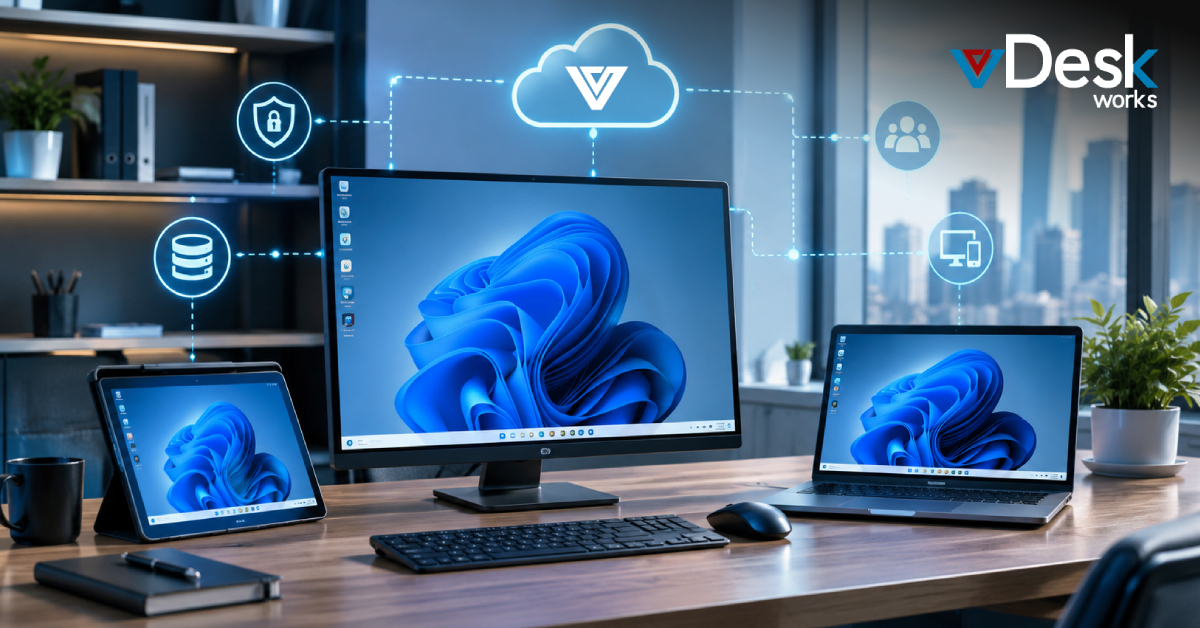
Cloud PCs centralize computing environments, allowing AI-driven security tools to monitor and protect all user activity from a single control plane. Instead of defending hundreds of endpoints individually, organizations can secure one unified environment.
2. Identity-Based Attacks Are Replacing Traditional Breaches
Cybercriminals are shifting their focus from breaking into networks to exploiting identities. Stolen credentials, deepfake impersonations, and session hijacking are becoming the most effective attack vectors.
Traditional perimeter-based security is no longer enough. Once attackers gain access to a user account, they can move freely within systems.
Where Cloud PC Helps:
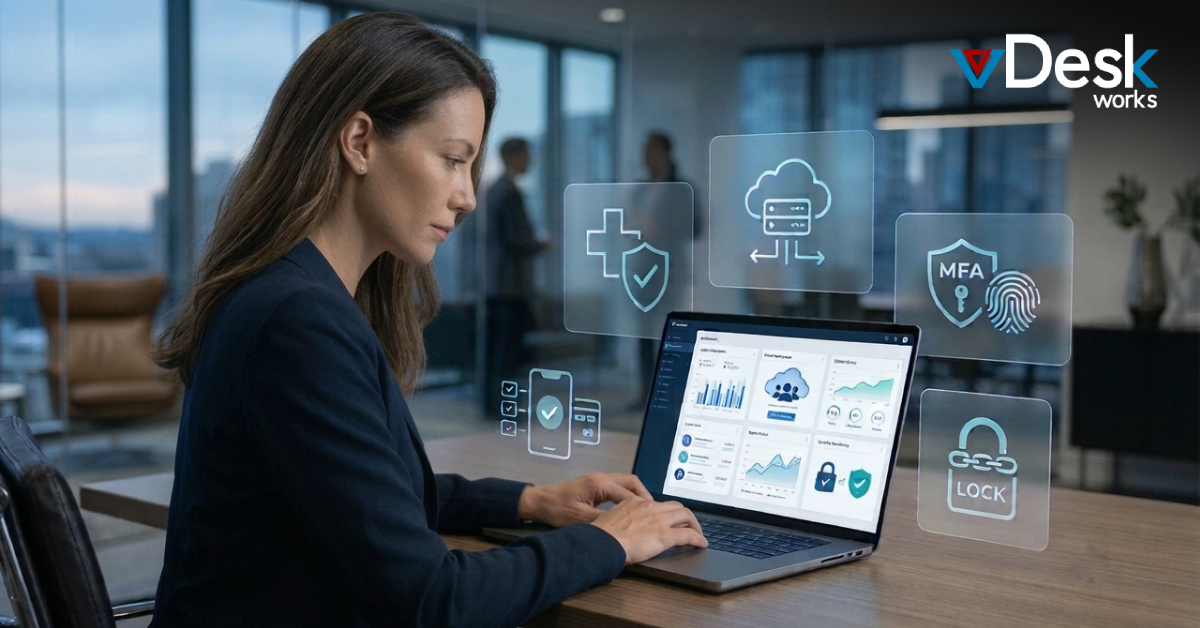
Cloud PCs enforce strict identity and access controls. Features like multi-factor authentication, session isolation, and zero-trust access ensure that even if credentials are compromised, attackers cannot easily exploit them.
3. Ransomware is More Sophisticated Than Ever
Ransomware continues to dominate the threat landscape, but it has evolved into a highly organized business model. Cybercriminal groups now operate like enterprises, offering ransomware-as-a-service and targeting critical infrastructure.
These attacks are no longer random—they are precise, data-driven, and financially motivated.
Where Cloud PC Helps:
With Cloud PCs, data is stored in secure cloud environments rather than on local devices. This significantly reduces the risk of data encryption attacks. Even if a device is compromised, the core system remains untouched, enabling quick recovery and business continuity.
4. Cloud Dependency is Increasing Risk—and Responsibility
Organizations are relying more on cloud platforms than ever before. While this improves scalability and collaboration, it also introduces concentration risk—where a single failure can impact multiple systems.
Misconfigurations, weak access controls, and third-party vulnerabilities are becoming major entry points for attackers.
Where Cloud PC Helps:
Unlike traditional cloud setups, Cloud PCs are designed with security-first architecture. They offer controlled environments where configurations are standardized, monitored, and continuously updated—reducing the risk of human error.
5. Cybercrime is Becoming Industrialized
Cybercrime is no longer the work of isolated hackers. It has evolved into a global ecosystem with tools, marketplaces, and services that make launching attacks easier than ever.
From phishing kits to exploit-as-a-service platforms, attackers now have access to enterprise-grade capabilities without needing advanced skills.
Where Cloud PC Helps:
Cloud PCs reduce the attack surface by limiting exposure of endpoints. Since applications and data reside in the cloud, there are fewer entry points for attackers to exploit.
6. Remote Work is Expanding the Attack Surface
Hybrid and remote work models are here to stay—but they come with security challenges. Employees access sensitive data from personal devices, unsecured networks, and multiple locations.
This distributed environment makes it difficult for IT teams to maintain visibility and control.
Where Cloud PC Helps:
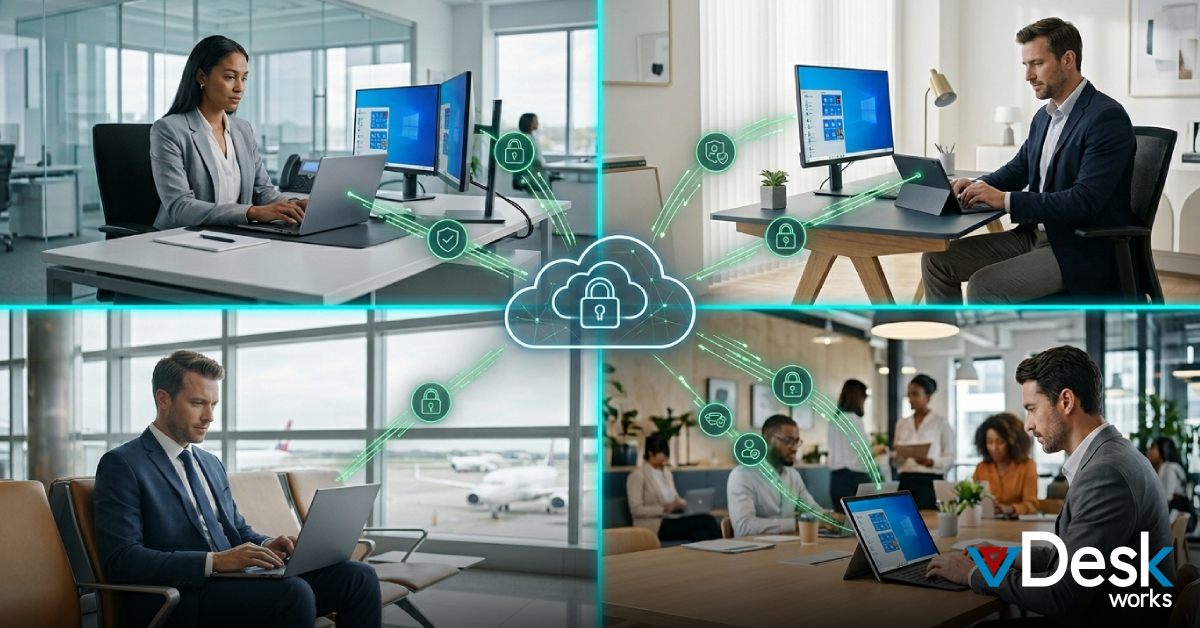
Cloud PCs enable secure remote work by keeping all data and applications in a centralized environment. Employees can access their work desktops from anywhere, while IT teams retain full control over security policies, updates, and monitoring.
7. Cyber Resilience is the New Priority
In 2026, organizations are shifting from prevention to resilience. It’s no longer about stopping every attack—it’s about ensuring that businesses can recover quickly when incidents occur.
Downtime, data loss, and reputational damage are now the biggest concerns for leadership teams.
Where Cloud PC Helps:
Cloud PCs are built for resilience. With automatic backups, rapid provisioning, and centralized management, businesses can restore operations quickly after an incident—minimizing disruption.
Why Choose vDeskWorks Cloud PC for Cybersecurity in 2026?
While many Cloud PC solutions exist, vDeskWorks Cloud PC solution stands out as a powerful, business-ready platform designed specifically to tackle modern cybersecurity challenges.
Here’s how vDeskWorks strengthens your security posture:
1. Centralized Data Protection
All your business data stays securely in the cloud rather than on local devices, significantly reducing risks of theft, loss, or ransomware attacks.
2. Advanced Access Controls
vDeskWorks integrates multi-factor authentication and role-based access to ensure only authorized users can access critical systems.
3. Endpoint Independence
Even if a user’s device is compromised, your core data and applications remain safe within the secure Cloud PC environment.
4. Built-in Backup & Disaster Recovery
With automated backups and quick restore capabilities, vDeskWorks ensures business continuity even after cyber incidents.
5. Scalable & Secure Remote Work
Whether your team is working from home, office, or on the go, vDeskWorks provides a secure and consistent desktop experience.
6. Reduced IT Complexity
By shifting to a Cloud PC model, businesses can eliminate the need for managing multiple endpoints, patches, and security layers manually.
Final Words: Cloud PC is the Future of Cybersecurity
The cybersecurity landscape in 2026 is defined by speed, complexity, and constant change. Traditional security approaches—focused on endpoints and perimeter defenses—are no longer sufficient.
Cloud PC solutions offer a fundamental shift in how organizations approach security:
- Centralized control instead of scattered endpoints
- Built-in security instead of layered patchwork solutions
- Faster recovery instead of prolonged downtime
As threats continue to evolve, businesses must rethink their infrastructure. Adopting a Cloud PC is not just a technological upgrade—it’s a strategic move toward a more secure, resilient, and future-ready organization.
If you’re looking to stay ahead of cyber threats in 2026 and beyond, investing in a Cloud PC solution like vDeskWorks could be the smartest decision you make.
 Emma Carson