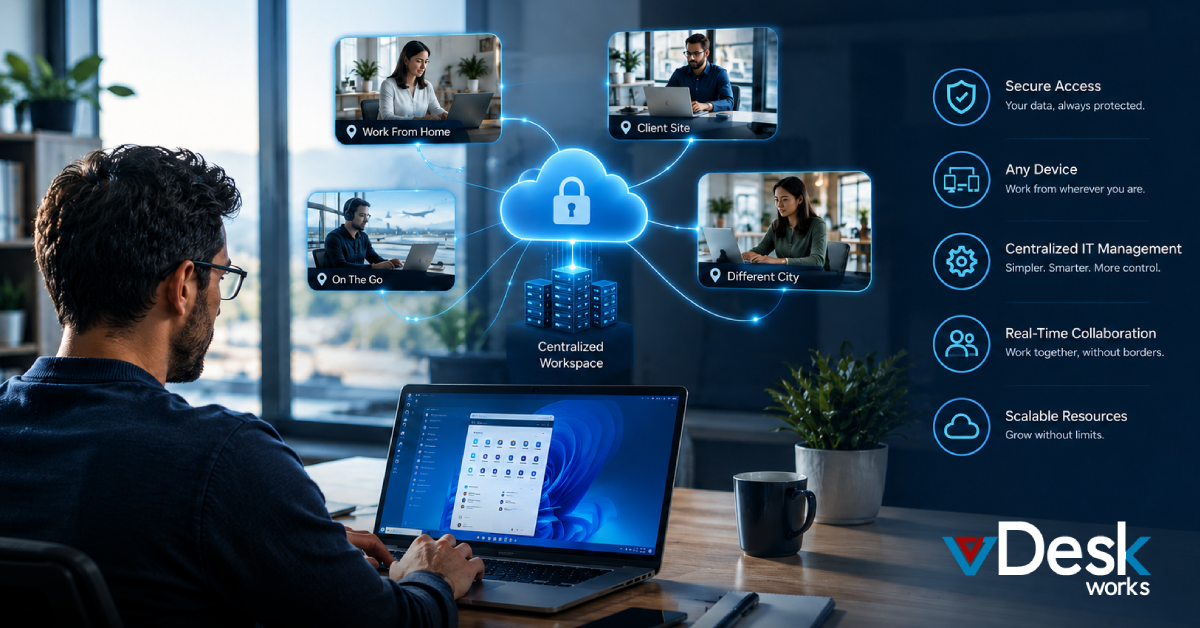
The way businesses operate has changed significantly over the past few years. Work is no longer confined to office spaces, and employees are expected to stay productive across multiple locations and devices. This shift has created new challenges for organizations trying to maintain consistency, security, and performance while supporting a distributed workforce.
Traditional desktop environments, whether physical or virtual, often struggle to meet these expectations. They either lack flexibility or introduce complexity that slows down operations. As a result, many organizations are now turning to Virtual Desktops as a more practical and future-ready solution.
Virtual Desktops represents a new approach to delivering workspaces. Instead of relying on local devices or layered virtual environments, it provides a complete desktop experience directly through the cloud. This allows users to access their work from a nywhere while giving IT teams greater control over how those environments are managed.
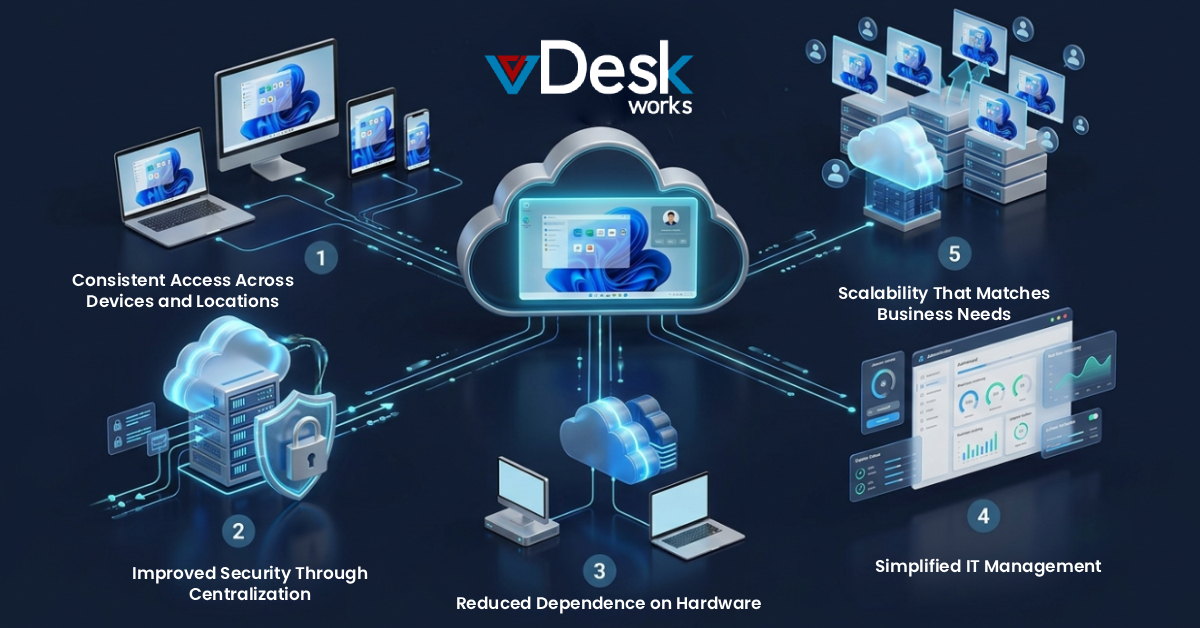
Consistent Access Across Devices and Locations
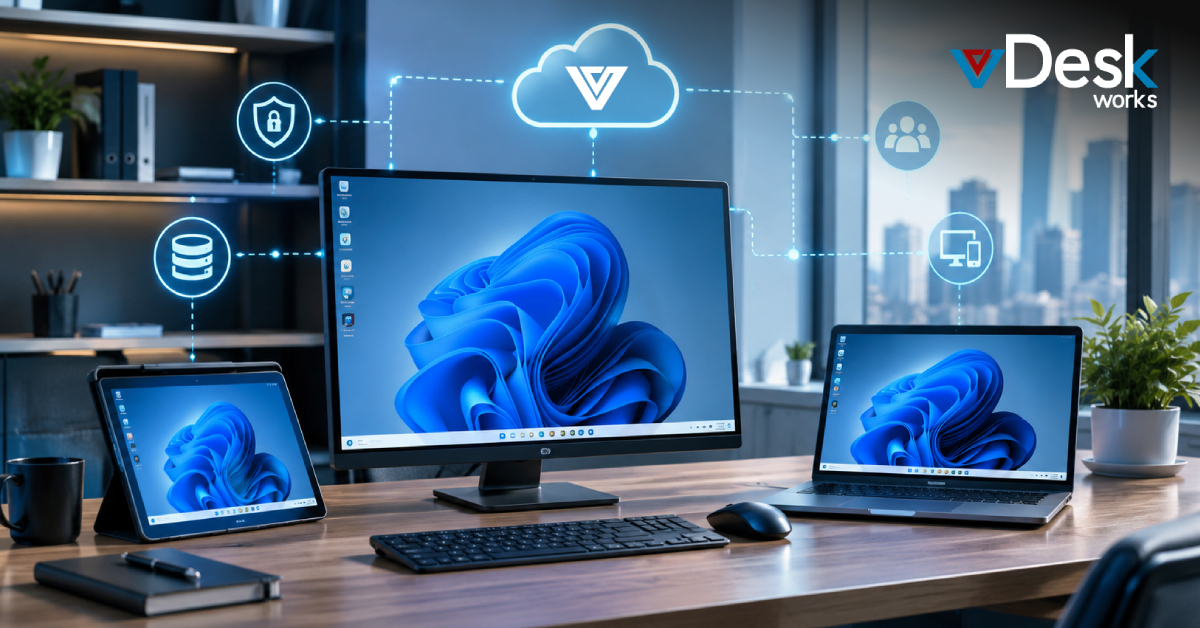
One of the biggest advantages of Virtual Desktops is the ability to deliver a consistent experience regardless of where or how users access their desktops. Employees no longer need high-performance machines to run demanding applications. Instead, the computing power is delivered through the cloud, ensuring that performance remains stable across devices.
This consistency is particularly valuable for organizations with remote or hybrid teams. Whether an employee is working from home, traveling, or using a personal device, their workspace remains the same. This eliminates compatibility issues and reduces the time spent troubleshooting device-related problems.
Improved Security Through Centralization
Security remains a top priority for businesses, especially as cyber threats continue to evolve. Traditional setups often store data on individual devices, increasing the risk of loss or unauthorized access. Managing security across multiple endpoints can be both complex and time-consuming.
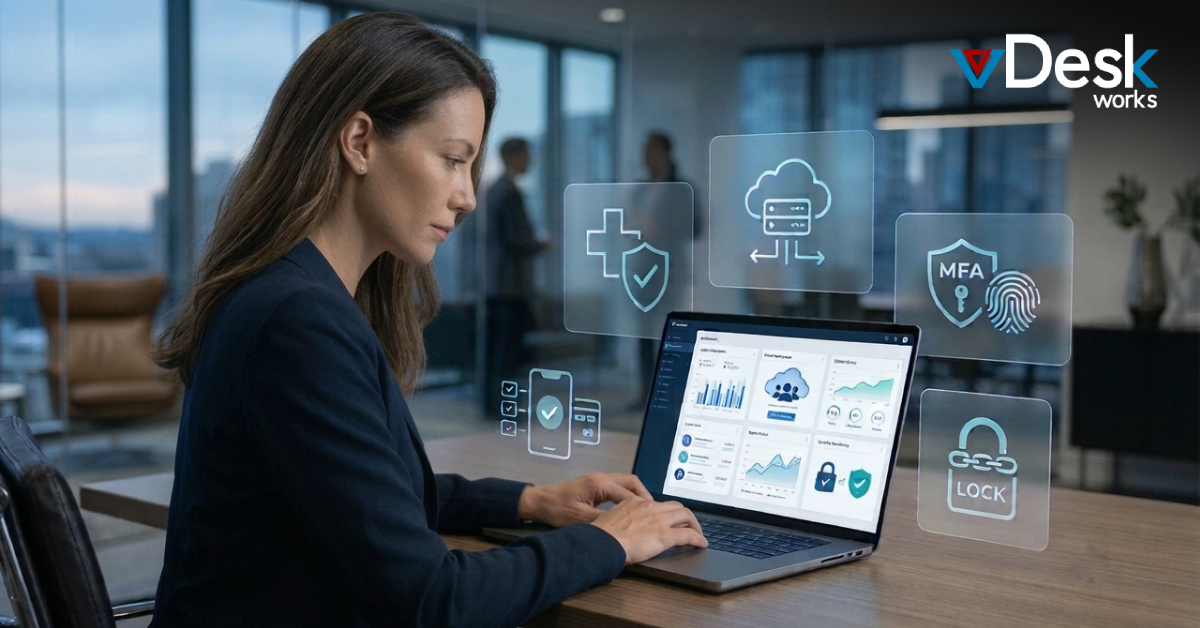
Virtual Desktops addresses this challenge by centralizing data and applications within a controlled environment. Instead of being stored locally, sensitive information remains in the cloud, where it can be protected through advanced security measures and access controls.
This centralized approach reduces the attack surface and makes it easier for IT teams to enforce policies, monitor activity, and respond to potential threats. It also simplifies compliance with regulatory requirements, which is increasingly important for organizations handling sensitive data.
Reduced Dependence on Hardware
Hardware management has long been a significant cost and operational burden for organizations. Devices need to be purchased, maintained, upgraded, and eventually replaced. For growing businesses, these costs can add up quickly.
Virtual Desktops reduces this dependency by shifting the focus away from physical devices. Since the desktop environment is hosted in the cloud, users can access it from almost any device, including lower-spec machines.
This not only lowers hardware costs but also extends the lifespan of existing devices. Organizations can invest less in equipment while still delivering high-performance work environments to their teams.
Simplified IT Management
Managing traditional desktop environments often involves handling multiple layers of infrastructure, from hardware and operating systems to applications and security tools. This complexity can slow down IT teams and make it difficult to scale operations efficiently.
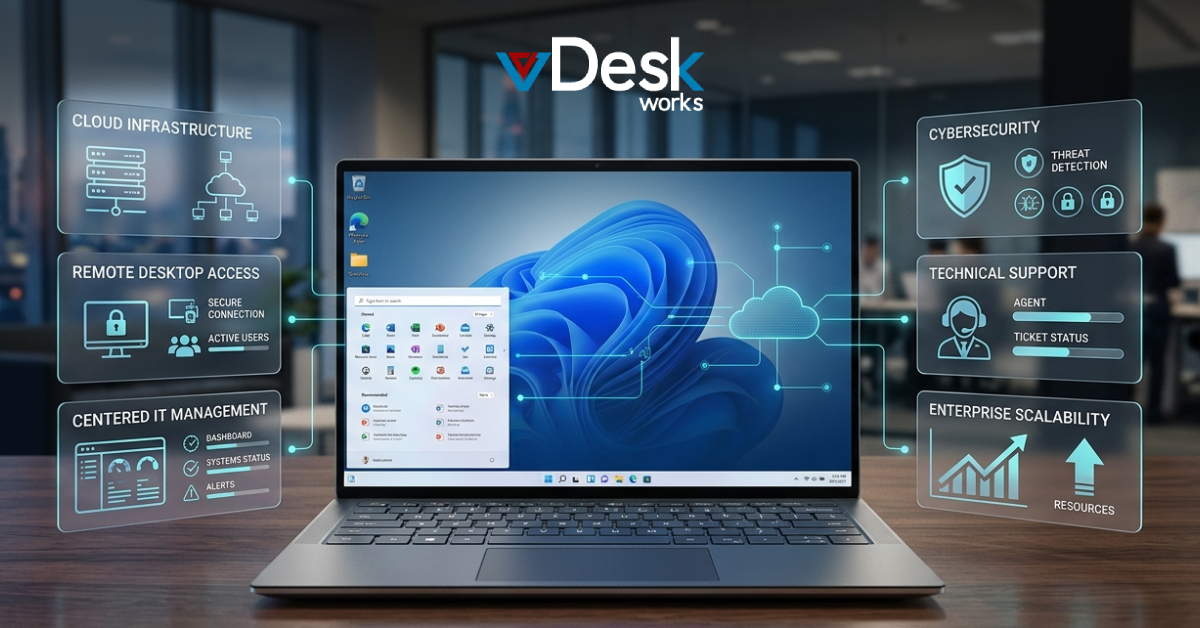
Virtual Desktops simplifies this process by centralizing management within a single platform. IT teams can deploy desktops, manage users, enforce policies, and monitor performance from one place.
This reduces the need for manual intervention and allows organizations to respond more quickly to changing requirements. Whether onboarding new employees or adjusting resources, tasks that once took days can now be completed in minutes.
Scalability That Matches Business Needs
Modern organizations need the ability to scale quickly without being limited by infrastructure. Traditional models often require planning ahead, purchasing additional resources, and setting up new environments before growth can happen.
Virtual Desktops removes these barriers.
Resources can be adjusted dynamically based on demand, allowing businesses to scale up or down as needed. This flexibility is particularly useful for organizations with seasonal workloads, project-based teams, or rapid growth.
By aligning resources with actual usage, Virtual Desktops also helps optimize costs, ensuring that businesses are not paying for capacity they do not need.
Why vDeskWorks Virtual Desktops is the Right Choice?
For organizations looking to adopt Virtual Desktops, vDeskWorks Virtual Desktops offers a solution designed to deliver both simplicity and performance. It provides fully managed cloud desktops that are accessible from any device, ensuring a consistent experience for users across different environments.
vDeskWorks Virtual Desktops stands out by combining centralized management with strong security and scalability. IT teams can control access, monitor performance, and manage resources through a unified platform, reducing complexity and improving efficiency.
At the same time, businesses benefit from the flexibility to scale as needed, without the challenges associated with traditional infrastructure. This makes it easier to support remote teams, onboard new users, and adapt to changing business demands.
A Smarter Way to Work
As organizations continue to evolve, the need for flexible, secure, and efficient work environments will only grow. Virtual Desktops provides a solution that aligns with these needs, offering a modern alternative to traditional desktop models.
By simplifying management, improving accessibility, and reducing reliance on hardware, it enables businesses to focus on what matters most—productivity and growth.
For companies ready to embrace this shift, Virtual Desktops is not just an upgrade. It is a smarter way to work.
 Emma Carson