One of the biggest challenges in delivering virtual desktops has never been access—it has been decision-making.
Before a single user logs in, IT teams are forced to answer complex questions. Which infrastructure should we choose? How do we balance cost and performance? What configuration works best for different users? How do we scale without overcommitting resources?
In traditional environments, these decisions are unavoidable because infrastructure sits at the center of everything.
But in 2026, that model is starting to break.
Businesses no longer want to spend time comparing instance types, pricing models, or deployment architectures. They want a solution that simply works—without forcing them to become infrastructure experts.
This is where Cloud PC is changing the conversation.
The Problem With Too Many Infrastructure Choices
Cloud platforms have made it possible to deploy desktops in multiple ways. Organizations can choose between different compute models, pricing structures, and performance tiers depending on their needs.
On paper, this flexibility looks like an advantage.
In reality, it often creates confusion.
Each option comes with trade-offs. Some offer more control but require deeper expertise. Others simplify deployment but limit customization. Pricing models can vary between predictable flat rates and usage-based billing, making cost forecasting difficult.
As a result, IT teams spend significant time evaluating options instead of delivering outcomes.
The problem is not a lack of choice—it is too much of it.
Why Infrastructure Shouldn’t Be the Starting Point
Most desktop strategies still begin with infrastructure decisions.
Teams evaluate compute environments, define configurations, and build systems that can support different user groups. Only after this process is complete do they begin delivering workspaces.
This approach made sense when infrastructure was scarce and expensive.
It no longer does.
Modern businesses operate in dynamic environments where user needs change frequently. Teams grow, projects evolve, and workloads fluctuate. In this context, static infrastructure planning becomes a limitation.
What organizations need instead is a model where infrastructure adapts automatically—without requiring constant decision-making.
Cloud PC Shifts the Focus to Outcomes
Cloud PC removes infrastructure from the decision-making process.
Instead of asking how desktops should be built, organizations can focus on what users need. Performance, access, and security become the priority, while the underlying infrastructure is handled by the platform.
This shift simplifies everything.
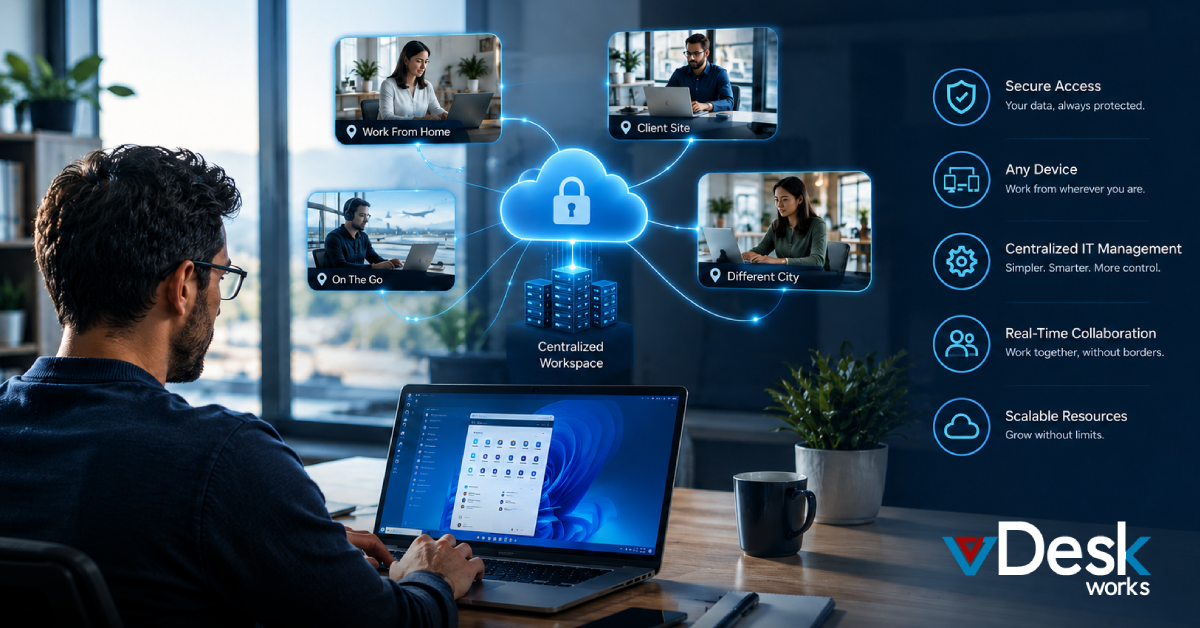
There is no need to compare compute models or configure backend systems. Users receive a complete desktop environment that is ready to use, regardless of where they are or what device they are using.
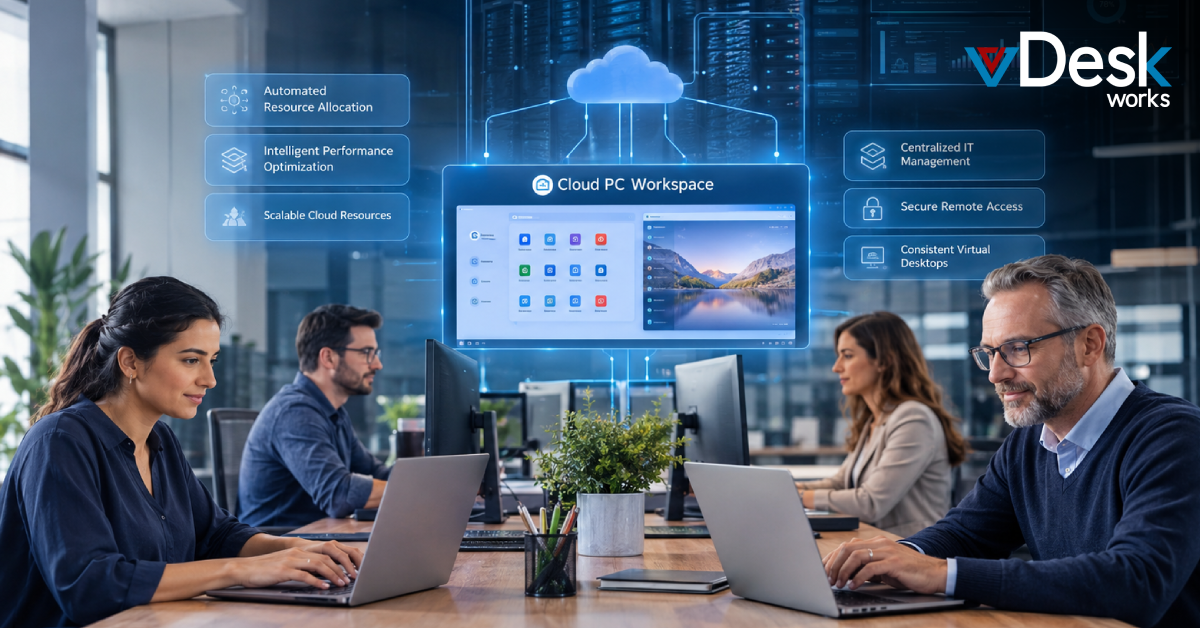
Behind the scenes, resources are optimized dynamically, ensuring that performance remains consistent without manual intervention.
Balancing Performance, Cost, and Flexibility—Automatically
One of the biggest challenges in traditional setups is balancing competing priorities.
High performance often comes with higher costs. Flexible scaling can introduce unpredictability in billing. Simplified deployments may limit customization.
Cloud PC resolves these trade-offs by managing them internally.
Resources are allocated based on actual usage, ensuring that users get the performance they need without unnecessary overhead. Scaling happens in real time, allowing organizations to adjust to changing demands without planning cycles.
This creates a more efficient system where cost, performance, and flexibility are aligned rather than competing.
Supporting Different Users Without Complex Configurations
Every organization has diverse user requirements.
Some employees need high-performance environments for design or development work. Others require standard desktops for everyday tasks. Temporary workers may need access for a limited time, while full-time staff require persistent environments.
In traditional models, supporting these differences requires multiple configurations and careful resource planning.
Cloud PC simplifies this by providing adaptable environments that can be tailored without rebuilding infrastructure. Organizations can support different user types within a single platform, reducing complexity while maintaining flexibility.
Why vDeskWorks Cloud PC Eliminates the Guesswork?
For organizations looking to simplify desktop delivery, vDeskWorks Cloud PC offers a solution designed to remove infrastructure complexity entirely.
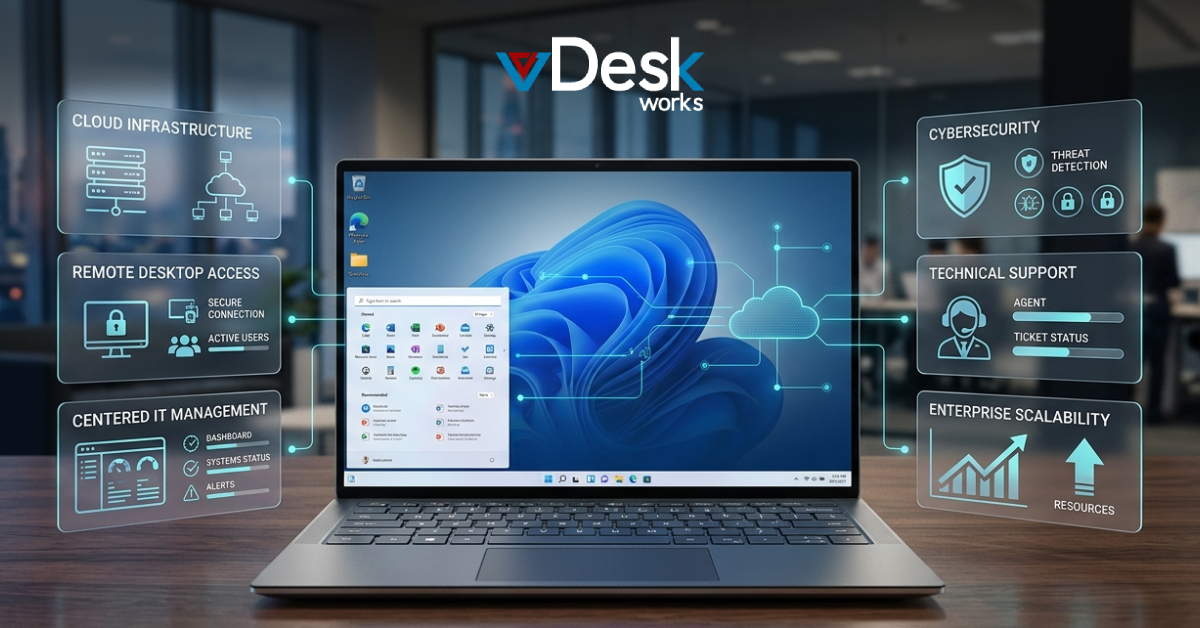
With vDeskWorks, businesses no longer need to choose between different backend deployment models or worry about configuring cloud environments. The platform abstracts these decisions, delivering fully managed desktops that are optimized for performance, cost, and scalability.
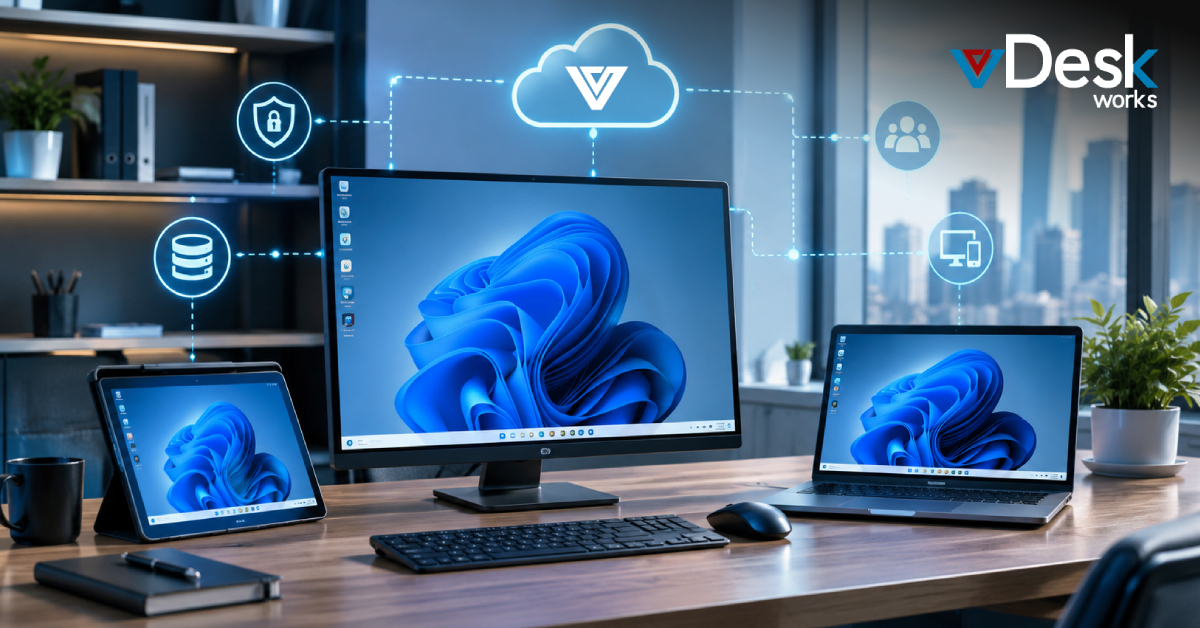
Users can access their workspaces instantly from any device, with a consistent experience across locations. IT teams gain centralized control, allowing them to manage access, enforce policies, and monitor performance from a single interface.
vDeskWorks Cloud PC also adapts to different use cases without requiring multiple configurations. Whether supporting full-time employees, remote teams, or temporary staff, it provides a unified solution that scales effortlessly.
This approach not only reduces operational complexity but also accelerates deployment, enabling organizations to move faster without sacrificing control.
 Emma Carson