
As organizations move toward cloud-first work environments, many assume that simply shifting desktops to the cloud will automatically improve performance. But one critical factor is often overlooked—data locality.
Where your data lives, how it connects to applications, and how far it travels across networks can significantly impact user experience, cost, and scalability. In distributed environments, even small missteps in data placement can lead to major performance issues.
For businesses adopting Cloud PC, understanding data locality is not optional. It is foundational.
What Data Locality Really Means in Modern Workspaces
At its core, data locality refers to the physical or logical location of data in relation to the applications and users accessing it. In cloud environments, this becomes more complex because data, compute, and users may all exist in different regions.
When data is located close to the applications processing it, performance is fast and efficient. But when data must travel across regions or networks, latency increases, costs rise, and the user experience suffers.
In digital workspaces, this directly affects how quickly applications load, how smoothly they run, and how responsive the environment feels to users.
The Cost of Ignoring Data Locality
One of the most common mistakes organizations make is assuming that network performance will compensate for poor data placement. While modern networks are powerful, they cannot eliminate the impact of distance.
When applications and their underlying data are separated, every interaction requires data to travel across the network. This increases latency, consumes bandwidth, and can slow down workflows significantly.
In cloud environments, this also leads to unexpected costs. Data transfers between regions or services can quickly add up, turning what seemed like a cost-effective solution into an expensive one.
The result is a system that is both slower and more expensive than anticipated.
Why One-Size-Fits-All Storage Doesn’t Work
Another common misconception is that all data can be stored in a single location or platform. In reality, different types of applications have very different data requirements.
Some applications rely on real-time database access, while others depend on large file transfers or collaborative storage systems. Treating all data the same often leads to performance bottlenecks and inefficiencies.
Modern IT environments require a more nuanced approach, where data is placed strategically based on how it is used. This ensures that performance remains consistent while meeting the specific needs of each workload.
The Balance Between Data and User Location
While data locality is critical, focusing only on where data resides can create another problem—ignoring where users are located.
In a global workforce, users may be spread across multiple regions. If cloud desktops are hosted far from users, even well-placed data can result in poor performance due to network latency.
The challenge is finding the right balance between data proximity and user proximity. This often requires multi-region deployments, where environments are distributed geographically to ensure optimal performance for all users.
Organizations that fail to consider this balance often end up with environments that perform well in one region but struggle in others.
Cloud PC Solves Data Locality with Intelligent Design
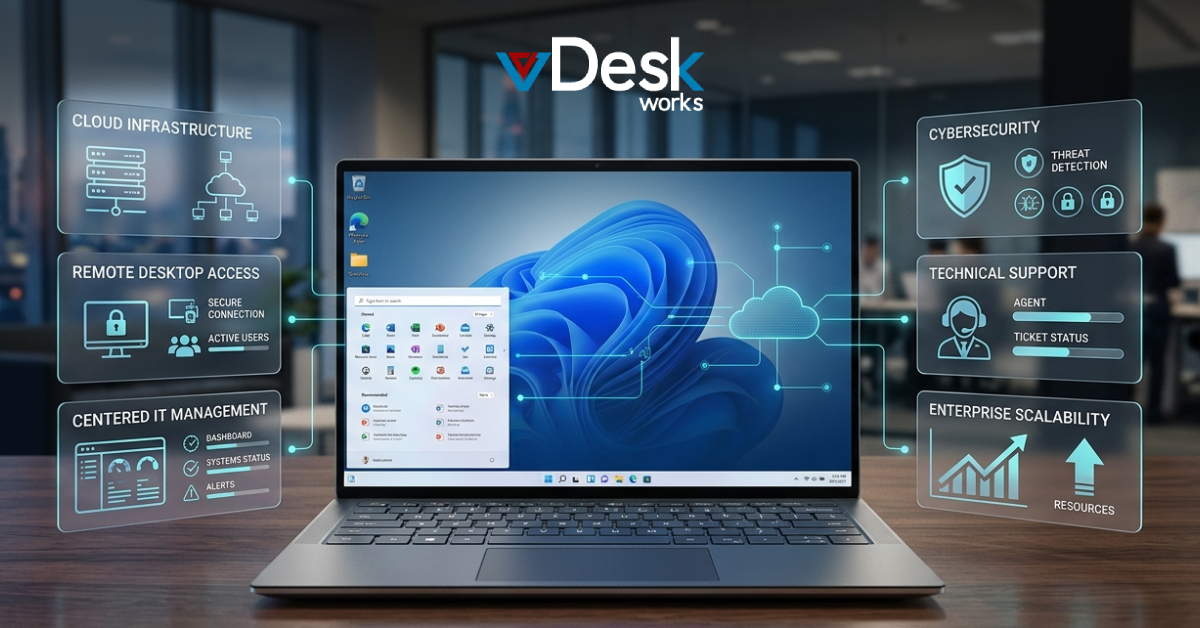
Cloud PC platforms are uniquely positioned to address data locality challenges when designed correctly. By centralizing desktop environments and integrating them with cloud infrastructure, they allow organizations to align compute, storage, and access more effectively.
Instead of relying on fragmented systems, Cloud PC enables a more cohesive architecture where data and applications can be strategically placed to minimize latency and maximize efficiency.
This approach not only improves performance but also simplifies management, as environments can be optimized centrally rather than across multiple disconnected systems.
Why vDeskWorks Cloud PC Gets Data Locality Right?
For organizations looking to avoid these common pitfalls, vDeskWorks Cloud PC provides a solution designed with data locality in mind.
vDeskWorks enables organizations to deploy cloud desktops in regions that are closest to their users, ensuring low latency and consistent performance. At the same time, it allows integration with existing data systems, ensuring that applications and data remain closely aligned.
With centralized control, IT teams can manage where data resides, how it is accessed, and how environments are configured. This level of visibility and flexibility ensures that performance is optimized without sacrificing security or scalability.
vDeskWorks Cloud PC also supports hybrid and multi-region architectures, allowing organizations to balance data locality and user proximity effectively. This ensures that global teams can work seamlessly, without the delays or inconsistencies caused by poor data placement.
By combining intelligent infrastructure design with centralized management, vDeskWorks transforms data locality from a challenge into a strategic advantage.
The Future of Cloud Workspaces Depends on Smarter Architecture
As cloud adoption continues to grow, the focus is shifting from simply moving to the cloud to optimizing how cloud environments are designed.
Data locality will play a critical role in this evolution. Organizations that understand and address it will be able to deliver faster, more reliable, and more cost-efficient digital workspaces.
Those that ignore it will continue to face performance issues, rising costs, and frustrated users.
Cloud PC represents the next step in this journey, providing a framework where data, applications, and users can be aligned intelligently. It removes the guesswork and enables organizations to build environments that are both scalable and efficient.
In the end, performance is not just about technology—it is about architecture. And getting data locality right is one of the most important decisions any organization can make in a cloud-first world.
 Admin
Admin