Hybrid work has evolved from a temporary solution into a permanent operating model. But as organizations expand across locations, managing a hybrid workplace becomes less about flexibility and more about structure. Without the right systems in place, hybrid environments can quickly become fragmented, insecure, and inefficient.
The real challenge is not deciding where employees work—it is ensuring that technology, policies, and operations work together seamlessly. Organizations that succeed treat hybrid work not as a policy, but as a complete operating system built for scale, security, and consistency.
Hybrid Work Fails Without Unified Ownership
One of the biggest risks in hybrid environments is the lack of clear ownership. When IT responsibilities are split across internal teams, external vendors, and ad hoc processes, inefficiencies emerge quickly.
This leads to inconsistent device management, delayed support, and security gaps that are difficult to track. Over time, these issues compound, creating operational drag that slows down the entire organization.
Successful hybrid workplace management requires a single, accountable framework where ownership is clearly defined. This ensures that systems are standardized, support is streamlined, and security protocols are consistently enforced across all locations.
Policies Must Be Built Around Work, Not Location
Many organizations make the mistake of designing hybrid policies around employee preferences rather than operational needs. This often leads to confusion, inefficiency, and inconsistent performance.
A more effective approach is to design policies based on tasks rather than locations. Different types of work require different environments. Deep focus tasks may be best suited for remote work, while collaboration and decision-making may benefit from in-person interaction.
By aligning work modes with actual job functions, organizations create a structured and scalable hybrid model that supports productivity without unnecessary complexity.
Standardization is the Key to Scalable Growth
As teams become more distributed, the number of tools, devices, and platforms increases. Without standardization, this leads to tool sprawl, inconsistent workflows, and higher security risks.
A well-managed hybrid workplace requires a standardized technology stack that ensures consistency across all users. This includes identity management, secure access systems, collaboration tools, and endpoint controls.
Standardization not only improves efficiency but also simplifies onboarding, reduces training time, and strengthens overall security by eliminating gaps between systems.
Security Must Shift to a Zero Trust Model
Traditional security models were built around the idea of a secure office network. In a hybrid environment, that assumption no longer holds true. Employees access systems from multiple locations, devices, and networks, significantly increasing the attack surface.
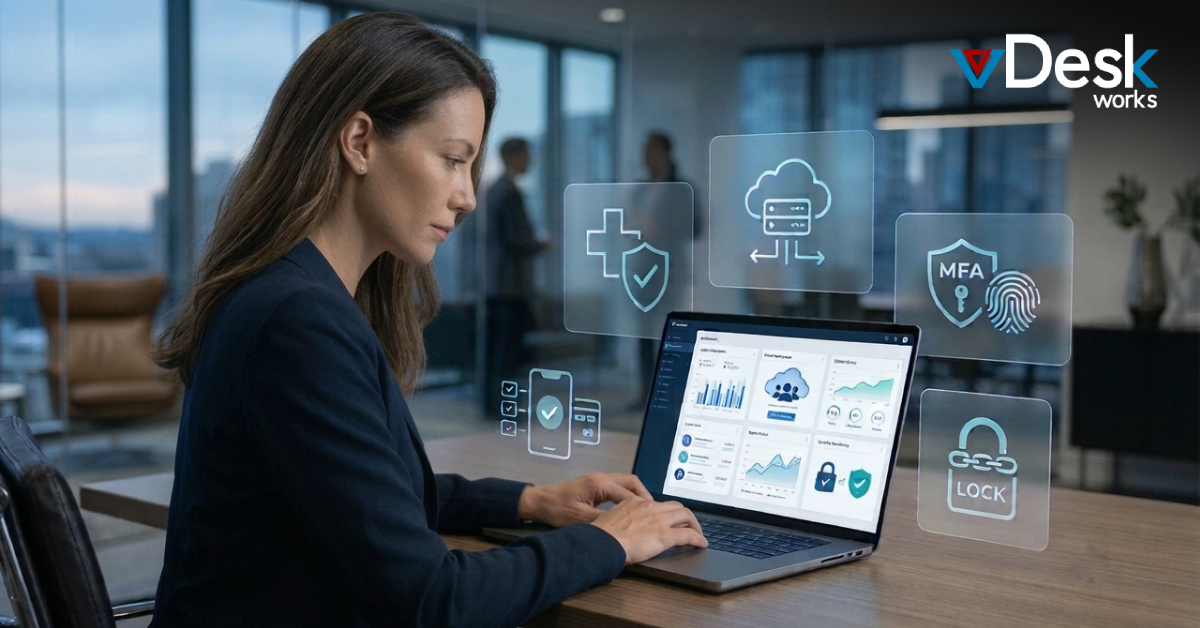
To address this, organizations must adopt a Zero Trust approach, where every user and device is continuously verified before access is granted. This model ensures that security is not dependent on location but is enforced consistently across all environments.
By implementing strict identity controls, device compliance standards, and limited access permissions, organizations can significantly reduce the risk of breaches and maintain a strong security posture in distributed environments.
Eliminating Bias in a Distributed Workforce
Hybrid work introduces a less obvious but equally critical challenge—proximity bias. Employees who are physically present in the office often receive more visibility, opportunities, and recognition compared to remote team members.
Over time, this imbalance can impact morale, retention, and overall performance. To build a truly effective hybrid workplace, organizations must ensure that performance is measured based on outcomes rather than presence.
Transparent processes, documented workflows, and consistent evaluation criteria help create a level playing field where all employees can contribute and succeed equally, regardless of their location.
Measuring Success Through Data, Not Assumptions
One of the biggest challenges in hybrid workplace management is determining whether the model is actually working. Without clear metrics, decisions are often based on assumptions rather than data.
Organizations need to adopt structured measurement frameworks that track productivity, employee engagement, and resource utilization. This allows leaders to identify inefficiencies, optimize operations, and make informed decisions about scaling their hybrid model.
A data-driven approach ensures that hybrid work remains aligned with business goals while continuously improving over time.
Why vDeskWorks Cloud PC Enables Scalable Hybrid Work?
As organizations work to unify their hybrid environments, vDeskWorks Cloud PC provides a critical layer of simplicity and control.
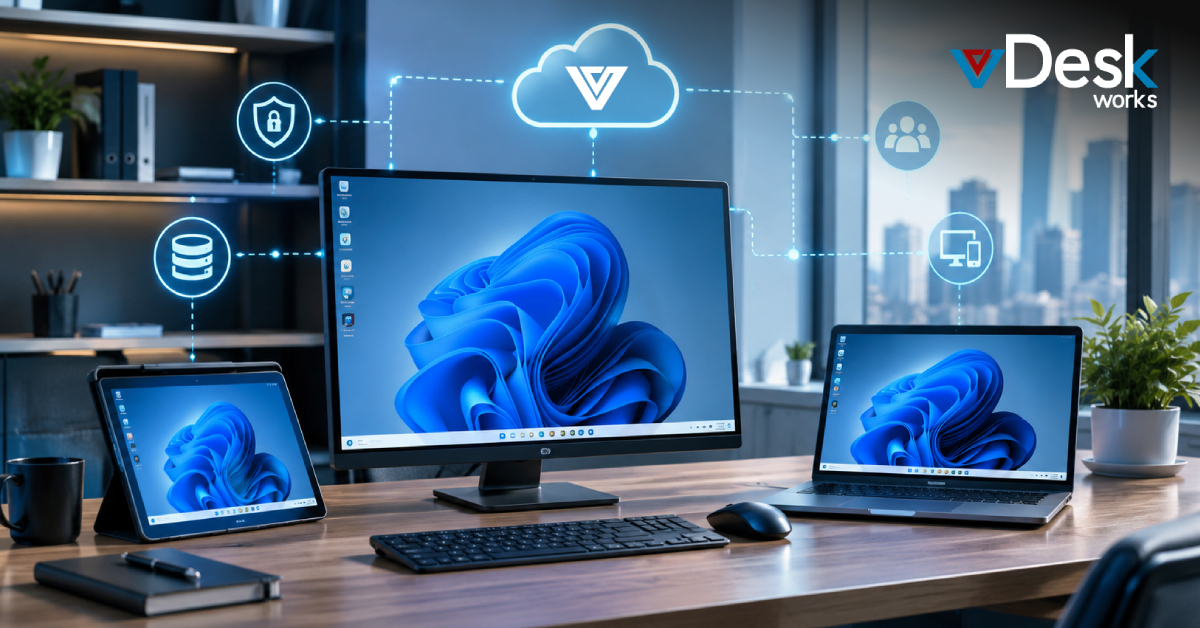
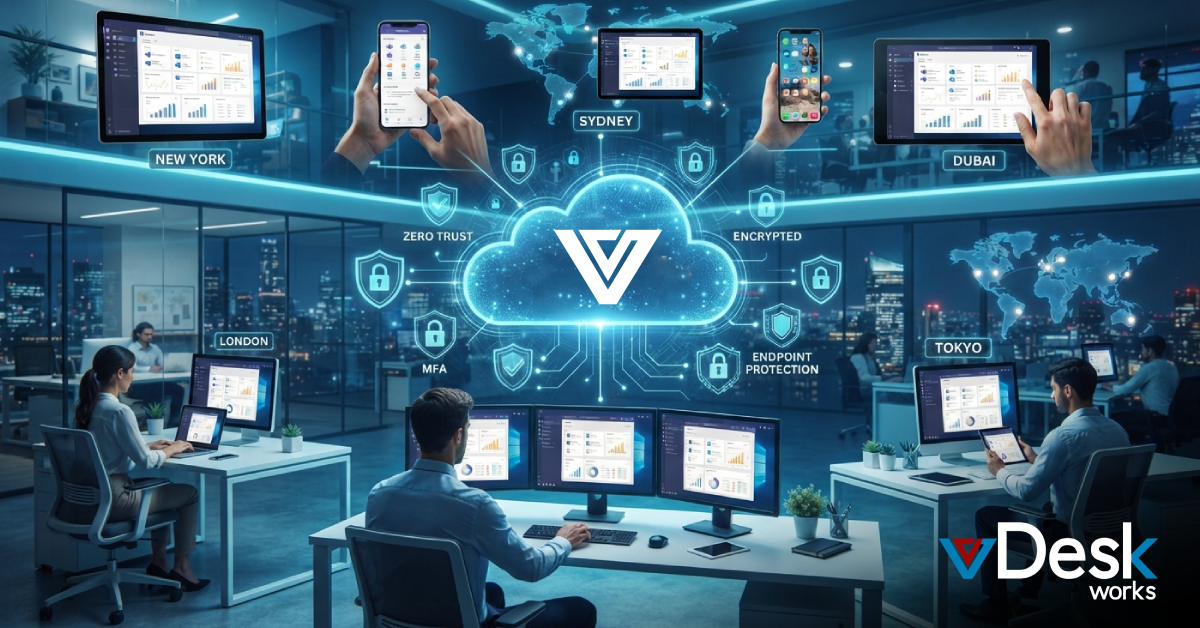
vDeskWorks Cloud PC centralizes the entire desktop environment in the cloud, allowing employees across different locations and countries to access the same secure and consistent workspace. This eliminates the fragmentation caused by device differences, network variability, and regional infrastructure limitations.
With centralized management, IT teams can enforce security policies, manage access, and monitor activity across the entire organization from a single platform. This aligns perfectly with Zero Trust principles and reduces the complexity of managing distributed environments.
vDeskWorks also supports rapid scalability, enabling organizations to onboard new employees and expand globally without the need for additional infrastructure. Employees can start working immediately with pre-configured environments that ensure consistency and performance.
By combining centralized control with flexible access, vDeskWorks transforms hybrid workplace management from a challenge into a strategic advantage.
The Future of Hybrid Work is Structured and Scalable
Hybrid work is not inherently complex—poorly managed hybrid work is. Organizations that approach it with clear structure, standardized systems, and strong governance will be able to scale efficiently while maintaining security and performance.
The future workplace will be defined by its ability to operate seamlessly across locations, devices, and teams. This requires more than policies; it requires integrated systems that support consistency, visibility, and control.
Cloud-first technologies, especially Cloud PC solutions, are playing a central role in enabling this transformation. They provide the foundation for a workplace that is not limited by geography but empowered by technology.
As businesses continue to expand globally, the ability to manage hybrid environments effectively will become a key differentiator. Those who build for scale today will be the ones who lead tomorrow.
 Jerry Clark